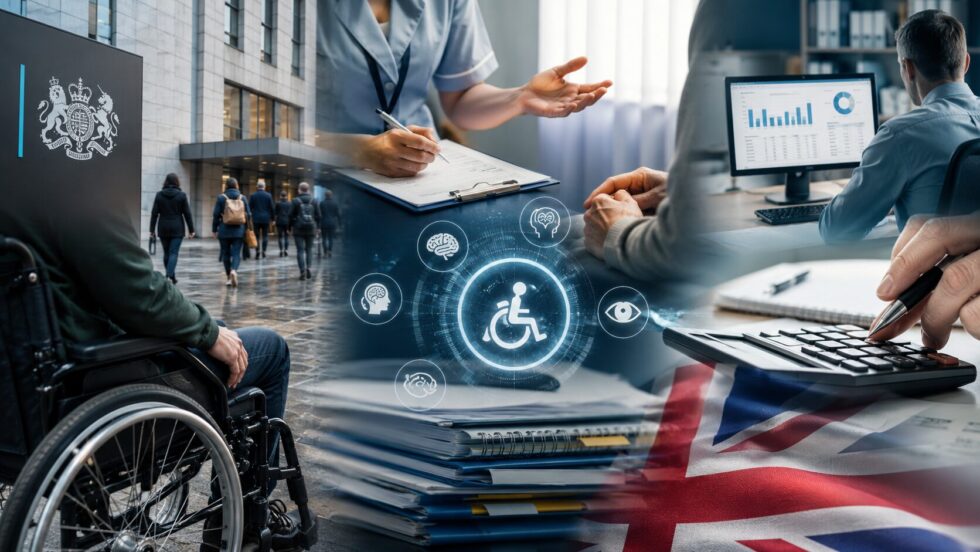
Personal Independence Payment claimants across Britain are being drawn into a new Department for Work and Pensions (DWP) pilot that could significantly change how disability benefit decisions are made. The trial, which the department confirms currently affects around four per cent of PIP cases — equivalent to approximately 150,000 claimants — shifts more responsibility for assessment decisions away from healthcare professionals and towards DWP case managers, The WP Times reports.
The programme has emerged during a period of intense scrutiny of Britain's disability benefits system, with ministers already facing pressure over the future of Personal Independence Payment and wider welfare reforms. Disability organisations, campaigners and some experts have raised concerns that reducing the role of clinicians in assessments could increase the risk of disputed decisions, appeals and financial uncertainty for vulnerable claimants. The DWP insists the trial is designed to reduce duplication and improve efficiency rather than alter entitlement rules.
How the new Personal Independence Payment assessment pilot works
Under the current Personal Independence Payment system, healthcare professionals including nurses, physiotherapists, paramedics and other trained assessors conduct functional assessments and provide detailed recommendations to the DWP.
These assessments examine how a claimant's physical or mental health condition affects everyday activities. Assessors review evidence, conduct interviews and recommend which descriptors apply to the claimant's circumstances. Those descriptors determine the number of points awarded and ultimately influence entitlement levels.
The new pilot changes that process.
According to information disclosed by a whistleblower and subsequently acknowledged by the DWP, healthcare professionals continue carrying out functional assessments but may have a reduced role in recommending entitlement outcomes. Instead, greater responsibility is placed on DWP case managers, who review evidence and determine which descriptors should apply.
The DWP says final decisions have always been made by case managers. However, critics argue that the practical influence of healthcare professionals may be reduced under the new model.
Key differences reported in the pilot
| Current system | Pilot approach |
|---|---|
| Assessors gather evidence | Assessors gather evidence |
| Assessors recommend descriptors | Greater emphasis on DWP case managers |
| Clinical recommendations central to report | Case managers apply judgement using evidence |
| Healthcare professionals influence entitlement recommendations | DWP staff take larger role in assessment outcomes |
| Existing national model | Limited pilot affecting around 4% of claims |
The trial is understood to be part of a wider government programme designed to modernise benefit assessments and streamline decision-making processes.
Why disability groups are raising concerns about the Personal Independence Payment trial
Several disability organisations have reacted strongly to the existence of the pilot. Campaigners argue that Personal Independence Payment assessments frequently involve complex medical evidence, fluctuating conditions and mental health issues that require specialist understanding. They fear that reducing clinical influence could make decision-making less accurate.
Disability Rights UK described the pilot as deeply concerning and questioned why it was being introduced while the government simultaneously conducts a major review of Personal Independence Payment led by disability minister Sir Stephen Timms. Many campaigners argue that PIP assessments are already among the most contested areas of the welfare system. Appeals data over recent years have repeatedly shown that a significant proportion of successful tribunals overturn original decisions. Critics therefore fear that any reduction in specialist clinical input could increase disputes rather than reduce them.
Among the concerns raised by campaigners are:
- Greater risk of inaccurate decisions.
- Increased appeals and tribunal cases.
- Additional stress for disabled claimants.
- Potential delays in benefit awards.
- More difficulty assessing fluctuating conditions.
- Reduced consideration of complex mental health cases.
- Increased administrative costs despite reform aims.
Supporters of the current assessment model argue that healthcare professionals bring clinical experience that cannot easily be replicated through administrative training alone.
What the DWP says about the Personal Independence Payment changes
The Department for Work and Pensions has defended the pilot and rejected suggestions that final decision-making powers are changing. Officials emphasise that DWP case managers already make the final determination on every Personal Independence Payment claim. According to the department, the pilot simply rebalances responsibilities between assessors and decision-makers.
The DWP argues that healthcare professionals should focus on collecting and interpreting medical information while case managers concentrate on applying benefit regulations consistently. Officials say the trial is intended to reduce duplication within the process and improve operational efficiency. A DWP spokesperson stated that the trial is a "small-scale" project designed to examine whether responsibilities can be distributed more effectively without affecting claimant outcomes. The department also says case managers will continue to seek clarification from healthcare professionals whenever additional medical input is required.
What the DWP says the pilot aims to achieve
- Reduce duplicated work.
- Increase assessment capacity.
- Improve consistency in decisions.
- Speed up claim processing.
- Allow healthcare professionals to focus on assessments.
- Give case managers greater responsibility for evidence review.
The government has not announced any nationwide rollout and says the trial remains under evaluation.
Personal Independence Payment reform debate deepens as DWP assessment pilot expands
The launch of the new Personal Independence Payment assessment pilot comes at one of the most politically sensitive moments for Britain's welfare system in recent years. With more than four million people receiving Personal Independence Payment across the UK, ministers are facing mounting pressure to balance support for disabled people with concerns over rapidly rising welfare expenditure. Government forecasts have repeatedly highlighted the growing cost of disability-related benefits, making welfare reform a central issue in Westminster discussions throughout 2026.
Against that backdrop, the decision to test a new assessment model affecting approximately 150,000 claimants has drawn significant attention from disability organisations, welfare experts and MPs. Critics argue that introducing operational changes before the completion of an ongoing government review risks creating uncertainty among claimants and raises questions about the future direction of the benefits system.
The pilot is unfolding while Disability Minister Sir Stephen Timms leads an independent review of Personal Independence Payment. The review was launched after intense political debate surrounding proposals to tighten eligibility rules for the benefit and is expected to report later this year.
Campaigners have questioned whether structural changes should be tested before ministers have received the review's recommendations. Fazilet Hadi, Head of Policy at Disability Rights UK, criticised the timing of the pilot, saying it was "absolutely astonishing" that the changes were being introduced while a major review of Personal Independence Payment was still underway.
The Department for Work and Pensions maintains that the pilot does not alter eligibility criteria or payment rates and is intended solely to improve administrative efficiency. Officials insist that final entitlement decisions have always been made by DWP case managers and that the trial is focused on reducing duplication between assessors and decision-makers. Nevertheless, the programme has become another focal point in the wider debate over how disability support should be assessed, funded and delivered in modern Britain.
Why the timing matters
Several developments are taking place simultaneously:
- The Timms Review of Personal Independence Payment continues.
- Welfare spending remains under intense scrutiny.
- Disability benefit caseloads continue to rise.
- Ministers are examining long-term reform options.
- Disability groups are demanding greater claimant involvement.
- Assessment providers remain under contract until 2031.
Taken together, these factors mean that even a limited pilot project can carry wider political significance beyond its immediate operational purpose.
What the changes could mean for Personal Independence Payment claimants
For the vast majority of current Personal Independence Payment recipients, there is no immediate change to existing awards, payment levels or eligibility rules. The pilot currently affects only a small proportion of claims and remains under evaluation. However, disability organisations argue that its long-term implications could be substantial if the model is eventually expanded nationwide.
Much of the concern centres on claimants whose conditions require detailed clinical interpretation rather than straightforward medical evidence. Healthcare professionals conducting PIP assessments frequently encounter conditions that fluctuate over time, present differently between individuals or involve complex interactions between physical and mental health symptoms. Campaigners argue that such cases often require professional judgement developed through years of clinical experience.
Conditions frequently cited by disability groups include:
| Physical Conditions | Mental Health and Neurodivergent Conditions |
|---|---|
| Multiple sclerosis | Bipolar disorder |
| Parkinson's disease | Severe anxiety disorders |
| Fibromyalgia | Complex PTSD |
| Chronic fatigue syndrome | Autism spectrum conditions |
| Neurological disorders | Schizophrenia |
Many of these conditions can vary significantly from one day to another. Claimants may appear relatively functional during an assessment while experiencing substantial limitations at other times.
The whistleblower who raised concerns about the pilot warned that removing clinical recommendations from the assessment process could reduce what they described as "essential medical nuance" in decision-making.
According to information shared with Disability Rights UK, the whistleblower said: "Decisions on complex, fluctuating, and especially mental health conditions require clinical insight and direct assessment experience."
They added: "Removing health professionals from the decision-making process will strip out essential medical nuance, leading to poorer quality, less accurate, and less fair outcomes."
The whistleblower further warned that vulnerable claimants could face "wrong decisions, increased stress, financial hardship and unnecessary appeals."
Supporters of reform, however, argue that case managers are already the legal decision-makers and can continue making accurate determinations when supplied with comprehensive assessment evidence.
The Department for Work and Pensions has repeatedly stressed that healthcare professionals will continue conducting functional assessments and that case managers will still be able to seek clarification from clinicians when required.
Questions facing the future of the Personal Independence Payment system
As evaluation of the pilot continues, several key questions remain unanswered.
Will the pilot be expanded nationally?
The DWP has not announced any nationwide rollout. Officials say the trial is currently being assessed before any future decisions are made.
Could the model be extended beyond PIP?
Reports suggest officials are also exploring whether similar approaches could eventually be applied to other assessment systems, including the Work Capability Assessment used in parts of Universal Credit.
Will appeal rates increase?
Campaigners fear a reduction in clinical influence could lead to more disputed decisions. Government officials argue it is too early to draw conclusions before evaluation data becomes available.
Will payment rules change?
No changes to payment rates, scoring thresholds or eligibility criteria have been announced as part of the pilot.
What happens next?
The future of the programme is expected to depend on two parallel processes: the DWP's evaluation of the pilot and the findings of Sir Stephen Timms' wider review of Personal Independence Payment.
Until those conclusions are published, the pilot is likely to remain a closely watched development in Britain's disability benefits system. For supporters, it represents an attempt to modernise administrative processes and improve efficiency. For critics, it raises fundamental questions about whether complex disability assessments can be fairly conducted with a reduced role for healthcare professionals. As Westminster prepares for further debates on welfare reform later this year, the outcome of this trial could help shape the future of Personal Independence Payment for millions of people across the United Kingdom.
Read about the life of Westminster and Pimlico district, London and the world. 24/7 news with fresh and useful updates on culture, business, technology and city life: Best UK Cashback Cards 2026 For London Commuters And Travel: Which Cards Actually Save Money