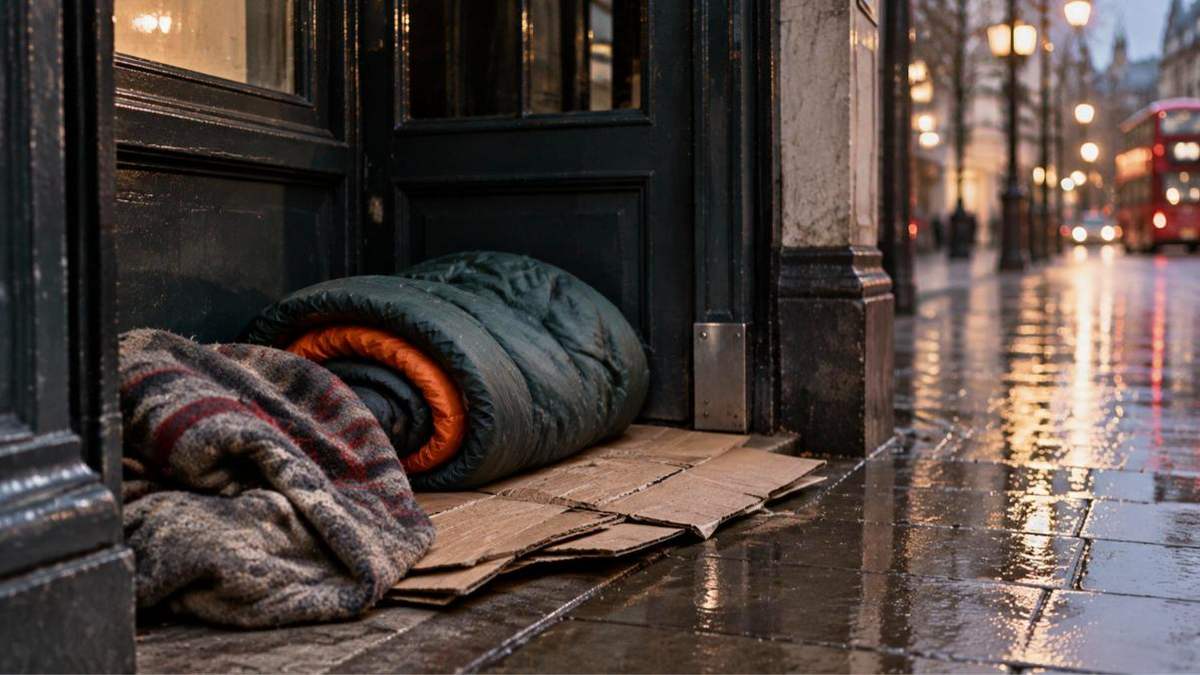
Rough sleeping rules that require outreach workers to see someone bedded down on the street before they can get help should be formally scrapped, the Mayor of London, Sadiq Khan, said on Wednesday 18 November 2026, calling them "ridiculous" and claiming the backing of the Prime Minister, Andy Burnham. Speaking at a youth hub in Islington run by the charity DePaul, Khan said that at present support can only be given "when somebody is bedded down and on the streets", a day after the government announced £168m of new funding for rough sleeping services, reports The WP Times.
The issue matters most in Westminster, which has more people sleeping rough than any other part of the country. Official CHAIN figures show 2,583 people were seen sleeping rough in the borough in 2025/26, more than a quarter of the London total of 12,938 and more than two and a half times the figure for Camden, the next highest. Westminster City Council says it offers a bed to almost everyone it finds on the streets on most days, but that up to 30% of those offers are turned down each night; it has also called on Transport for London to take urgent action over an encampment under the Westway near Paddington. Between July and September 2026, 4,678 people were recorded sleeping rough in London.
What is the rough sleeping verification rule?
For years, access to many rough sleeping services in London has depended on verification: an outreach worker must find a person sleeping, or bedded down, outdoors and record them before they qualify for certain types of help, such as specialist hostels or accommodation funded through rough sleeping programmes. The aim was to target resources at people genuinely on the streets, but critics say it forces people at risk to spend at least one night outside before they can be helped, and makes it harder to reach those who move around or hide.
In September the Ministry of Housing, Communities and Local Government changed its guidance, saying support should be based on individual need and risk rather than requiring people to verify or demonstrate rough sleeping. Khan's argument is that the rule still operates in practice because funding arrangements and commissioning across London are built around it, and that ministers need to change it formally. His Plan of Action commits to replacing the verification process in London by 2028, although he acknowledged this would take time.
| Element | Detail |
|---|---|
| Current practice | Outreach workers must see a person bedded down outdoors before some support is available |
| Government guidance, September 2026 | Support should be based on need and risk, not on proving rough sleeping |
| Mayor's position | Rules are "ridiculous" and must be formally changed |
| Mayor's target date for replacing verification in London | 2028 |
| Mayor's pledge to end rough sleeping in London | 2030 |
| New government funding announced 17 November | £168m |
What Sadiq Khan said
Khan made the comments during a visit to a DePaul youth hub in Islington, which supports 18 to 24-year-olds at risk of sleeping rough. He said that more than 21,000 people had been helped off London's streets during his time as Mayor, and that about 80% of them had not returned to rough sleeping. He also claimed investment in rough sleeping services had risen sixfold over the past decade.
"At the moment, we can only give support when somebody is bedded down and on the streets" (Sir Sadiq Khan, Mayor of London, speaking at DePaul's youth hub in Islington on 18 November 2026, as reported by the Local Democracy Reporting Service).
Khan said the Prime Minister agreed the rule was ridiculous and supported reform. His second demand of the government is funding for what he called wrap-around care, including mental health and addiction professionals working alongside outreach teams. The £168m announced by the government on Tuesday is restricted to helping people already on the streets rather than preventing homelessness, according to the report of his visit. Alexia Murphy, chief executive of DePaul, said that rough sleeping "is not straightforward, it's not simple, it's complex".
- More than 21,000 people helped off London's streets since 2016, according to the Mayor.
- About 80% have not returned to rough sleeping, according to the Mayor.
- Investment up sixfold in ten years, according to the Mayor.
- £168m in new government funding announced on 17 November 2026.
- Target to end rough sleeping in London by 2030.
How many people sleep rough in Westminster?
Westminster has the largest rough sleeping population of any local authority in England. The CHAIN database, run for the Greater London Authority by outreach services, recorded 2,583 people sleeping rough in the borough in 2025/26. That is about one in five of everyone seen sleeping rough in London, and far above Camden, which recorded 974. The concentration reflects the West End's transport hubs, late-night economy, day centres and the visibility and relative safety of busy streets.
Across London, the total fell slightly in 2025/26 to 12,938 from a record 13,231 the year before, but remains well above the 8,329 recorded in 2021/22. Quarterly figures for October to December 2025 showed a record 4,841 people sleeping rough in a single quarter, and 830 people classed as living on the streets, the highest number recorded. The latest quarter, July to September 2026, recorded 4,678 people.
| Period | People seen sleeping rough | Area |
|---|---|---|
| 2021/22 | 8,329 | London |
| 2024/25 | 13,231 | London, record year |
| 2025/26 | 12,938 | London |
| 2025/26 | 2,583 | Westminster |
| 2025/26 | 974 | Camden |
| October to December 2025 | 4,841 | London, record quarter |
| July to September 2026 | 4,678 | London |

What Westminster City Council is doing
The council's cabinet member for housing, Councillor David Harvey, has said the authority or the charities it works with make an offer of a bed to almost everyone sleeping on Westminster's streets nearly every day, but that up to 30% of the people they reach turn the offer down on any given night. The council argues that many of those sleeping rough have complex needs, including addiction and mental illness, and that accommodation offers alone are not enough without longer-term support.
On 11 November the council called on TfL to take urgent action over an encampment under the A40 Westway, land owned jointly by TfL and the council near Paddington. A similar encampment at the same location and at the Harrow Road roundabout was cleared under a court possession order in 2025. The council has also published cold weather support and advice, setting out how emergency shelter is opened when temperatures fall.
- Offers of accommodation made to almost everyone found sleeping rough, nearly every day, according to the council.
- Up to 30% of offers declined on a given night, according to the council.
- Call for TfL action on the Westway encampment, 11 November 2026.
- Cold weather support and advice published 1 November 2026.
- Council faces a £100m cut in government grant, adding pressure on discretionary services.
How to help someone sleeping rough
- Use StreetLink, online or through its app, to send an alert with the person's location; outreach teams follow up.
- If someone is in immediate danger or needs medical help, call 999.
- Give details such as the time, exact location and a description, with the person's consent where possible.
- Support local charities and day centres that provide food, showers and advice.
Cold weather emergency shelter
- The Severe Weather Emergency Protocol opens extra shelter when temperatures are forecast to fall to freezing.
- London boroughs, including Westminster, activate SWEP based on Met Office forecasts.
- Outreach teams increase patrols during SWEP periods.
Why the debate is growing this winter
The Mayor's intervention comes as rough sleeping becomes a national political issue. Andy Burnham, who as Mayor of Greater Manchester made reducing street homelessness a central policy, has spoken of ending rough sleeping, and his government's new funding settlement is aimed at expanding outreach and accommodation. At the same time, councils such as Westminster say government funding cuts are making it harder to sustain services, and charities warn that the rising cost of housing is pushing more people towards the streets.
The verification rule has become a focal point because it determines who can be helped quickly. Charities have long argued that preventing a first night on the streets is cheaper and more humane than responding once someone is entrenched. CHAIN figures show that most people new to rough sleeping in London are seen only once, which outreach workers say shows the value of rapid intervention.
| Who | Position |
|---|---|
| Mayor of London | Scrap verification formally, fund wrap-around care, end rough sleeping by 2030 |
| Government | New guidance in September, £168m announced on 17 November |
| Westminster City Council | Offers beds daily, says up to 30% refuse, calls for TfL action on encampments |
| DePaul | Rough sleeping is complex and needs long-term support |
Background: rough sleeping in London
London's rough sleeping figures have been collected through the CHAIN database since the early 2000s, recording everyone seen sleeping rough by commissioned outreach teams. The numbers fell after the Everyone In scheme during the pandemic in 2020, when hotels were used to house people sleeping rough, then rose sharply to record levels by 2024/25. Westminster has consistently had the largest share, reflecting its role as the centre of London's transport and night-time economy.
For more on the pressures facing Westminster this winter, see our reports on West End Live and Westminster's £100m funding cut, the Vauxhall Bridge repair warning, London Tube strikes and Christmas at Westminster Abbey.
Rough sleeping in London: frequently asked questions
What did Sadiq Khan say about rough sleeping rules?
He called the requirement for people to be seen bedded down on the street before receiving some support "ridiculous" and urged ministers to change it formally.
What is rough sleeping verification?
A process under which outreach workers must see a person sleeping outdoors before they can access certain rough sleeping services.
How many people sleep rough in Westminster?
2,583 people were seen sleeping rough in Westminster in 2025/26, the highest number of any borough, according to CHAIN.
How many people sleep rough in London?
12,938 people were seen sleeping rough in London in 2025/26. Between July and September 2026, 4,678 people were recorded.
How much new funding has the government announced?
£168m, announced on 17 November 2026, for helping people already sleeping rough.
How can I help someone sleeping rough in London?
Send an alert through StreetLink so outreach teams can find them, and call 999 if the person needs urgent medical help.
When does emergency cold weather shelter open?
Under the Severe Weather Emergency Protocol, when temperatures are forecast to fall to freezing, activated by each borough.
More London news, travel updates and Westminster guides from The WP Times. Read also: West End Live funding in doubt, Vauxhall Bridge could close to buses, London's most dangerous junctions for cyclists and London Tube strikes winter 2026.
Sources used: Mayor of London, Local Democracy Reporting Service, Southwark News, Westminster City Council, CHAIN, Greater London Authority, Ministry of Housing, Communities and Local Government, DePaul, Crisis, Homeless Link, The Telegraph.