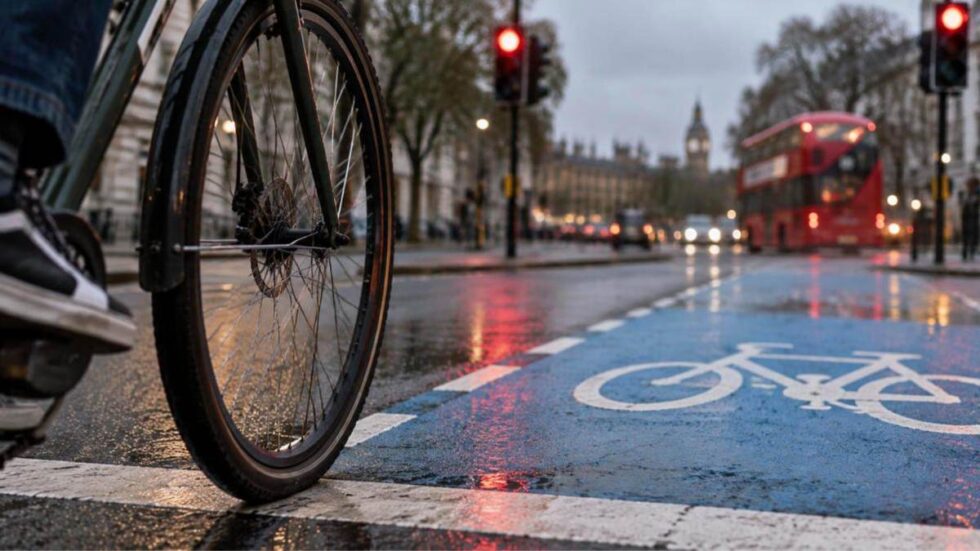
The most dangerous junctions for cyclists in London have been mapped again, and the worst is a cluster of side roads off Upper Tooting Road in Wandsworth, where Ansell Road, Derinton Road, Lessingham Avenue and Price Close cross Cycle Superhighway 7, according to the London Cycling Campaign's updated map of collision hotspots published this week. The junction recorded eight serious and 19 slight collisions involving cyclists between 2021 and 2025, and has topped the campaign's list for the fourth year running; the remaining nine sites stretch from Tottenham and Shoreditch to London Bridge, the Old Kent Road and Blackfriars, reports The WP Times.
The map is based on five years of emergency services collision data and is used by the campaign to press Transport for London and the boroughs for redesigns. Seven of the ten worst cycling junctions have traffic signals, and the London Cycling Campaign is calling for protected junction designs, which separate cyclists from turning traffic, and modal filters that stop through traffic on side roads. TfL said it was "determined to eliminate death and serious injury on the road network", pointing to 48 completed safer junction schemes and more than £150m allocated through its Safe and Healthy Streets programme, at a time when the number of daily cycle journeys in London has risen by 43% since 2019 to about 1.5 million.
Which are the 10 most dangerous junctions for cyclists in London?
The London Cycling Campaign groups collisions by junction clusters rather than single crossings, because side roads close together often share the same traffic patterns. Its list for 2026 covers six boroughs, with three sites in Southwark and two in Hammersmith and Fulham. Four of the ten recorded a fatal collision in the five-year period, and several combine heavy bus and lorry traffic with busy cycle routes.
| Junction | Borough | Fatal | Serious | Slight |
|---|---|---|---|---|
| Upper Tooting Road with Ansell Road, Derinton Road, Lessingham Avenue and Price Close, on CS7 | Wandsworth | Not given | 8 | 19 |
| Broad Lane, High Road and West Green Road, Tottenham | Haringey | Not given | 8 | 10 |
| Great Eastern Street and Curtain Road with Gatesborough Street, Leonard Street, New Inn Yard and Phipp Street | Hackney | Not given | 9 | 9 |
| King Street and Weltje Road | Hammersmith and Fulham | Not given | 7 | 16 |
| Carpenters Road, High Street, Jupp Road West and Wise Road, Stratford | Newham | 1 | 2 | 9 |
| London Bridge with Borough High Street, Duke Street Hill, King William Street and Railway Approach | Southwark | Not given | 6 | 18 |
| Old Kent Road with Dunton Road, Kinglake Street, Madron Street and Mina Road | Southwark | 1 | 2 | 7 |
| Westway and Wood Lane | Hammersmith and Fulham | 1 | 3 | 2 |
| New Bridge Street with Apothecary Street and Bridewell Place, Blackfriars | City of London | Not given | 7 | 3 |
| Old Kent Road and St James's Road | Southwark | 1 | 2 | 3 |
Why does Upper Tooting Road keep topping the list?
Upper Tooting Road carries Cycle Superhighway 7, one of London's earliest cycle superhighways, which in this section consists largely of blue-painted lanes rather than physically separated tracks. Several side roads join the main road within a short distance, and drivers turning in and out of them cross the cycle lane. The result is repeated conflicts between turning vehicles and cyclists travelling straight ahead, the pattern that most commonly leads to serious injuries at junctions.
The campaign's analysis has highlighted two other sites on the same CS7 corridor in previous years, at Clapham High Street and Balham High Road, which suggests the problem lies in the design of the route rather than in a single junction. Its proposed solutions are modal filters on the side roads, which would stop cars using them as through routes, and junction layouts that give cyclists their own protected space and signal phase.
- Location: Upper Tooting Road between Tooting Broadway and Tooting Bec, Wandsworth.
- Route: Cycle Superhighway 7, from the City to Colliers Wood.
- Collisions 2021 to 2025: 8 serious and 19 slight.
- Ranking: first for cycling for the fourth consecutive year.
- Main risk: vehicles turning across the cycle lane into side roads.
What TfL and City Hall said
TfL said it was committed to its Vision Zero target of eliminating death and serious injury from London's roads, and that work had been completed at 48 junctions under its safer junctions programme. The authority said more than £150m had been allocated through its Safe and Healthy Streets programme, and that £94.8m was available to boroughs in 2026 to 2027 for road safety projects.
"Our deepest sympathies are with everyone impacted by loss of life and injuries on London's roads" (Helen Cansick, head of Healthy Streets Investment Planning at Transport for London, responding to the London Cycling Campaign's map in November 2026).
The Mayor's walking and cycling commissioner, Will Norman, said City Hall was "making life-saving changes at some of London's most dangerous junctions". Many of the sites on the list are on roads controlled by boroughs rather than by TfL, which means improvements depend on councils applying for and spending the road safety funding available to them.
| Measure | Figure |
|---|---|
| Safer junction schemes completed by TfL | 48 |
| Safe and Healthy Streets programme allocation | More than £150m |
| Road safety funding available to boroughs, 2026 to 2027 | £94.8m |
| Daily cycle journeys in London | About 1.5 million |
| Increase since 2019 | 43% |
What the campaign wants changed
The London Cycling Campaign argues that traffic signals alone do not protect cyclists, noting that seven of the ten worst cycling junctions are already signal-controlled. Its recommendations centre on physical separation and on reducing the volume of traffic that crosses cycle routes.
- Protected junctions, with kerbed space for cyclists and separate signal phases.
- Modal filters on side roads to stop rat-running through residential streets.
- Early release signals that let cyclists move off before motor traffic.
- Banned turns where turning vehicles repeatedly cross busy cycle lanes.
- Lower speed limits and enforcement on main roads.
- Priority funding for the sites with the worst collision records.
For cyclists using these junctions now
- Avoid riding on the inside of buses and lorries at junctions, where drivers' visibility is lowest.
- Take a central position in the lane where it is safe to do so on approach to side roads.
- Use quieter parallel routes, such as Cycleways on back streets, where available.
- Make sure lights are on from dusk; in late November sunset in London is before 4pm.
For drivers
- Check mirrors and blind spots before turning left across a cycle lane.
- Give cyclists room when overtaking near junctions.
- Do not stop in advanced stop boxes reserved for cyclists at traffic lights.
What about central London and Westminster?
None of the ten worst cycling junctions on this year's list is in the City of Westminster, although the City of London site at New Bridge Street and Blackfriars lies just east of the borough boundary, and the junction at London Bridge, used by many commuters cycling into the City, is a short distance away. Central London junctions such as Hyde Park Corner and the Holborn gyratory have featured in earlier campaign lists, and have since been the subject of redesign schemes and segregated cycle routes, including the East-West Cycleway along the Embankment and through St James's Park.
Cycling in Westminster has grown with the expansion of protected routes and of Santander Cycles hire, but the borough's streets also carry heavy bus, taxi and delivery traffic. The council and TfL are responsible for different roads: TfL manages the red routes, such as Park Lane and the Embankment, while Westminster City Council manages most other streets in the borough.
- Nearest listed site to Westminster: New Bridge Street, Blackfriars, City of London.
- Earlier lists included Hyde Park Corner and the Holborn gyratory.
- Main protected routes through Westminster: the East-West Cycleway along the Embankment, routes through Hyde Park and the Mall.
- Red routes managed by TfL: Park Lane, the Embankment, Vauxhall Bridge Road and Euston Road.
Background: how the dangerous junctions list began
The London Cycling Campaign, a charity representing cyclists in the capital, has published its dangerous junctions analysis annually for several years, building on earlier work that identified blackspots across the city. In 2022 the London Assembly asked the Mayor what improvements were planned at 22 dangerous junctions identified by the campaign, including Hyde Park Corner, Trafalgar Square, Elephant and Castle and Holborn. Upper Tooting Road has been at the top of the cycling list since 2023.
The publication comes as London's cycling numbers continue to grow and as TfL faces a large maintenance backlog across its road network, from junctions to Thames bridges. For more on the state of London's streets, see our reports on Vauxhall Bridge's repair warning, London Tube strikes this winter and the Congestion Charge in 2026.
London's dangerous junctions: frequently asked questions
What is the most dangerous junction for cyclists in London?
The Upper Tooting Road cluster in Wandsworth, where several side roads cross Cycle Superhighway 7, with 8 serious and 19 slight cycling collisions in five years.
Who compiled the list of dangerous junctions?
The London Cycling Campaign, using emergency services collision data from 2021 to 2025.
Are any of the most dangerous junctions in Westminster?
No site on the 2026 top ten is in Westminster. The nearest is New Bridge Street at Blackfriars, in the City of London.
How many people cycle in London each day?
About 1.5 million cycle journeys a day, an increase of 43% since 2019, according to TfL.
What is TfL doing about dangerous junctions?
TfL says it has completed 48 safer junction schemes and allocated more than £150m through its Safe and Healthy Streets programme, with £94.8m available to boroughs in 2026 to 2027.
What does the London Cycling Campaign want?
Protected junction designs, modal filters on side roads, and priority funding for the sites with the worst collision records.
More London news, travel updates and Westminster guides from The WP Times. Read also: Vauxhall Bridge could close to buses, London Tube strikes winter 2026, West End Live funding in doubt and rough sleeping in London and Westminster.
Sources used: London Cycling Campaign, Transport for London, Mayor of London, BBC News, Highways Industry, London Assembly.