Ryanair FR5448 fuel emergency diversion is under scrutiny after a Boeing 737-800 from Seville to Nantes declared an emergency and landed safely in Brest when the runway at Nantes Atlantique became unavailable. The incident followed an earlier emergency involving an Iberia/Air Nostrum regional jet, which forced the airport to suspend traffic while debris and runway safety checks were handled, The WP Times reports.
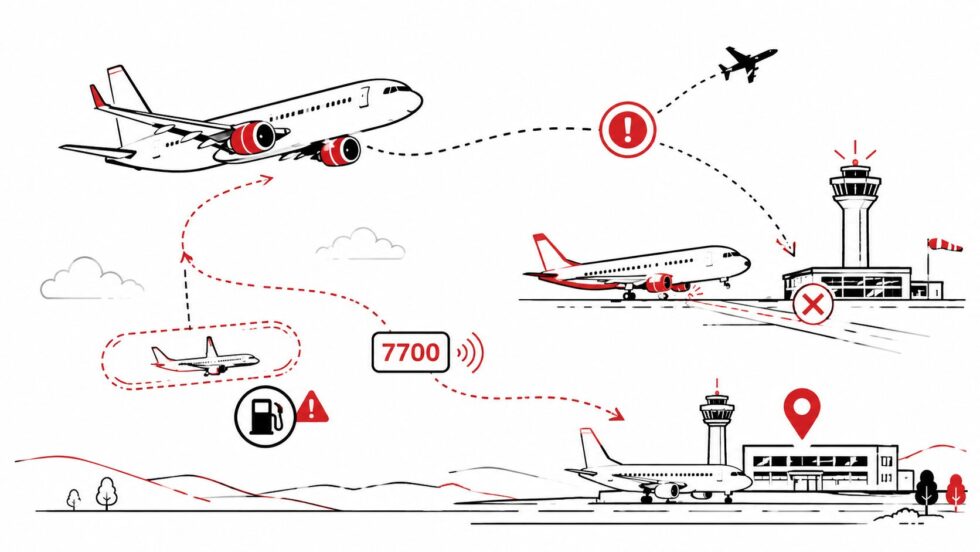
The Ryanair flight was operating from Seville Airport in Spain to Nantes Atlantique Airport in western France on Monday evening, 6 July. Aviation reports say the aircraft, registration EI-EBK, was on approach to Nantes when the crew had to abandon the landing because the runway was blocked. After holding near Nantes, the pilots declared a fuel emergency, selected emergency code 7700 and diverted to Brest Bretagne Airport, where the aircraft landed safely. (AIRLIVE, Flightradar24)
Ryanair FR5448 fuel emergency diversion: what happened on the Seville to Nantes flight
Ryanair flight FR5448 departed Seville for Nantes on the evening of 6 July and was expected to arrive shortly after 19:00 local time. The flight was routine until the final stage of the approach to runway 21 at Nantes. At that point, the airport’s runway was not available because of a separate incident involving an Iberia/Air Nostrum aircraft. (AIRLIVE)
The crew initiated a go-around, climbed away from Nantes and then entered a short holding pattern while air traffic control assessed whether the runway could reopen. When it became clear that Nantes would not be available quickly enough, the Ryanair crew declared a fuel emergency and diverted to Brest. Reports say the aircraft was given priority handling and landed safely after a flight time of about two hours and 40 minutes. (AIRLIVE, Simple Flying)
| Detail | Information reported |
|---|---|
| Flight | Ryanair FR5448 |
| Route | Seville to Nantes |
| Aircraft | Boeing 737-800 / 737-8AS |
| Registration | EI-EBK |
| Emergency code | 7700 |
| Diversion airport | Brest Bretagne Airport |
| Main trigger | Nantes runway blocked |
| Outcome | Aircraft landed safely |
Why Nantes runway was closed after the Iberia/Air Nostrum incident
The disruption at Nantes was linked to Iberia flight IB1222, operated by Air Nostrum, which was due to fly from Nantes to Madrid. French media reported that the aircraft suffered an incident and returned to Nantes, after which airport traffic was interrupted for several hours. (Le Parisien)
AIRLIVE reported that the aircraft was a CRJ-1000 and that debris was found on the runway after the incident. The runway inspection was completed around 22:30, and traffic resumed at about 23:00 local time. (AIRLIVE) For incoming aircraft, the practical problem was immediate. Nantes Atlantique relies on a single main runway for commercial traffic, so a blocked runway meant there was no second landing strip available for scheduled arrivals. That forced controllers to divert or delay flights while ground teams made the runway safe.
Timeline of the Ryanair FR5448 emergency
- Evening, 6 July: Ryanair FR5448 departs Seville for Nantes.
- Shortly after 19:00: the aircraft approaches Nantes.
- Final approach: crew aborts landing because the runway is blocked.
- After go-around: aircraft holds near Nantes.
- Fuel emergency: crew squawks 7700 and diverts to Brest.
- Later that evening: aircraft lands safely at Brest Bretagne Airport.
- Around 22:30: Nantes runway inspection completed.
- Around 23:00: traffic resumes at Nantes. (AIRLIVE, Le Parisien)
What a fuel emergency means and why pilots declare it
A fuel emergency does not mean passengers are automatically in immediate danger or that an aircraft has no fuel left. It means the crew has reached a point where fuel reserves require priority handling from air traffic control. In this case, the issue was not only fuel itself, but the operational chain: a blocked destination runway, extra time in the air, and the need to secure a safe landing at an alternate airport.
By declaring an emergency and selecting code 7700, the pilots made clear that FR5448 needed priority routing. Controllers then directed the aircraft towards Brest, where it could land without waiting for Nantes to reopen. This is exactly why aviation procedures exist: to move an aircraft from uncertainty to a safe, controlled landing.
Passenger disruption at Nantes after the runway closure
The runway closure caused wider disruption at Nantes Atlantique. Reports said incoming flights were diverted and several departures were cancelled or delayed while the airport dealt with the Iberia/Air Nostrum incident and runway inspection. (AIRLIVE, Le Parisien) For passengers, the most important point is that a single incident on the runway can affect many flights, even those operated by different airlines. Ryanair FR5448 was not the aircraft that caused the runway closure, but it became one of the most visible consequences because it was already close to landing when Nantes became unavailable.
What is confirmed and what remains unclear
Confirmed reports show that FR5448 diverted safely to Brest after the runway at Nantes was blocked. Reports also identify the Ryanair aircraft as EI-EBK and link the airport closure to the earlier Iberia/Air Nostrum IB1222 incident. (AIRLIVE, Flightradar24, Le Parisien)
What should not be overstated is the exact fuel quantity on landing. Public reports confirm that the crew declared a fuel emergency, but they do not provide an official Ryanair statement giving the precise amount of fuel remaining. For that reason, the safest wording is that FR5448 “declared a fuel emergency” after the blocked runway and holding period, not that the aircraft was proven to have landed with a specific number of minutes of fuel.
The incident is a clear example of how one runway closure can quickly become a network-wide problem. A regional jet incident on the ground at Nantes led to a blocked runway, diverted arrivals, delayed departures and a Ryanair emergency diversion to Brest.
There were no confirmed injuries reported in the available accounts of the Ryanair flight. The aircraft landed safely, and Nantes later resumed traffic after inspection work. The key aviation lesson is procedural rather than dramatic: when a destination airport suddenly becomes unavailable, pilots must balance holding time, alternate airport distance and fuel reserves quickly. In this case, the decision was to stop waiting, declare the emergency and land at Brest.
Sources used
The article is based on current reports from AIRLIVE, Le Parisien, Flightradar24 flight data pages and aviation media reports published after the 6 July 2026 incident.
Read about the life of Westminster and Pimlico district, London and the world. 24/7 news with fresh and useful updates on culture, business, technology and city life: Who won yesterday match? France beat Paraguay 1-0 to reach World Cup 2026 quarter-finals as Mbappé seals tense victory