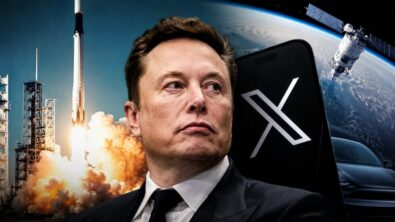
Investors entered Friday’s session with one central question as the SpaceX IPO brought Elon Musk’s rocket and satellite group to the public market in what has been described as the largest stock market debut on record. SpaceX priced its shares at $135 each, raised about $75bn and prepared to trade on Nasdaq under the ticker SPCX, giving the company an implied valuation of roughly $1.77tn, The WP Times reports, citing international financial media.
The flotation turns one of the world’s most closely watched private technology companies into a public market test of investor appetite for space infrastructure, satellite internet and Musk’s wider industrial empire. It also gives ordinary investors a direct market price for SpaceX shares for the first time, after years in which access was largely limited to private funds, secondary transactions and institutional investors. The central issue is no longer whether SpaceX is important, but whether the price attached to that importance can be justified by revenue, profits, cash flow and future growth.
SpaceX IPO: the key numbers behind the world’s biggest listing
The scale of the SpaceX IPO is unusually large even by the standards of recent technology listings. The company sold roughly 555.6mn shares at $135 each, raising about $75bn and placing its valuation close to $1.77tn. That makes the flotation larger than the previous benchmark set by Saudi Aramco and immediately places SpaceX among the most valuable listed companies in the world.
For financial markets, the size of the deal matters because it absorbs a vast amount of capital at once. A listing of this scale does not merely introduce a new stock to the market; it forces funds, banks, brokers, wealth managers and retail investors to decide how much exposure they want to a company that combines aerospace manufacturing, launch services, satellite broadband and long-term ambitions in artificial intelligence-linked infrastructure. The IPO therefore becomes a liquidity event for the whole market, not only for SpaceX.
The key figures are clear:
| Item | Detail |
|---|---|
| Company | SpaceX |
| Exchange | Nasdaq |
| Ticker | SPCX |
| IPO price | $135 per share |
| Shares sold | About 555.6mn |
| Capital raised | About $75bn |
| Implied valuation | About $1.77tn |
| Founder and chief executive | Elon Musk |
| Core businesses | Rockets, spacecraft, Starlink, space infrastructure |
The valuation is the most important number in the transaction. At nearly $1.8tn, SpaceX is not being valued like an experimental aerospace contractor. It is being priced as a global infrastructure and technology platform. That puts pressure on the company to show that Starlink can keep expanding, launch services can remain commercially dominant and long-term projects can eventually produce returns rather than only consume capital.
SpaceX stock price: why $135 is not the same as the real market price
The IPO price of $135 is the price at which shares were allocated in the offering. It is not necessarily the price at which most private investors will be able to buy SpaceX stock once trading begins. The public share price will be set by supply and demand on Nasdaq, and that price can move sharply above or below the IPO level in the first hours of trading.
This distinction matters. Many retail investors search for “SpaceX share price”, “SpaceX stock price” or “SPCX” expecting a simple number. In practice, there are two different prices to understand. The first is the offering price agreed before trading. The second is the live market price after the shares open. In a heavily demanded IPO, the opening trade can be much higher than the offer price, which means late buyers may pay a substantial premium.
There is also the question of volatility. A stock with this level of media attention can attract long-term institutions, passive funds, hedge funds and short-term retail traders at the same time. Those investors do not all behave in the same way. Some may want multi-year exposure to Starlink and space infrastructure. Others may buy for a first-day gain and sell quickly. That mix can make early trading unstable.
For investors, the practical questions are simple:
- Is the opening price close to the $135 IPO level or far above it?
- How much of the first-day move is based on fundamentals?
- How much demand is coming from long-term funds?
- Are retail investors buying because of SpaceX’s business or because of Musk’s name?
- Does the valuation leave room for operational disappointment?
- What happens when lock-up restrictions expire and more shares can be sold?
A strong opening day would not automatically prove that the valuation is sustainable. Equally, early volatility would not necessarily mean the business is weak. The first trading session is a measure of demand, not a full verdict on SpaceX’s long-term economics.
Why Starlink sits at the centre of the SpaceX valuation
The SpaceX story is often told through rockets, Mars and spectacular launches. For investors, however, the more important part of the valuation is likely to be Starlink. Satellite broadband gives SpaceX a recurring-revenue business that is easier to model than one-off launch contracts. It also gives the company a role in global communications, defence, maritime connectivity, aviation and remote broadband access.
That is why the IPO is not simply a bet on space exploration. It is also a bet on whether SpaceX can turn satellite infrastructure into a durable, high-margin global network. If Starlink keeps adding customers, expanding coverage and increasing enterprise and government contracts, it can support a valuation far above that of a traditional launch provider. If growth slows or costs rise, the market may begin to question the premium.
SpaceX’s business can be divided into several financial pillars:
- Starlink subscriptions
Recurring broadband revenue from households, businesses, aircraft, ships, governments and military-linked users. - Commercial launches
Paid satellite launches for private companies, telecoms groups and international customers. - Government and NASA contracts
High-value work linked to crewed missions, cargo delivery, security programmes and national space priorities. - Starship development
A long-term programme with potentially enormous strategic value, but also high technical and financial risk. - Space infrastructure
A broader category that may include communications, logistics, data services and orbital operations.
The attraction for investors is that SpaceX is not dependent on one narrow product. The risk is that many of its most ambitious programmes require continuous investment. Public markets may be patient with visionary capital spending, but only if the company can show credible paths to scale, margin improvement and eventual returns.
Elon Musk’s net worth: why the IPO changes the calculation
The SpaceX listing also transforms the public calculation of Elon Musk’s wealth. A public market valuation gives investors and wealth trackers a more visible benchmark for his SpaceX stake. If the company trades strongly, Musk could move closer to becoming the world’s first trillionaire on paper. That phrase is likely to dominate headlines, but the financial reality is more complex.
Musk’s wealth is mainly tied to equity. It is not the same as cash. The market value of his holdings can rise or fall with the share price, and a large paper gain can disappear if investors reassess the company’s valuation. The IPO therefore creates a more transparent price for one of his most valuable assets, but it also subjects that asset to daily market scrutiny.
For SpaceX shareholders, Musk is both an asset and a risk. His involvement has helped the company attract capital, talent, public attention and government relevance. At the same time, his public profile, political comments, management style and multiple business commitments can create governance concerns. Investors buying SPCX are not only buying rockets and satellites. They are also buying exposure to Musk’s leadership.
The main Musk-related points for investors are:
- His SpaceX stake becomes easier to value after the listing.
- His net worth may rise sharply if SPCX trades above the IPO price.
- His wealth remains highly sensitive to market movements.
- His role can support investor confidence but also add volatility.
- Corporate governance will be watched more closely now that SpaceX is public.
The serious financial question is not whether Musk reaches a symbolic wealth milestone. It is whether SpaceX can deliver the operating performance required to support such a large valuation.
What the SpaceX IPO means for the wider market
A $75bn IPO is not an isolated event. It affects market liquidity, technology valuations and investor behaviour. When a listing absorbs that much capital, some investors may need to sell other assets to make room. That can influence technology stocks, aerospace shares, funds with pre-IPO exposure and companies preparing their own listings.
The IPO also sets a new benchmark for late-stage private technology companies. If SpaceX can list successfully at this valuation, other large private groups may see an opportunity to test the public market. That matters for companies in artificial intelligence, defence technology, satellite communications and advanced infrastructure. A strong SpaceX debut could reopen the IPO window for mega-cap private technology groups. A weak debut could do the opposite.
For the market, the listing creates several consequences:
| Market area | Possible effect |
| Technology IPOs | May encourage other large private companies to list |
| Retail investing | Could increase speculative demand for high-profile names |
| Passive funds | Index inclusion may eventually force buying by some funds |
| Aerospace sector | Raises the visibility of commercial space companies |
| Tesla | Investors may compare Musk-linked assets more directly |
| Global funds | Portfolio managers may need to decide whether SPCX is a core holding |
| Risk appetite | The debut becomes a test of demand for expensive growth stocks |
The timing is also important. Public markets have been selective about large growth companies, particularly those with heavy investment needs. SpaceX is entering the market with extraordinary brand power, but also with a valuation that requires sustained confidence. That combination can produce strong demand and high volatility at the same time.
The investor risks behind the SpaceX stock debut
The largest IPO on record is not automatically a low-risk investment. SpaceX has technological advantages, but its business model is capital intensive. Rockets, satellites, launch facilities, ground stations and next-generation spacecraft all require large and continuous spending. The company may have powerful growth prospects, but those prospects need to be converted into durable earnings.
The valuation is the first risk. At roughly $1.77tn, the company must deliver exceptional growth to justify the price. If Starlink customer growth slows, if margins disappoint, if launch competition increases or if technical setbacks hit Starship, the share price could come under pressure. Public investors tend to be less patient than private backers when expectations are missed.
The second risk is regulatory and geopolitical. SpaceX operates in areas linked to national security, communications infrastructure, spectrum rights, export controls and government contracts. That gives the company strategic importance, but it also exposes it to political pressure. Starlink’s role in conflict zones has already shown that satellite communications can become geopolitically sensitive.
The third risk is concentration. SpaceX is closely associated with Musk. That has helped build the company’s identity, but it can also make the stock more exposed to one individual’s decisions, statements and reputation. For institutional investors, this may become a governance issue.
Key risks include:
- Very high starting valuation.
- Heavy capital expenditure requirements.
- Technical risk in Starship and launch systems.
- Dependence on Starlink growth.
- Exposure to government and defence contracts.
- Regulatory scrutiny over satellites and spectrum.
- Geopolitical sensitivity of communications networks.
- Musk-related governance and reputational risk.
- Possible first-day volatility.
- Pressure once lock-up periods expire.
None of these risks means SpaceX is a weak company. They mean investors must separate the quality of the business from the price of the stock. A great company can still be an expensive investment if expectations are already too high.
Should investors buy SpaceX stock after the IPO?
The answer depends on price, time horizon and risk tolerance. Investors who believe SpaceX will dominate satellite internet, reusable launch services and future space infrastructure may view the IPO as a rare chance to buy into a strategic technology platform. Investors focused on valuation discipline may prefer to wait until the first trading frenzy settles and more financial data becomes available.
A cautious investor should not treat the IPO price as a guarantee of value. The real test begins after the listing, when SpaceX must report results, explain its margins, disclose risks and face public-market scrutiny every quarter. That is a major change for a company that has spent most of its life in private markets.
Before buying SPCX, investors should ask:
- What is the current market price compared with the $135 IPO price?
- How much revenue comes from Starlink?
- Is SpaceX profitable on a consolidated basis?
- How much cash is required for Starship?
- What are the company’s debt and capital expenditure needs?
- How dependent is the valuation on Musk’s personal brand?
- Can the investor tolerate a sharp fall after the first-day excitement?
- Is direct exposure preferable to indirect exposure through funds?
For UK and European investors, currency risk also matters. SPCX trades in dollars. That means a buyer outside the US is exposed not only to the SpaceX share price but also to movements in sterling, the euro or the Swiss franc against the dollar. In a stock this volatile, currency may not be the main risk, but it should not be ignored.
What happens next for SpaceX, SPCX and Elon Musk
The first day of trading will produce headlines about the opening price, Musk’s wealth and whether the stock jumps or falls. But the more important period will come after the initial excitement. SpaceX will need to show how it intends to balance growth, capital spending and shareholder expectations. Public investors will want clearer evidence of how Starlink performs, how profitable launches are and how much money future projects consume.
The market will also watch whether SpaceX becomes a core holding for major funds. If the stock is added to important indices, passive buying could support demand. If early investors sell aggressively, the stock could face pressure. The scale of the IPO means both outcomes matter beyond SpaceX itself.
For Musk, the listing creates a new public benchmark for his most ambitious company. For investors, it creates direct exposure to a business that sits at the intersection of space, telecoms, defence and advanced technology. For financial markets, it tests whether investors are still willing to assign trillion-dollar valuations to companies whose largest opportunities remain partly in the future.
The SpaceX IPO is therefore not simply a celebration of a successful listing. It is the beginning of a public examination. The company now has to prove that its technology, market position and revenue growth can support one of the largest valuations ever attached to a newly listed company.
Read about the life of Westminster and Pimlico district, London and the world. 24/7 news with fresh and useful updates on culture, business, technology and city life: Best UK Cashback Cards 2026 For London Commuters And Travel: Which Cards Actually Save Money