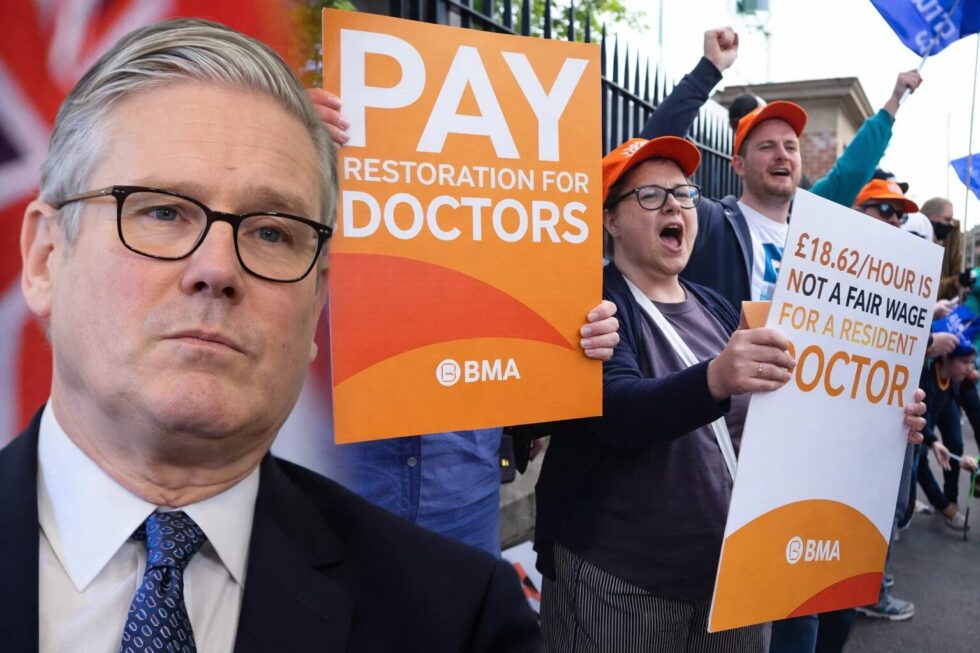
Prime Minister Keir Starmer took his place at the dispatch box for the final Prime Minister’s Questions of the year, facing a barrage of challenges ranging from industrial action in the healthcare sector to the UK’s evolving post-Brexit relationship. The session coincided with the start of a five-day strike by resident doctors in England, who recently turned down the government's latest pay proposal. Despite the significant disruption to medical services, Health Secretary Wes Streeting emphasized that emergency care remains a priority and urged the public to seek hospital help if necessary. Streeting admitted that the industrial action carries an "opportunity cost" of approximately £500 million—funds that otherwise could have been directed toward frontline improvements, reports The WP Times with reference to The Guardian.
On the diplomatic front, the UK and the European Union have reached a milestone in energy cooperation. Cabinet Office Minister Nick Thomas-Symonds and EU Trade Commissioner Maroš Šefčovič confirmed the conclusion of exploratory talks regarding the UK’s participation in the EU's internal electricity market. This common understanding aims to establish a framework that could eventually lower energy prices by improving access to power from member states like France. While Northern Ireland has maintained its position in the all-island market, Great Britain has operated as a "third country" since Brexit. Detailed letters outlining the next steps for this integration are expected to be published shortly.
Domestic political shifts also made headlines as Jamie Driscoll, the former Labour mayor of North of Tyne, officially defected to the Green Party. Driscoll, often characterized as a pragmatic left-winger, cited a need for "bold politics" and expressed disillusionment with the current state of British governance. His departure follows a public rift with the Labour leadership after he was blocked from a regional shortlist. Meanwhile, the trade union landscape saw a significant shift with Andrea Egan being elected as General Secretary of Unison, defeating incumbent Christina McAnea. Egan, a vocal critic of Starmer’s leadership, signaled a more confrontational era for the UK’s largest union.
In the House of Commons, Wes Streeting faced intense scrutiny over the assisted dying bill. The Health Secretary declined to provide categorical assurances to MPs that it is currently "safe" to pass the legislation, citing deep concerns over the current state of palliative care. He argued that without high-quality end-of-life services, patients might feel pressured into an assisted death due to a lack of viable alternatives. Streeting, who voted against the bill at its second reading, stressed that while the government remains officially neutral, the health service is not yet in a position to guarantee the necessary safeguards for such a monumental legal change.
Read about the life of Westminster and Pimlico district, London and the world. 24/7 news with fresh and useful updates on culture, business, technology and city life: What changes in the UK Settlement and ILR reform, and why the 10-year rule matters