Tesla has confirmed it will discontinue production of its Model S and Model X vehicles from next quarter, signalling a decisive strategic shift away from its long-established electric car business towards robotics and artificial intelligence. The move was announced by chief executive Elon Musk during Tesla’s quarterly earnings call on Wednesday, as the company reported falling vehicle sales while accelerating its focus on the humanoid robot project Optimus. This was reported by The WP Times, citing The Guardian.
“It’s time to basically bring the Model S and X programs to an end,” Musk told investors. “We expect to wind down S and X production next quarter.”
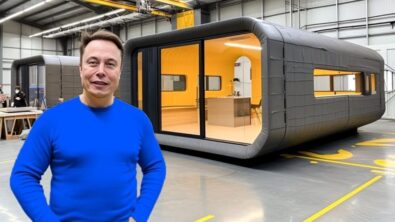
According to Elon Musk, Tesla’s Fremont factory in California, where the Model S and Model X are currently produced, will be repurposed to support manufacturing of the Optimus humanoid robot. Production of the two vehicles is expected to be wound down during the next quarter, placing the effective end of Model S and X output in Q2 2026. Tesla has said it plans to begin Optimus production before the end of 2026, with consumer sales targeted for 2027.
End of an era for Tesla’s flagship models
The Model S, first launched in 2012, played a central role in establishing Tesla as a global force in the electric vehicle market. Alongside the Model X SUV, it represented the company’s premium offering and helped redefine expectations around performance, range and software-driven design in electric cars. However, demand for both models has weakened in recent years as competition intensified and consumer interest shifted towards lower-priced alternatives. Tesla has increasingly prioritised the Model 3 and Model Y, which account for the majority of its global deliveries. The discontinuation of Model S and X marks the clearest indication yet that Tesla is prepared to scale back its legacy products in favour of emerging technologies.
Earnings beat expectations despite revenue decline
Tesla’s announcement came alongside the release of its latest financial results. The company reported fourth-quarter earnings per share of $0.50, beating market expectations of $0.45. Quarterly revenue reached $24.9bn, narrowly exceeding analysts’ forecasts. Despite this, Tesla posted its first-ever annual decline in total revenue, down 3% year-on-year. Automotive revenue fell by 11% across 2025, reflecting falling demand for electric vehicles, particularly in Europe.
Earlier this month, Tesla revealed that vehicle deliveries in the fourth quarter dropped by 16% compared with the same period last year. In its earnings report, the company described 2025 as a year of transition, moving “from a hardware-centric business to a physical AI company”.
Robots and AI take centre stage
Musk has increasingly framed Tesla’s future around robotics, autonomous systems and artificial intelligence. He has repeatedly described Optimus as the company’s most important long-term product and claimed it could eventually surpass the economic value of Tesla’s car business.
Tesla said it plans to begin producing Optimus robots before the end of 2026, with consumer sales expected to follow in 2027. The company also confirmed a $2bn investment in xAI, Musk’s artificial intelligence firm. Chief financial officer Vaibhav Taneja told analysts that Tesla’s capital expenditure would total around $20bn, a figure significantly higher than many previous estimates and largely driven by investment in AI and robotics infrastructure.
Growing pressure from global rivals
Tesla’s pivot comes amid mounting pressure from competitors. China’s BYD overtook Tesla in 2025 as the world’s largest electric car manufacturer, reporting sales growth of 28% driven by cheaper models across multiple markets. Some of Tesla’s newer vehicle projects have also struggled. Sales of the Cybertruck fell by 48% last year, according to Kelley Blue Book, despite Musk previously calling it “the best vehicle Tesla has ever made”.
While Tesla’s share price rebounded sharply in late 2025 amid investor enthusiasm for AI-linked companies, the decision to end Model S and X production underlines how decisively the company is reshaping its priorities — moving away from established electric cars towards unproven but potentially transformative technologies.
Read about the life of Westminster and Pimlico district, London and the world. 24/7 news with fresh and useful updates on culture, business, technology and city life: Tesla Glide: Could the “levitating sneakers” really be Tesla’s next breakthrough — or just a myth