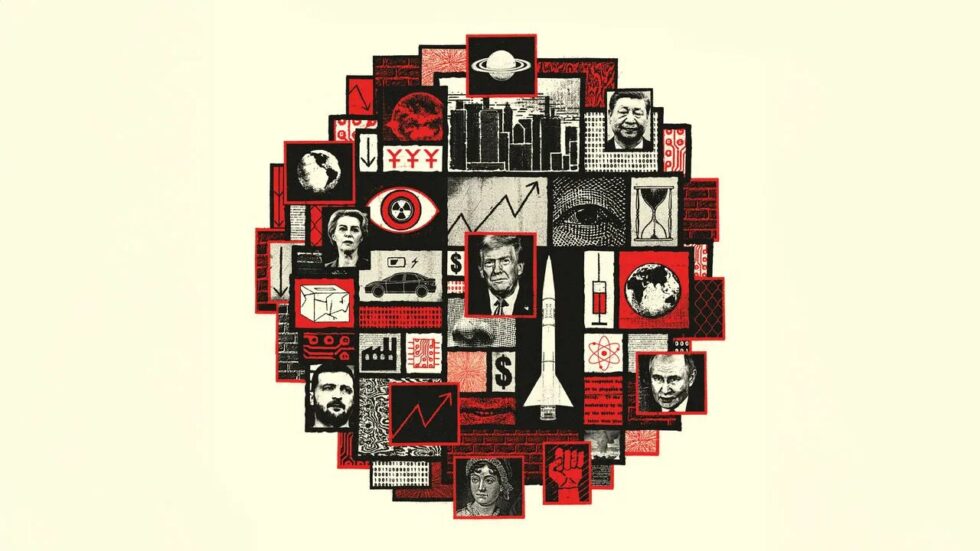
The annual forecast "The World Ahead 2026" from the British magazine The Economist, whose cover was published in November 2025, is presented as a complex visual puzzle that condenses the ten defining global trends of the coming year. The illustration is instantly eye-catching due to its strong dual colour scheme of red and blue, signalling conflict and polarization. Experts interpret the dense iconography – from military equipment like tanks and drones to symbols of economic decline and climate change – as a warning of a multipolar world characterized by escalation and technological disruption.
The focus is on the depiction of Ukrainian President Volodymyr Zelenskyy, positioned with binoculars amidst military hardware. This is interpreted as a metaphor for the necessity of constant crisis observation and the lack of predictability of global events in 2026. The decoding of these symbols offers governments and businesses critical insight into the risk areas of the coming year, reports The WP Times with reference to the economist.
The Signs of Confrontation: Geopolitics and the Breakdown of Old Orders
The The Economist cover stages the global power play by separating four influential leaders – Trump, Putin, Xi, and Netanyahu – with crossed swords. This visualizes the deepening and persistent global confrontation and the decline of multilateral cooperation.
- Continuing Wars: The forecast anticipates the continuation of military conflicts in Ukraine, Sudan, and Myanmar. The military symbols shown emphasize that there are no signs of immediate de-escalation in these so-called "hot zones."
- Expansion of Conflict Zones: The line between war and peace is blurred by the expectation of "grey provocations" – actions below the threshold of open warfare – particularly in strategic areas like the Arctic and the South China Sea. Additionally, new conflict arenas are opening up in domains such as outer space, the deep seabed, and cyberspace.
- Rise of Flexible Alliances: In response to the weakening of traditional institutions, the importance of "Coalitions of Interest" is highlighted. These flexible, ad-hoc alliances will be formed to tackle specific challenges in defence, climate, and trade.
Western Turmoil: US Protectionism and Europe's Security Dilemma
The domestic situation in the US is represented by symbols such as the 250-year anniversary cake and the fist breaking out in handcuffs. This refers to the deep political division and turmoil surrounding the national celebration.
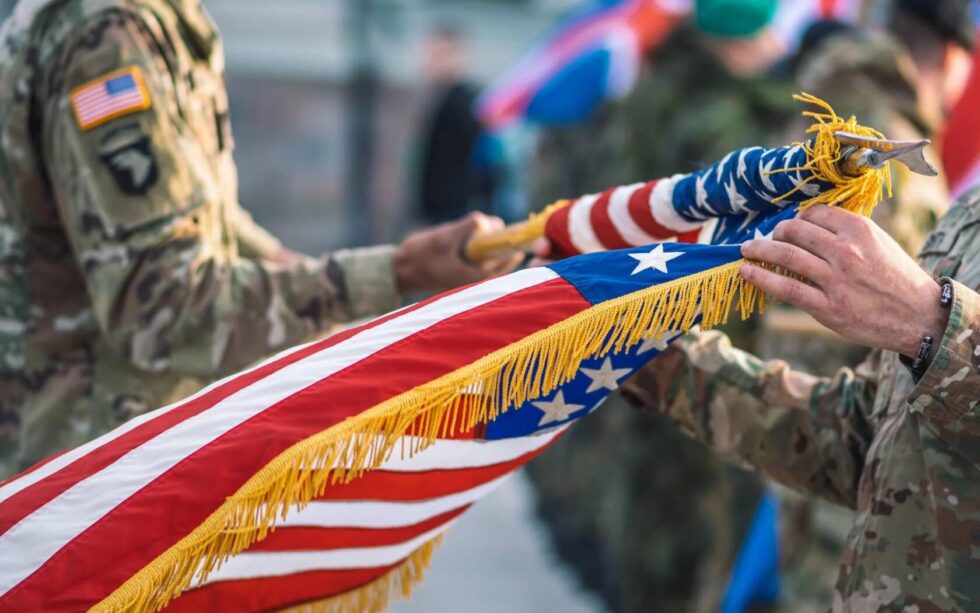
- Risk of US Isolationism: Analysts anticipate a hardening of the "America First" policy, based on protectionism and unilateral decisions. The broken dollar sign and the falling graph on the cover warn of the economic risks of this policy for global growth and the stability of bond markets.
- European Defence Dilemma: European states are facing the imperative to significantly increase their defence spending to address the new security threats. This must be done without destabilizing national finances. An additional danger is the expected rise in popularity of right-wing populist movements in Europe, which could undermine the continent's political consensus.
Technological and Medical Disruption: AI, Climate, and the End of a Monopoly
The cover includes forward-looking symbols that hint at profound technological and scientific changes.
- Double-Edged AI: The image of the brain with microchips and an army of robots symbolizes the rapid progress of Artificial Intelligence (AI). At the same time, experts warn of the risk of unemployment among university graduates due to automation, as well as ethical questions regarding the control of powerful AI systems.
- Climate Change and Power Shift: The melting ice cubes next to solar panels illustrate the ongoing climate crisis and the low probability of reaching the 1.5C target. Interestingly, the magazine sees the Global South (Asia, Africa, Latin America) as the driving force for investment in clean energy and new environmental standards.
- Medical Revolution: A significant medical forecast concerns the pharmaceutical market: The development of new, more affordable and effective weight-loss drugs is anticipated, which could end the Ozempic monopoly and make obesity treatment mass-market, enabling wider access.
The New World Order: China's Growing Influence and Politicized Sports
The isolationist tendency of the US creates an opportunity for China to expand its diplomatic and economic initiatives. The People's Republic will intensify cooperation with the Global South, which could lead to the formation of new, rival power coalitions. Furthermore, sports are becoming a stage for geopolitical tensions: The 2026 FIFA World Cup in the US, Canada, and Mexico is likely to be tainted by political protests and tensions between the host nations.
The world in 2026 presents itself as a complex web of conflicts, political ruptures, and disruptive innovations. These developments necessitate a critical re-evaluation of international relations and a high degree of adaptability.
Read about the life of Westminster and Pimlico district, London and the world. 24/7 news with fresh and useful updates on culture, business, technology and city life: Full Flight Cancellation: Why Brussels Airport Shuts Down on November 26