Toy Story 5 release date searches surged across Britain, the United States and European entertainment platforms after Disney officially confirmed that global music superstar Bad Bunny has joined Pixar’s long-awaited animated sequel, adding one of the world’s most commercially powerful artists to a franchise that already spans more than three decades of cinema history. Disney announced that the new film will arrive in cinemas on 19 June 2026, while fresh production details revealed a darker, more emotional and technologically focused storyline built around Woody, Buzz Lightyear, Jessie and a generation of children growing up attached to digital screens rather than traditional toys, The WP Times reports as Pixar pushes one of its most valuable franchises into a new era.
The announcement immediately accelerated worldwide interest surrounding the toy story 5 release date after Pixar revealed a far more ambitious and emotionally layered direction for the franchise than many audiences expected. Alongside confirming the return of Woody, Buzz Lightyear and Jessie, Disney unveiled major narrative changes including Woody’s visibly aged appearance, Jessie’s expanded emotional role, the arrival of AI-inspired technology themes and a new wave of characters voiced by Bad Bunny, Greta Lee, Conan O'Brien and Alan Cumming. Unlike earlier instalments built primarily around nostalgia, friendship and childhood innocence, Toy Story 5 appears positioned as Pixar’s most contemporary chapter yet — a film designed to confront the realities of modern childhood shaped by tablets, digital dependency, online communication and shrinking attention spans, while still preserving the emotional DNA that transformed the original 1995 release into one of the most influential animated films in cinema history.
Pixar’s fifth entry into the franchise also arrives during one of the most uncertain periods the animation industry has faced in decades. Streaming services, mobile gaming, short-form video platforms and algorithm-driven digital entertainment increasingly dominate younger audiences worldwide, forcing major studios to rethink how family storytelling functions in an era where physical toys now compete directly with screens for emotional attention. The cultural anxiety surrounding that transformation sits at the very centre of Toy Story 5, giving the sequel a noticeably more reflective and socially relevant tone than earlier films.
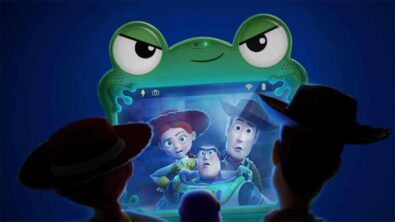
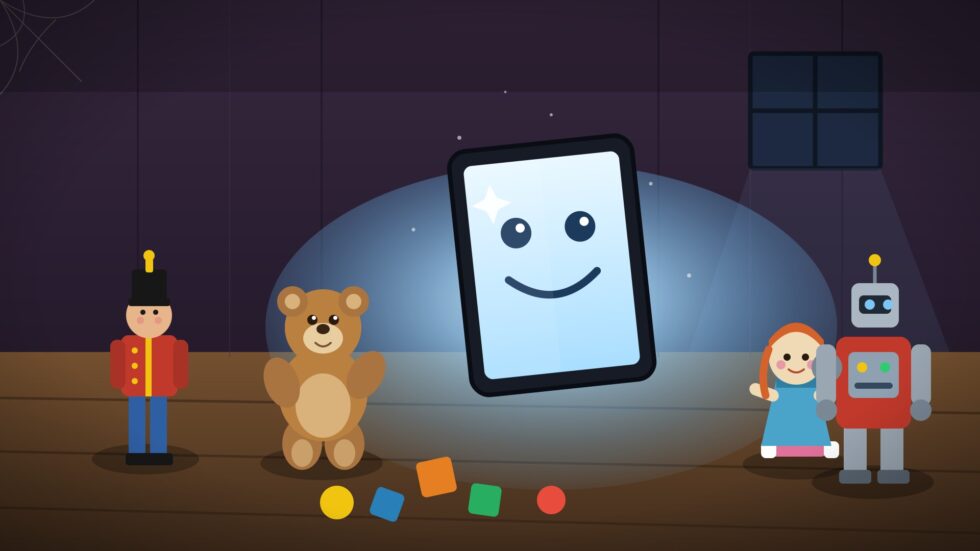
Disney executives confirmed that much of the story revolves around Bonnie’s growing attachment to a tablet-like digital companion named Lilypad, voiced by Greta Lee. The device becomes more than a simple character inside the narrative — it functions as a symbolic representation of modern childhood itself, forcing Woody, Buzz and Jessie to confront a difficult question: do traditional toys still hold emotional value for children growing up inside permanently connected digital lives? Pixar filmmakers insist the film is not intended as a simplistic attack on technology or screens. Instead, the studio appears focused on emotional realism, generational change and the uncomfortable coexistence between imagination-driven play and the increasingly dominant digital ecosystems shaping modern family life.
Toy Story 5 release date confirmed as Pixar prepares major London and UK cinema launch
Disney officially confirmed that Toy Story 5 will release in cinemas across Britain and worldwide on 19 June 2026, positioning the sequel as one of the studio’s biggest UK family film launches of the summer and one of the most commercially important animated releases expected to hit London cinemas this year. The announcement immediately intensified online searches around the toy story 5 release date across Britain, particularly after Pixar unveiled darker emotional themes, aging versions of classic characters and a storyline directly connected to modern children growing up surrounded by tablets, apps and digital entertainment rather than traditional toys.
The June release window is strategically critical for Disney and Pixar because UK school holiday traffic historically drives enormous family box office numbers across London, Manchester, Birmingham and other major British cinema markets. Industry analysts expect Toy Story 5 to become one of the dominant family releases of the British summer season, especially as cinema chains across the UK continue fighting to rebuild audience habits after years of streaming disruption and declining theatrical attendance among younger viewers.
Pixar also appears determined to restore the scale and emotional event status that once defined major animated cinema launches in Britain during the late 1990s and early 2000s, when Toy Story films became multi-generational cultural events rather than simply children’s releases. In London particularly, the franchise still carries unusually strong nostalgic weight among audiences who originally watched Woody and Buzz Lightyear during the first wave of Pixar’s global rise.
The fifth film reunites the core cast that transformed the franchise into one of the most influential entertainment properties in modern cinema history. Tom Hanks returns as Woody, Tim Allen reprises Buzz Lightyear and Joan Cusack once again voices Jessie, while Pixar introduces a broader and noticeably more emotionally reflective tone compared with earlier instalments.
However, Disney executives confirmed that the emotional structure of Toy Story 5 differs sharply from previous chapters.
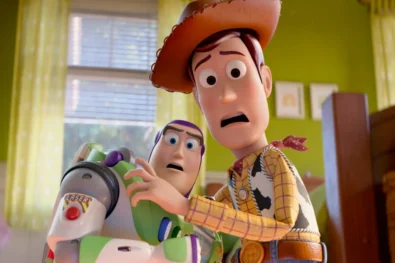
Jessie reportedly becomes far more central to the story, while Woody enters the film physically worn down, emotionally older and visibly changed after years spent outside the familiar structure of Bonnie’s bedroom. Early footage shown during promotional previews revealed a visibly aging Woody with a balding patch beneath his cowboy hat — a detail that rapidly became one of the internet’s most discussed visual moments after the trailer release.
Pixar director Andrew Stanton explained during studio presentations that Woody’s altered appearance intentionally reflects decades of emotional exhaustion, sacrifice and responsibility accumulated through years spent protecting and rescuing other toys. According to Stanton, Woody is no longer obsessively focused on maintaining perfection for one child and instead exists more freely — and more realistically — inside a wider toy ecosystem where purpose, identity and emotional relevance have become increasingly uncertain.
That thematic direction marks one of the biggest tonal shifts the franchise has attempted since the original 1995 film. Rather than relying purely on nostalgia, Toy Story 5 appears positioned as a more reflective story about aging, technological change and the emotional displacement facing traditional toys inside a generation increasingly shaped by screens, online communication and digital entertainment culture.
Pixar insiders also suggested the sequel will place stronger emphasis on emotional realism and modern childhood behaviour than any previous Toy Story film, giving the franchise a more contemporary relevance for British families navigating similar questions around screen time, tablets and changing patterns of imagination-driven play.
Confirmed Toy Story 5 details
| Topic | Confirmed information |
|---|---|
| Release date | 19 June 2026 |
| Studio | Disney and Pixar |
| Returning stars | Tom Hanks, Tim Allen, Joan Cusack |
| New cast | Bad Bunny, Greta Lee, Alan Cumming, Conan O’Brien |
| Main technology theme | Tablets and digital childhood |
| Central conflict | Toys versus changing play habits |
| Main child character | Bonnie |
| New digital character | Lilypad |
Pixar also confirmed that the latest trailer introduces more technologically advanced Buzz Lightyear units, new digital toy systems and a darker visual atmosphere compared with earlier entries in the franchise.
Bad Bunny joins Toy Story 5 cast as forgotten toy character
Bad Bunny joins the sequel as Pizza With Sunglasses, a mysterious forgotten toy living in an abandoned backyard shed alongside other discarded characters.
Disney described the character as “effortlessly cool and mysterious”, while production materials revealed that Pizza With Sunglasses belongs to a hidden community of toys effectively abandoned by children and isolated from mainstream toy society.
The role represents another major Hollywood expansion for Bad Bunny, whose entertainment career now stretches far beyond music.
The Puerto Rican artist — born Benito Antonio Martínez Ocasio — already dominates streaming platforms globally and recently headlined the Super Bowl halftime show. His crossover into mainstream film projects has accelerated rapidly over the past several years.
He previously appeared alongside Brad Pitt in Bullet Train, worked with Austin Butler and Zoë Kravitz in crime thriller projects and recently secured his first major lead acting role in the upcoming film Porto Rico opposite Javier Bardem and Edward Norton.
Disney’s decision to cast him reflects broader entertainment industry trends where globally recognised musicians increasingly function as multinational commercial brands capable of attracting younger streaming-era audiences to traditional theatrical releases.
Bad Bunny’s involvement immediately triggered major online growth for searches connected to toy story 5 release date, particularly among younger audiences following both music culture and franchise cinema.
New voice cast joining Toy Story 5
- Bad Bunny — Pizza With Sunglasses
- Greta Lee — Lilypad
- Alan Cumming — darker Bullseye variant
- Conan O’Brien — Smarty Pants
- Craig Robinson — Atlas
- Shelby Rabara — Snappy
Pixar executives stated that voice casting focused heavily on recognisable vocal textures and distinctive personalities capable of standing apart within crowded ensemble scenes.
Pixar explores technology, screens and modern childhood anxiety
One of the most significant developments surrounding Toy Story 5 involves Pixar directly addressing the impact of technology on childhood imagination.
The franchise historically focused on emotional abandonment, friendship and loyalty between toys and children. The new film instead examines how screens increasingly dominate the emotional and psychological attention once occupied by traditional play.
Bonnie, now older than in previous films, spends much of her time interacting with Lilypad — a tablet-style digital assistant capable of messaging, gaming and online communication.
From the perspective of the toys, Lilypad initially appears threatening because she rapidly absorbs Bonnie’s attention.
However, Pixar filmmakers repeatedly emphasised that the digital device is not written as a conventional villain.
Director McKenna Harris explained that Pixar intentionally avoided simplistic anti-device messaging because modern technology is already permanently integrated into contemporary childhood experiences.
Instead, the story focuses on adaptation.
Woody, Jessie and Buzz must learn whether imagination connected to physical toys can survive alongside a world dominated by apps, tablets and digital interaction.
The emotional conflict therefore becomes far more nuanced than previous franchise instalments.
Core themes explored in Toy Story 5
| Theme | Explanation |
|---|---|
| Digital distraction | Children spending more time on screens |
| Aging | Woody physically showing wear and exhaustion |
| Emotional abandonment | Toys losing relevance |
| Technology adaptation | Learning coexistence with devices |
| Friendship | Rebuilding emotional connection |
| Modern childhood | Online communication replacing play |
| Identity | Toys redefining purpose |
| Imagination | Creativity competing against screens |
Pixar executives stated that Bonnie’s imagination sequences remain visually important throughout the film and deliberately contrast the colder digital atmosphere associated with Lilypad and technology.
Woody’s transformation becomes one of Pixar’s darkest emotional arcs
Pixar confirmed that Woody’s appearance in Toy Story 5 intentionally reflects physical aging and emotional fatigue accumulated across the franchise timeline.
The cowboy toy now appears slightly heavier, more weathered and partially bald beneath his hat.
Director Andrew Stanton explained that Woody’s bald spot symbolises years spent prioritising the survival and wellbeing of other toys rather than himself.
That concept reportedly emerged during creative development discussions focused on what realistic aging might look like for a toy existing for decades.
The change represents one of the franchise’s boldest visual evolutions.
Previous films acknowledged emotional growth and abandonment, but Toy Story 5 appears prepared to visualise deterioration physically as well.
Pixar filmmakers said Woody no longer defines himself purely through service to one child. Instead, he now exists within a broader toy ecosystem where identity and purpose feel increasingly uncertain.
That emotional shift may become central to the sequel’s mature tone.
What changed about Woody in Toy Story 5?
- Balding patch beneath cowboy hat
- Slight weight gain
- More relaxed personality
- Red poncho added to costume
- Greater emotional distance from Bonnie
- Older visual appearance
- More reflective attitude toward purpose
Pixar executives also confirmed that Woody’s relationship with Jessie becomes increasingly important as the franchise evolves beyond its earlier emotional structures.
Jessie emerges as emotional centre of the new story
Jessie reportedly becomes one of the film’s strongest emotional anchors. Pixar confirmed that the cowgirl toy returns to the house once owned by Emily — the child who abandoned her in Toy Story 2.
However, Emily no longer lives there.
Instead, a young girl named Blaze occupies the home and reconnects Jessie emotionally to memories of loss, replacement and childhood attachment. Filmmakers described Jessie’s storyline as deeply emotional because it forces her to revisit unresolved feelings connected to abandonment. Blaze herself also became technologically important for Pixar’s animation department. Production teams revealed that her highly detailed curly hair required entirely new rendering systems capable of producing realistic movement, lighting interaction and texture complexity.According to Pixar visual effects supervisors, the technology developed for Blaze will likely influence future animated productions across the studio.
Randy Newman returns as Pixar revives the emotional sound of Toy Story
Pixar additionally confirmed that legendary composer Randy Newman returns to score Toy Story 5, bringing back one of the franchise’s most emotionally recognisable creative figures at a time when Disney appears determined to reconnect the fifth film with the atmosphere, warmth and emotional identity that shaped earlier instalments. Newman’s music has been woven into the DNA of the series since the original Toy Story premiered in 1995, and executives inside Pixar reportedly viewed his return as essential while developing a sequel that balances nostalgia, aging, modern technology and emotional uncertainty around Woody, Jessie and Buzz Lightyear.
Newman composed the scores and songs for previous Toy Story films, including some of Pixar’s most iconic musical moments such as “You’ve Got a Friend in Me”, which evolved far beyond a soundtrack piece and effectively became one of the defining emotional signatures of modern animation cinema. Across multiple sequels, Newman’s orchestral arrangements helped establish the emotional rhythm of the franchise — shifting between childhood wonder, loneliness, fear of abandonment and bittersweet maturity without overwhelming the story itself.
Director Andrew Stanton said during Pixar preview discussions that he considered himself “Team Randy” from the very beginning of the original film’s production and praised the composer’s unusual ability to combine warmth, humour and emotional melancholy inside the same musical structure. Stanton explained that Newman’s work avoids sounding overly sentimental while still carrying emotional weight, something Pixar considered particularly important for Toy Story 5because the new film explores more mature themes surrounding aging, relevance and technology replacing traditional childhood play.
Pixar executives also suggested that Newman’s score becomes larger, more cinematic and visually expansive in the fifth film, especially during Western-inspired sequences involving Woody and Jessie. Several production insiders described moments featuring sweeping orchestral arrangements tied to desert landscapes, abandoned toy environments and emotionally reflective scenes connected to Woody’s evolving identity. That tonal direction reportedly gives parts of the sequel a more reflective atmosphere compared with the faster and more comedic pacing associated with earlier instalments.
The emotional importance of Newman’s return extends beyond music alone. For many audiences who grew up with the franchise during the late 1990s and early 2000s, the soundtrack itself functions almost like emotional memory architecture connected to childhood. Pixar appears fully aware that hearing Newman’s musical style again immediately reconnects older viewers with earlier emotional experiences associated with Andy, Woody, Buzz and the original films.
Pixar producer Lindsay Collins hinted that Newman was given opportunities to create “bigger” musical moments than before, including broader orchestral cues inspired by classic American Western cinema. That direction reportedly aligns with the sequel’s more mature visual identity and Woody’s evolving role as an older, more weathered toy existing in a changing world increasingly dominated by screens and digital devices rather than imagination-driven physical play.
The studio additionally confirmed that Newman worked closely with filmmakers while scenes were still evolving visually, allowing the score to shape emotional pacing during important sequences involving Jessie’s return to Emily’s former house, Bonnie’s growing dependence on technology and Woody’s reflections on purpose after years outside traditional ownership structures.
Industry analysts also note that Newman’s return may prove commercially important for Disney because nostalgia remains one of Pixar’s strongest audience retention tools. In an era where streaming content competes aggressively for attention, instantly recognisable musical identity can significantly strengthen emotional audience attachment before release.
For Pixar itself, the decision reinforces the idea that Toy Story 5 is not attempting to abandon the emotional foundations of the earlier films despite introducing modern technology themes and more contemporary storytelling elements. Instead, the studio appears focused on combining old emotional language with newer anxieties surrounding digital childhood, loneliness and changing social behaviour.
Questions audiences are asking about Toy Story 5
When is the Toy Story 5 release date?
Disney confirmed that Toy Story 5 will release in cinemas worldwide on 19 June 2026, positioning the sequel as one of Pixar’s biggest theatrical launches in years.
Who does Bad Bunny play in Toy Story 5?
Bad Bunny voices Pizza With Sunglasses, a mysterious forgotten toy living in an abandoned backyard shed alongside other discarded characters.
Is Woody older in Toy Story 5?
Yes. Pixar confirmed Woody appears visibly older, slightly heavier and partially bald beneath his cowboy hat, symbolising years of emotional exhaustion and physical wear.
Is Lilypad the villain in Toy Story 5?
Pixar filmmakers said Lilypad is not technically a villain. Instead, the tablet-like device represents changing childhood behaviour, modern technology and the growing dominance of screens in children’s daily lives.
Does Buzz Lightyear return?
Yes. Tim Allen reprises his role as Buzz Lightyear alongside Tom Hanks as Woody and Joan Cusack as Jessie.
Why is Toy Story 5 focusing on tablets and screens?
Pixar said the sequel explores how modern children increasingly interact with technology, online communication and digital entertainment instead of traditional physical toys and imaginative play.
Will Randy Newman create new songs for Toy Story 5?
Pixar confirmed Randy Newman composed new music for the film, although Disney has not yet fully revealed whether major original songs will accompany the soundtrack in the same way as earlier films.
Why is music so important in the Toy Story franchise?
Music became one of the emotional foundations of the franchise because Randy Newman’s compositions helped audiences emotionally connect with themes of friendship, abandonment, childhood and growing older across multiple generations of viewers.
Why Toy Story 5 may become Pixar’s most culturally important sequel in years
Unlike previous instalments built primarily around nostalgia and emotional continuity, Toy Story 5 appears designed to examine a much broader cultural shift involving technology, childhood and human attention itself. The original 1995 film transformed animation. The 2026 sequel may attempt to explain what happens when imagination competes directly against screens, algorithms and permanent digital stimulation. That makes the project commercially important not only for Disney and Pixar, but for the wider entertainment industry attempting to understand how younger generations emotionally connect with stories, characters and play. By combining legacy icons like Woody and Buzz with technology-driven anxieties, aging themes and globally recognised performers including Bad Bunny, Pixar appears determined to evolve the franchise rather than simply repeat earlier formulas. Whether audiences embrace that darker and more reflective direction may ultimately define the future of one of cinema’s most valuable animated universes.
Read about the life of Westminster and Pimlico district, London and the world. 24/7 news with fresh and useful updates on culture, business, technology and city life: Where to Find Affordable Rent in London 2025: A Borough-by-Borough Analysis.