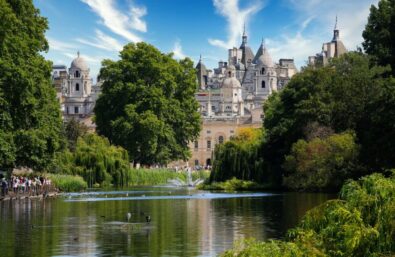
On Saturday 18 April 2026, groups and communities across the UK will take part in a coordinated national “Day of Action for Nature, Parks and Green Spaces”, with the London branch of Campaign to Protect Rural England (CPRE) joining events across the capital ahead of local elections scheduled for Thursday 7 May 2026, The WP Times reports, citing a CPRE London press release (London, April 2026). The organisers state that the purpose of the action is “to demonstrate, visibly and collectively, that people everywhere care deeply about the natural world and want to see it protected and restored”, positioning the mobilisation as a nationwide response to current debates over land use, housing policy and access to green space.
The action is being presented as a decentralised national campaign rather than a single demonstration at a fixed London location. Published material does not identify a central assembly point or unified timetable for the capital, instead stating that groups and communities will take part locally across the UK on the same day (CPRE London, press release, London, April 2026).
The organisation says it is using the mobilisation to press two linked demands: a halt to what it describes as the government’s “grey belt” approach to development around London, and stronger legal protection for parks and green spaces facing increasing commercial use. It confirms that it is writing to Prime Minister Keir Starmer and is urging members of the public to do the same through formal channels, including written correspondence and official contact routes (CPRE London, London, 25 March 2026). In its release, the group states that “building on London’s countryside cannot solve London’s housing crisis” and calls for “better protection for parks in the face of increasing commercialisation” (CPRE London, press release, London, April 2026). Both issues are linked to the pre-election period, when planning decisions, land use policy and park management fall within the remit of local authorities.
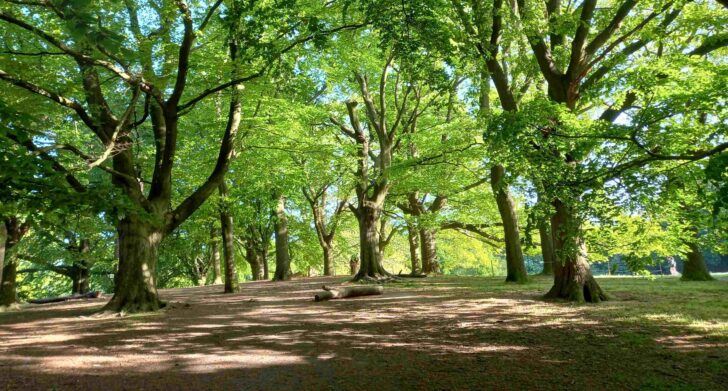
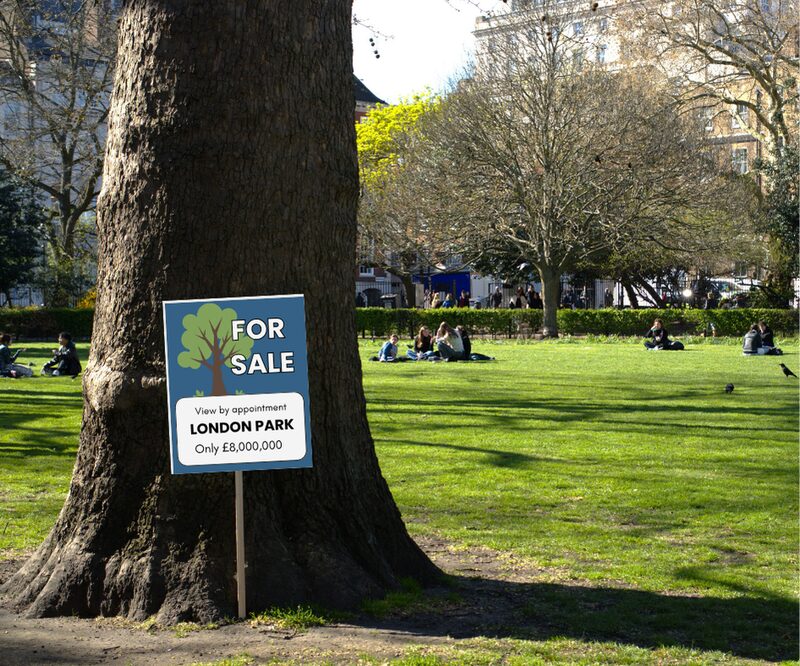
Alice Roberts of CPRE London said: “The government’s grey belt policy is threatening countryside and farmland, allowing developers to cash-in on London’s countryside. But we cannot solve London’s housing crisis by building on valuable farmland and trashing nature. Just building more homes does not make them affordable. The government must reverse damaging ‘grey belt’ policy and halt the London Green Belt Review immediately - and instead introduce credible policies to tackle housing affordability” (Alice Roberts, CPRE London statement, London, April 2026). She added: “Meanwhile, the public’s right to recreational use of parks and green spaces is increasingly under threat from commercialisation. We’re calling on the government to change the law to place strong conditions on the sale, lease and renting of public parks to safeguard our open space for generations to come” (Alice Roberts, CPRE London statement, London, April 2026).
The campaign text also sets out a direct call for public participation: “Today we are writing to the Prime Minister to demand action and we want anyone concerned about nature, parks and countryside – and anyone who wants real solutions to the housing crisis – to write as well” (Alice Roberts, CPRE London statement, London, April 2026).
The Day of Action is described by organisers as a UK-wide mobilisation taking place simultaneously across multiple locations rather than a centrally coordinated protest. No single London march route, stage location or official start time has been published. Participation is expected to be organised at borough and community level, with local groups using parks and green spaces as focal points (CPRE London, press release, London, April 2026).
The campaign brings together two parallel policy debates
The first concerns land use. The organisation opposes the government’s “grey belt” approach and is calling for the London Green Belt Review to be halted. A London Assembly research briefing states that the Green Belt was originally established to “check unrestricted sprawl” and protect countryside around urban areas, but is now under increased pressure as housing demand continues to rise (London Assembly Research Unit, “London’s Green Belt”, February 2026).
The second concerns public parks. Campaign material identifies several areas of pressure, including the sale of parkland, long-term leasing of public green space, expansion of commercial events within parks, and rising rents or loss of sports grounds used by community groups (CPRE London, “Halt commercialisation of London parks before it’s too late”, London, 25 March 2026).
The group cites specific cases, stating that “a large section of Greendale Park in Southwark was sold” and that “Enfield Council gave a large section of Whitewebbs Park away on a long-term lease”. It also refers to disputes over land use in Wimbledon Park and to campaigns in Finsbury, Brockwell and Gunnersbury Parks concerning access and commercial activity (CPRE London, London, 25 March 2026). The same material states that councils, facing financial pressure, have in some cases rented “larger sections of parks to event companies for longer periods of time”, raising concerns about access during peak periods and the condition of parkland following large-scale events (CPRE London, London, 25 March 2026).
The organisation also highlights the impact on community sport, stating that some protected playing fields face rent increases beyond what local clubs can afford, citing Bealonians FC in Redbridge, and that some privately owned sports grounds have been taken out of use following acquisition by developers (CPRE London, London, March 2026).
Background: housing pressure, planning policy and access to green space
Housing affordability remains a central structural issue in London and across the South East. Data from the Office for National Statistics shows that in 2025 the median house price in London was around 10.5 times median annual earnings, compared with around 5.0 in regions such as the North East (ONS, “Housing affordability in England and Wales: 2025”, 26 March 2026). The ONS said affordability “remains above the five-times-earnings threshold” despite some improvement since 2021. Government policy has increasingly focused on planning reform and land supply. Prime Minister Keir Starmer said the system must be reformed to “unlock land and get Britain building again”, linking planning changes to housing delivery (Labour Party conference, October 2025). Within that framework, proposals involving the use of lower-quality or underused land within Green Belt boundaries — often described as “grey belt” — have become part of the policy debate.
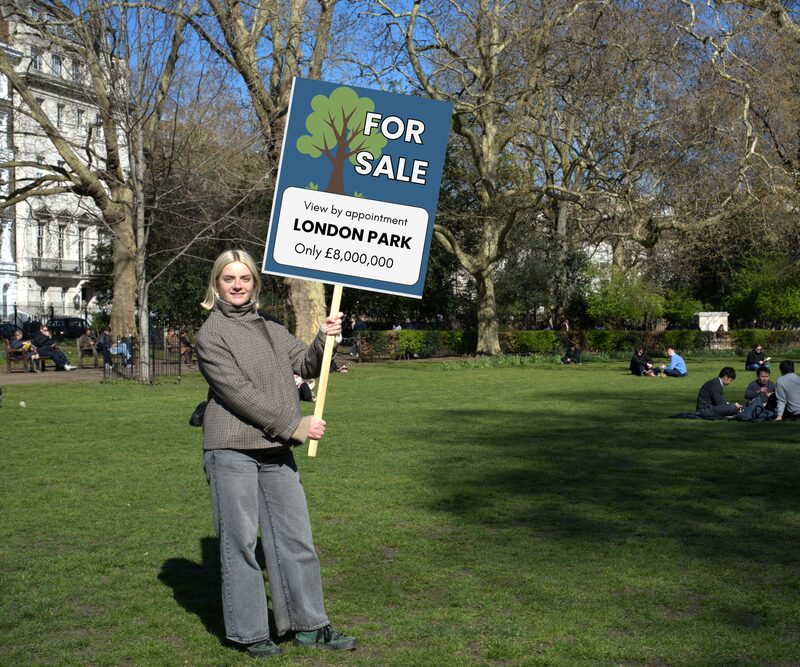
At city level, the Greater London Authority has confirmed that a review of Green Belt land is being undertaken to inform the next London Plan. A London Assembly briefing notes that the Green Belt’s original purpose was to limit urban expansion and protect countryside, but that it is now under increased pressure as housing demand continues to rise (GLA briefing, February 2026).
Campaign groups, including Campaign to Protect Rural England, argue that increasing supply alone does not determine affordability outcomes. CPRE London states that “just building more homes does not make them affordable” and points to what it describes as a backlog of homes with planning permission that remain unbuilt, alongside available brownfield land (CPRE London campaign material, London, 2026). Access to green space has emerged as a parallel policy issue. According to Fields in Trust, around 6.1 million people in Great Britain do not live within a ten-minute walk of a park or green space, while only around 7% of parks are legally protected (Fields in Trust, Green Space Index, 2026).
At the same time, the Local Government Association has said councils “continue to face significant funding challenges”, with implications for how public assets, including parks, are managed (LGA finance statement, 2025). In some cases, this has been associated with increased use of parks for revenue-generating activities, including commercial events and long-term leasing arrangements. These issues converge ahead of local elections scheduled for 7 May 2026, when planning decisions, land designation and park management fall within the responsibilities of local authorities. The Day of Action on 18 April is positioned within this wider policy context, where housing supply, land use and access to green space are being debated simultaneously at local and national level.
Read about the life of Westminster and Pimlico district, London and the world. 24/7 news with fresh and useful updates on culture, business, technology and city life: Tube strikes 2026: London Underground disruption dates, TfL impact and alternative routes explained
Photo: Campaign to Protect Rural England (CPRE London)