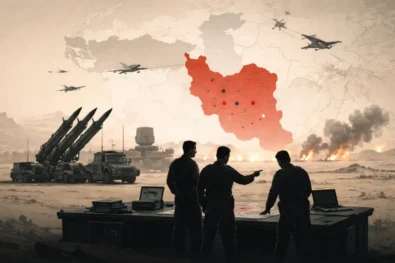
Today, 15 April 2026, expectations for Bank of England interest rates are being recalibrated across financial markets as policymakers confront a rapidly shifting external shock tied to the Middle East conflict, with energy prices and trade disruption emerging as the central variables shaping the UK’s inflation outlook and monetary path. Market pricing, which had briefly tilted towards a single rate rise, is now being questioned by economists who argue that such a trajectory fails to reflect the binary nature of current risks—either a stabilisation leading to cuts or a prolonged shock forcing aggressive tightening, The WP Times reports.
At the centre of this reassessment is the uncertainty surrounding the Strait of Hormuz, a critical global oil transit route, where disruption has intensified fears of fuel shortages and renewed inflation pressure in advanced economies. The Bank’s Monetary Policy Committee (MPC) is therefore operating within a narrow corridor of visibility, where decisions must increasingly be made ahead of confirmed data, balancing growth risks against the potential for a second-round inflation surge driven by energy costs.
Market pricing and rate path now described as “misaligned”
Current interest rate expectations in financial markets have been described by leading City economists as structurally inconsistent with the underlying macroeconomic risks. Kallum Pickering said the prevailing assumption of a single rate increase does not align with how central banks typically respond to external shocks of this magnitude.
“I still find market pricing odd. One hike — what is the point in that? Chances are, this is among the least likely paths,” (Pickering, London, 15 April 2026, via City AM). Instead, analysts are increasingly framing the outlook in two distinct scenarios:
- De-escalation scenario: reopening of Hormuz, easing energy prices, allowing rate cuts
- Escalation scenario: prolonged disruption, rising oil prices, forcing rate hikes
- Middle path: viewed as unstable and unlikely due to binary geopolitical outcomes
This shift reflects a broader repricing already underway, with traders moving from expectations of multiple hikes to a more cautious, conditional outlook.
Iran conflict creates binary risk for inflation and growth
The economic transmission mechanism from the Middle East conflict into UK monetary policy operates primarily through energy markets and inflation expectations. Andrew Bailey acknowledged the scale of the shock during recent remarks: “We’ve obviously had a very big shock in the last month or so with the conflict breaking out in the Middle East,” (Bailey, Brussels, 9 April 2026, European Parliament Committee on Economic and Monetary Affairs). This shock is being assessed across three core channels:
| Channel | Impact on UK economy |
|---|---|
| Energy prices | Higher oil → higher inflation |
| Trade routes | Disruption → supply chain pressure |
| Market sentiment | Volatility → tighter financial conditions |
The key uncertainty remains duration. Short-term disruption may be absorbed without policy tightening, but sustained pressure risks embedding inflation expectations.

Diverging views across the City on next MPC move
Forecasts from major institutions highlight the absence of consensus on the Bank’s next move.
- JPMorgan Chase now expects one rate hike in June, revised down from earlier projections
- RSM UK warns of upward pressure on rates due to persistent inflation
- Independent economists continue to emphasise conditional outcomes rather than fixed paths
Thomas Pugh pointed to underlying domestic risks: “There is still pressure on the Bank to raise rates, particularly if inflation proves persistent and wage growth remains elevated,” (Pugh, London, April 2026). Meanwhile, internal policymakers are signalling the limits of data-driven certainty. Megan Greene said rate decisions may require forward judgment: “We will need to make a judgment call rather than wait for all the data, given the competing risks,” (Greene, UK, April 2026).
The direction of UK interest rates in 2026 is being set by a tight cluster of external variables rather than domestic data alone, with the Bank of England effectively operating under a conditional framework driven by energy markets and geopolitical timing. The decisive factors are clear: how quickly the Iran-linked conflict stabilises, whether oil flows through the Strait of Hormuz remain uninterrupted, how sharply energy costs transmit into UK inflation, and whether wage growth and services inflation absorb or amplify that shock. These inputs now define the Bank’s reaction function.
If supply routes normalise within weeks, the path is relatively clean—two rate cuts into late 2026, easing inflation expectations and a measured recovery in consumer and business confidence. If disruption persists, the policy response shifts abruptly: the MPC moves to containment, with potential rate hikes to anchor inflation, higher borrowing costs, and a deliberate tightening of financial conditions. This leaves the outlook structurally binary. Incremental moves are unlikely; policy will adjust in response to the scale and duration of the shock rather than follow a gradual trajectory.
Focus now centres on the MPC meeting on 30 April 2026, where updated projections will test whether current market pricing aligns with the Bank’s internal assessment. The signal will come less from the rate decision itself and more from guidance—specifically, how directly policymakers link future moves to energy dynamics and geopolitical developments. In practical terms, UK monetary policy has shifted regime: from domestically anchored calibration to externally driven response, where interest rate direction is now dictated by global energy flows and geopolitical risk rather than the traditional inflation cycle.
Read about the life of Westminster and Pimlico district, London and the world. 24/7 news with fresh and useful updates on culture, business, technology and city life: What does the Standard Life Aegon UK deal mean for UK pensions, fees and customers today