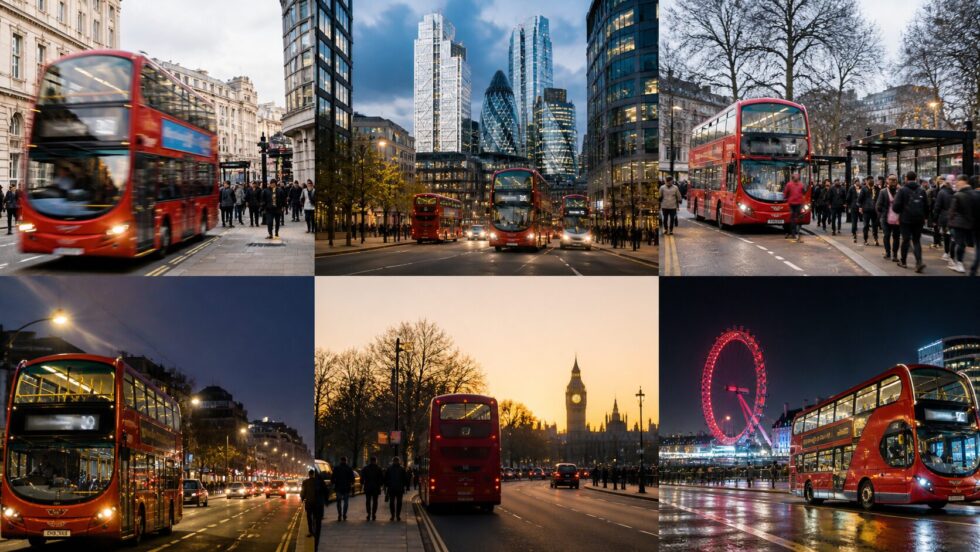
London bus routes 2026 changes will begin rolling out from Saturday 3 May 2026, with phased updates continuing through May and early June, as Transport for London (TfL) restructures services across West London, East London and outer borough corridors. The programme introduces new night buses, recalibrates frequencies and reroutes key services to reflect how Londoners now travel — with less emphasis on traditional peak commuting and more demand across evenings, weekends and orbital journeys, The WP Times reports.
The changes are not a single overhaul but a controlled, multi-week implementation designed to minimise disruption. TfL is rolling out updates in weekend blocks, allowing operational adjustments between phases. For passengers, the immediate effect will be timetable changes, route extensions and revised stop patterns, with the most noticeable improvements focused on night connectivity and outer London coverage, where population growth and housing expansion have shifted travel demand significantly.
rollout timeline: exact dates and what happens each weekend
TfL has structured the London bus routes 2026 update as a phased programme, with each stage targeting specific geographic areas or service types. This approach allows gradual adaptation while maintaining network stability.
| Date | Area | What changes |
|---|---|---|
| 3 May 2026 | West London | Route extensions, reroutes and frequency adjustments |
| 10 May 2026 | East London | Timetable balancing, stop changes and route expansions |
| 17 May 2026 | Night network | New and expanded night bus services activated |
| 24 May 2026 | Network-wide | Frequency recalibration across multiple routes |
| Early June 2026 | Final phase | Minor corrections, stop optimisation and operational fixes |
Passengers should note that not all stops or segments change simultaneously. Updates may apply only to specific sections of routes, meaning journey planning must be checked at postcode level rather than relying on route numbers alone.
west London changes: routes, extensions and congestion avoidance
The first phase on 3 May focuses on West London, where TfL is addressing congestion bottlenecks and expanding service coverage in residential growth zones.
Key route-level changes
- Route 94 (Acton – Piccadilly Circus)
Extended further west beyond Acton into newly developed residential districts. This reflects increased housing density and demand for direct links into central London without requiring interchanges. - Route 295 (Ladbroke Grove – Clapham Junction)
Rerouted to bypass Hammersmith Broadway, a known congestion hotspot. The new alignment improves reliability by avoiding delays caused by traffic saturation and bus stacking in the interchange area. - Route E8 (Ealing Broadway – Brentford)
Off-peak frequency reduced from every 8–10 minutes to every 12–15 minutes. TfL states this reflects lower midday demand while maintaining peak capacity. - Route N9 (Heathrow – Aldwych)
Night frequency increased to every 20 minutes, strengthening airport connectivity during overnight hours.
What this means in practice
West London passengers will experience fewer delays on congested corridors but may face slightly longer waits outside peak hours. The trade-off is improved reliability — buses arriving more consistently rather than in irregular clusters.
east London updates: timetable balancing and expanded coverage
The second phase, beginning 10 May, targets East London — one of the fastest-growing parts of the capital in terms of population and commuting patterns.
Key route-level changes
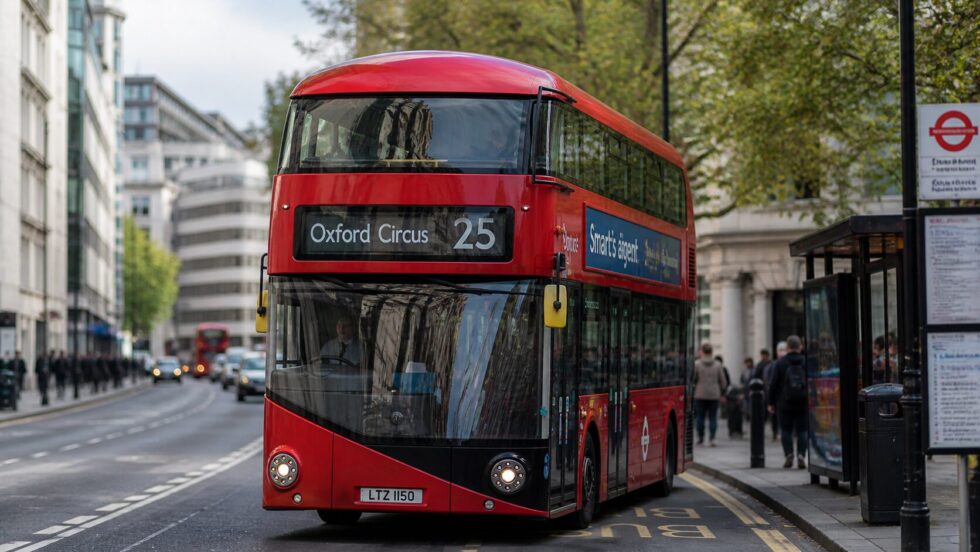
- Route 25 (Oxford Circus – Ilford)
One of London’s busiest bus routes will see timetable smoothing. Instead of irregular gaps and bunching, buses will run at more evenly spaced intervals, even if peak duplicates are reduced. - Route 86 (Stratford – Romford)
Extended beyond Romford into surrounding residential zones, improving connectivity for outer borough communities. - Route 205 (Paddington – Bow Church)
Stop adjustments introduced around Whitechapel and Mile End to better align with passenger flows and interchange demand. - Route N15 (Trafalgar Square – Romford)
Night coverage expanded deeper into East London, reflecting increased late-night activity in the Stratford–Romford corridor.
Operational logic behind the changes
TfL is shifting from volume-based scheduling (more buses at peak) to consistency-based scheduling (even spacing throughout the day). This reduces overcrowding spikes and improves predictability for passengers.
night bus expansion 2026: full network upgrade and new routes
The most significant structural change comes on 17 May, when TfL expands London’s night bus network to support the capital’s 24-hour economy.
confirmed night routes
| Route | Start – End | Frequency | Strategic role |
|---|---|---|---|
| N9 | Heathrow – Aldwych | Every 20 min | Airport link |
| N25 | Oxford Circus – Ilford | 15–20 min | Central-east spine |
| N86 | Stratford – Romford | 20–30 min | Outer borough link |
| N207 | White City – Southall | Every 20 min | West London corridor |
Night buses will operate between 00:00 and 05:00, covering key Underground corridors when rail services are closed.
Why this matters
London’s workforce increasingly includes shift-based roles in healthcare, hospitality, logistics and aviation. These workers rely on affordable overnight transport, and TfL is responding by strengthening bus coverage rather than expanding costly rail night services.
fares and ticketing: what stays the same, even as routes change
TfL’s May 2026 bus changes alter routes, timings and night coverage, but the fare system remains the stable part of the network. For passengers, that matters because the new structure may require more changes between buses, especially on cross-London or outer-borough journeys. The standard bus fare remains £1.75, the Hopper fare still allows unlimited bus and tram transfers within one hour, and there is still no peak surcharge on London buses.
That means a passenger who now needs to change once — for example from a local West London service onto Route 94, or from an East London feeder route onto Route 25 — should still pay one fare if the transfer is made within the 60-minute window. Contactless cards, Oyster cards and mobile payments remain valid, so the practical change is not how people pay, but how carefully they plan the journey.
| Item | 2026 position | Passenger impact |
|---|---|---|
| Standard bus fare | £1.75 | Same flat fare across London |
| Hopper fare | Unlimited transfers within 60 minutes | More useful if routes now require a change |
| Peak pricing | Not applied | Morning and evening buses cost the same |
| Payment | Oyster, contactless, mobile wallet | No new ticket needed |
service changes: what passengers will actually notice
The biggest change is not the price. It is the rhythm of the network. TfL is moving away from simply adding more buses at the busiest times and towards spacing services more evenly, so buses are less likely to arrive in clusters and then leave a long gap behind them. On high-demand routes such as 25, 94 and 205, peak service is expected to remain strong, but some quieter off-peak routes may run slightly less often. For passengers, the effect will be mixed. A commuter using a major corridor may see little difference in the morning rush. Someone travelling at lunchtime, late evening or through an outer-borough residential area may need to allow extra waiting time. The benefit should be more predictable journeys, fewer empty buses and better night connections where demand has grown.
how to travel after the changes: think by corridor, not only by route number
The useful rule after May 2026 is simple: do not rely on one “perfect” bus if there is a faster corridor nearby. London’s bus network is becoming more like a surface grid, where the best journey may involve one change, a short walk or a switch to rail.
Route 25 / N25 becomes the key central-east corridor between Oxford Circus, Stratford, Ilford and late-night East London travel. Route 86 / N86 matters for Stratford, Romford and outer East London. Route N9 is the practical overnight option between Heathrow and central London. Route 94 remains useful for West London into the West End, especially if passengers are willing to get off before the most congested central stops and walk the final section.
| Journey | Better option after the changes | Why |
|---|---|---|
| Stratford → Oxford Circus | Route 25 or Elizabeth line | Bus for direct surface travel, rail for speed |
| Heathrow → central London overnight | N9 | Cheaper than taxi, direct night link |
| Romford → Stratford | 86 or N86 | Stronger outer East London connection |
| Ealing → West End | 94, then walk | Avoids slow final central section |
| White City → Southall at night | N207 | Better West London overnight link |
practical advice: what to do before your first journey
Passengers should check their regular route before travelling, especially if they use buses in West London from 3 May, East London from 10 May, or night buses from 17 May. The most important step is to identify one backup route, one nearby higher-frequency stop and one rail interchange that can replace a delayed bus.
For commuters, the safest approach is to test the new journey outside peak hours before relying on it for work. For night passengers, the key is to know the correct N-route before midnight, because the best overnight service may not follow the same stopping pattern as the daytime bus.
why TfL is changing the network
The restructuring reflects how London travel has changed since the old peak-commuter model. More people work hybrid hours, more journeys happen between outer boroughs, and demand after midnight is stronger in areas linked to airports, hospitality, healthcare and late-shift work. TfL is trying to move buses from where capacity is underused to where passengers now travel more often.
The risk is confusion. Some passengers may lose a direct habit-route and have to change buses. Others may face longer off-peak waits. The gain is a network that should be more reliable, better used and more useful at night. For Londoners, the real change is not the fare — it is the need to plan journeys more intelligently.
broader impact: what this means for London’s transport future
The London bus routes 2026 programme marks a shift away from a centralised, commuter-focused network toward a decentralised, flexible system.
structural transformation
- Greater focus on outer London connectivity
- Stronger night-time infrastructure
- Reduced reliance on central hubs
- Increased integration with rail systems
long-term implications
This model reflects a modern urban transport system — one that prioritises flexibility, resilience and real-world travel behaviour over legacy commuting patterns.For Londoners, the benefits include better night access and improved cross-borough travel. However, the network becomes less intuitive, requiring active planning rather than routine use.
final practical summary: what passengers must know
- Changes start 3 May 2026 and roll out in phases
- West London updated first, followed by East London
- Night bus expansion begins 17 May 2026
- Fares remain unchanged at £1.75
- Some routes extended, others rerouted or reduced off-peak
- Planning journeys in advance becomes essential
For passengers, the 2026 changes are less about disruption and more about adaptation. Those who adjust quickly — using updated routes, night services and combined transport options — will benefit from a system that is ultimately more aligned with how London now moves.
Read about the life of Westminster and Pimlico district, London and the world. 24/7 news with fresh and useful updates on culture, business, technology and city life: London Underground strike May 2026: what is happening, when and why