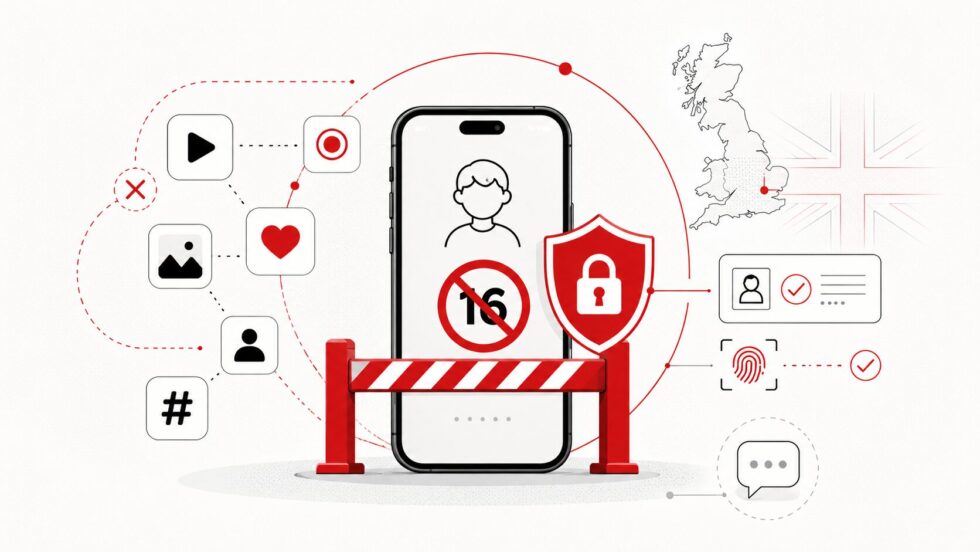
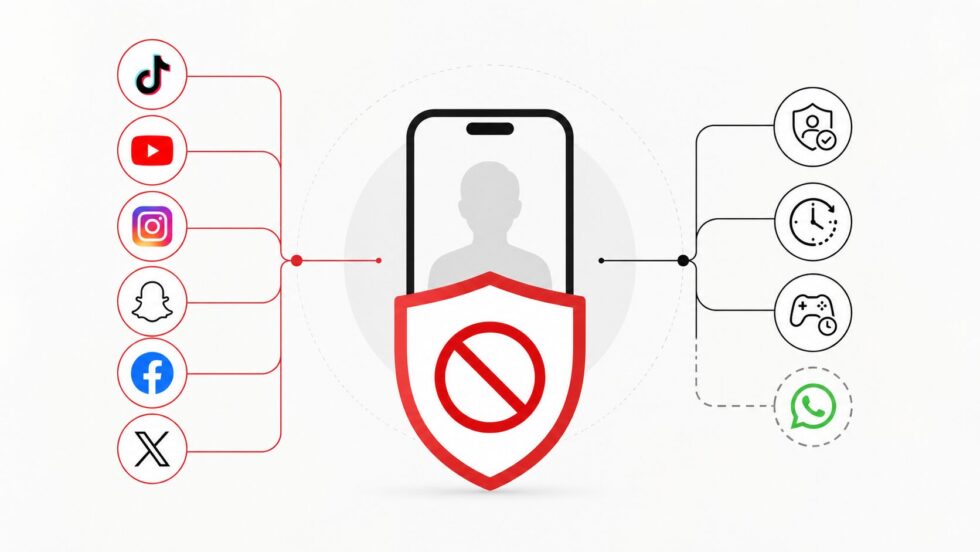
Britain is preparing a social media ban for children under 16 after Prime Minister Keir Starmer confirmed a landmark move that would stop major platforms from offering their services to younger teenagers from spring 2027. The plan, announced on 15 June 2026, is aimed at TikTok, YouTube, Snapchat, Instagram, Facebook and X, while messaging apps such as WhatsApp and Signal are not expected to be covered by the ban, The WP Times reports, citing a 15 June government press release.
The decision marks one of the UK’s most aggressive interventions yet in the online lives of children and the business model of global tech platforms. Ministers say the measure is designed to give parents a clearer legal line, reduce exposure to harmful algorithmic feeds, and move responsibility away from families and towards the companies that design and profit from social media services. The government says the regulations are expected to be brought to Parliament before Christmas, with the first protections expected to come into force in spring 2027.
Social media ban UK: what exactly is changing for under-16s
The UK social media ban under 16 will apply to user-to-user platforms whose core function is social interaction, posting material and algorithmic distribution. That definition is why YouTube is included alongside TikTok, Snapchat, Instagram, Facebook and X, even though many families also use YouTube for entertainment, education and music. The government says it intends to follow the Australian model, but with additional restrictions on harmful features such as livestreaming and stranger contact with children. Those wider restrictions will also reach beyond classic social media and apply to some gaming services where children can be contacted by adults. For parents asking when is the social media ban happening UK, the answer is not immediately. The government’s current timetable points to regulations before Christmas 2026 and implementation in spring 2027. Reuters reported that the ban would be enforced against platforms rather than by fining children who find ways around the rules. Ofcom is expected to conduct a rapid study into age assurance and to publish an enforcement approach.
| Question | Current government position |
|---|---|
| What apps are being banned for under-16s UK? | TikTok, YouTube, Snapchat, Instagram, Facebook and X are named examples |
| Is WhatsApp social media under the ban? | No, WhatsApp and Signal are not expected to be included |
| Is YouTube social media under the ban? | Yes, the government lists YouTube among affected platforms |
| When will social media be banned in the UK? | Protections are expected in spring 2027 |
| Who enforces the ban? | Platforms face compliance duties, with Ofcom central to enforcement |
Keir Starmer says tech companies failed to protect children
Keir Starmer framed the policy as a direct response to parental concern and said the online world had made it harder for families to keep children safe. In the government statement, Starmer said: “This is a line in the sand” (Prime Minister Keir Starmer, government press release, 15 June 2026). Technology Secretary Liz Kendall also said the move was about creating a “safer, healthier life online” for children and future generations.
The political message is clear: the government wants to present the ban as a child protection measure, not merely a screen-time rule. Ministers say more than 116,000 responses were submitted by parents, children and experts during the national consultation. According to the government, nine in ten parents supported a social media ban for children under 16, while two-thirds of young people agreed that children below 16 should not be allowed to use at least some social media platforms.
The policy also arrives after years of pressure over child safety online, including public debate following the death of Molly Russell. A 2022 prevention of future deaths report recorded the inquest conclusion that Molly Rose Russell died while suffering from depression and the negative effects of online content.
Is YouTube social media, and is WhatsApp social media under the UK ban?
One of the biggest practical questions is whether services used every day by children will be treated as social media or communication tools. The government’s answer is that YouTube is covered because it allows users to post material and is driven by recommendation systems. That means families asking is YouTube social media should assume, under this policy, that it is included in the social media ban.
WhatsApp is treated differently. The government says it does not intend to include messaging services such as WhatsApp or Signal in the social media ban. That distinction matters because many teenagers use WhatsApp for school groups, sport clubs, family contact and direct messaging rather than public posting. However, exemptions are expected to stay under review, especially if services add features that resemble algorithmic social feeds.
Ofcom age checks: how the under-16 social media ban could be enforced
The central enforcement problem is age assurance. The government says it will use highly effective age assurance measures and has asked Ofcom to examine what works for verifying whether someone is over 16. Reuters reported that the options could involve stronger checks on platforms rather than punishment for children themselves.
That creates a difficult balance. Strong checks may make the ban harder to bypass, but they also raise privacy questions if families are asked for biometric, identity or financial data. The government says Ofcom will need a clear enforcement strategy and adequate funding to carry out its new responsibilities.
The live implementation will matter more than the headline. Australia’s under-16 social media ban is the model, but BBC News live coverage noted that Australian teenagers have already found ways to bypass age restriction systems. The same BBC coverage also highlighted mixed reactions from children, parents, Meta and school leaders, showing that the debate is not only legal but social and practical.
Beyond TikTok and Instagram: gaming, livestreaming and AI chatbots
The UK plan is not limited to a ban on social media platforms. Ministers also want to block harmful functions for under-16s, including livestreaming and strangers communicating with children. These restrictions are expected to apply to a wider range of online services, including gaming sites.
The government is also targeting AI romantic companion chatbots. Platforms offering AI tools designed to simulate sexual relationships or intimate roleplay will have to enforce a minimum age of 18. Similar intimate functions will be restricted more broadly for under-18s. Further measures may follow. The government says it will set out more detail in July on overnight curfews and breaks in infinite scrolling for under-18s. Restrictions on harmful functions will also be switched on by default for 16- and 17-year-olds to prevent a sudden cliff-edge at 16.
What parents, children and schools need to know now
For now, families do not need to delete accounts or take immediate technical action. The ban is not yet in force, and the government says more detail will be provided before implementation. The practical changes will depend on how Ofcom defines age assurance and how platforms redesign sign-up, login and safety systems.
Schools are likely to welcome parts of the policy because teachers often deal with the consequences of weekend online disputes, bullying, harmful content and sleep disruption. BBC live coverage reported support from major teaching unions, while also noting that headteachers said a wider package of measures would be needed to address the risks of the online world. Parents should also understand what the ban does not solve. It does not automatically remove harmful content from the internet. It does not stop children from trying VPNs, using older relatives’ accounts or moving to less regulated spaces. It also does not replace media literacy, parental boundaries, school support or stronger design duties on companies.
The political and industry reaction: support, concern and enforcement doubts
The government is presenting the move as a choice to side with families over tech companies. Ofcom had already warned in May 2026 that some major platforms had not gone far enough to make feeds safe for children and that minimum-age rules were not reliably keeping underage children off services. The tech industry’s concern is that a ban could push teenagers into less visible online spaces. Meta said bans risk isolating teenagers from online communities and information, according to BBC live coverage. Critics also argue that device-level age verification may be more workable than making users prove their age separately to dozens of apps.
At the same time, the UK government is trying to maintain Britain’s position as a place for tech and AI investment. That creates a policy tension: ministers want tougher duties on US-owned platforms while also courting the same global technology companies for investment, jobs and innovation. Reuters reported that the rules will cover social media, gaming and livestreaming restrictions, with a fuller policy response expected in July.
What happens next with the UK social media ban?
The next stage for the UK social media ban is legal detail, technical enforcement and a public test of whether ministers can turn a headline policy into a working system by spring 2027. The government wants the first regulations to be brought before Parliament before Christmas 2026, with Ofcom then expected to set out how highly effective age assurance should work, what evidence platforms must collect, and how companies should treat existing accounts, new users and children whose age cannot be clearly verified. For families, the immediate message is that nothing changes overnight. Children will not be removed from TikTok, YouTube, Snapchat, Instagram, Facebook or X immediately, and parents are not being asked to take urgent action today. The crucial decisions will come in the months ahead, when the government explains how the ban will be phased in, whether platforms must proactively identify under-16 users, and what happens if a teenager already has an account before the rules begin.
The enforcement burden is expected to fall on platforms rather than children. That means the central question is not whether a 14-year-old will be punished for trying to open an account, but whether tech companies will be legally required to stop that account being created or used in the first place. Ofcom’s role will be decisive because the regulator must define what counts as a reliable age check, how privacy should be protected, and what penalties companies may face if they fail to comply.
The most difficult area will be age verification. Ministers want a system strong enough to stop children bypassing the rules, but not so intrusive that millions of adults are forced to repeatedly hand over passports, driving licences or biometric data to multiple platforms. The government has indicated that many adults may not need fresh checks if platforms already have reliable age signals, but the exact standard will need to be set out in guidance. There will also be pressure to clarify the status of borderline services. YouTube is expected to be included because it allows user-generated content, comments, subscriptions and algorithmic recommendations. WhatsApp and Signal are not expected to be included because the government is treating them as messaging services rather than social media platforms. Gaming sites, livestreaming tools and AI companion services will be handled through wider safety restrictions, especially where children can be contacted by strangers or exposed to intimate, addictive or harmful features.
The question for families is no longer simply: is social media getting banned in the UK? The sharper question is how the UK will enforce an under-16 social media ban across global platforms used daily by children, schools, creators, clubs and families. The law may draw the line at 16, but its success will depend on whether platforms can verify age fairly, reduce harmful design features, protect privacy, avoid pushing children into unregulated spaces and give parents a rule that is simple enough to understand and strong enough to matter.
UK social media ban: questions and answers for parents and teenagers
When is the social media ban happening in the UK?
The government says the first regulations are expected before Parliament before Christmas 2026, with protections expected to come into force in spring 2027. That means the ban is not active immediately, but the legal and technical framework is now being prepared.
What apps are being banned for under-16s in the UK?
The named platforms include TikTok, YouTube, Snapchat, Instagram, Facebook and X. The ban is aimed at user-to-user social media services where children can post content, interact with others and be targeted by algorithmic feeds.
Is YouTube social media under the UK ban?
Yes. Under the government’s approach, YouTube is expected to be covered because it is not only a video platform but also a user-to-user service with comments, creators, recommendations and social interaction.
Is WhatsApp social media under the ban?
No, not under the current plan. The government has said it does not intend to include messaging services such as WhatsApp and Signal in the under-16 social media ban.
Will children or parents be fined?
The policy is expected to place responsibility on platforms, not on children. The key enforcement question is whether companies can be made to stop under-16s accessing covered services, rather than punishing families after a child gets around the rules.
Will adults need to prove their age?
Some adults may need to verify their age, but the government has suggested that many users could already have enough age signals attached to their accounts. Ofcom will need to define what counts as accurate, robust and fair age assurance.
Can teenagers bypass the ban with VPNs or fake details?
Some will try. That is why age assurance is the hardest part of the policy. The government’s argument is that the possibility of bypassing a law does not mean the law should not exist, but the practical effectiveness will depend on the strength of platform checks.
What happens to existing accounts owned by under-16s?
This is one of the details still likely to require clarification. Platforms may be expected to identify underage users and restrict access, but the exact process for existing accounts has not yet been fully set out.
Will gaming platforms be included?
The blanket social media ban is aimed at social media services, but the government also wants wider restrictions on harmful functions across gaming and other online services. That includes stranger communication, livestreaming and features that may expose children to risk.
What is the biggest risk with the UK social media ban?
The main risk is displacement. If children are blocked from mainstream platforms but move to smaller, encrypted or less regulated spaces, the policy could reduce visibility rather than reduce harm. That is why enforcement, privacy protection, platform design and offline support for children will matter as much as the ban itself.
Read about the life of Westminster and Pimlico district, London and the world. 24/7 news with fresh and useful updates on culture, business, technology and city life: England Driveway EV Charger Rules: What Homeowners, EV Drivers and Councils Need to Know in 2026