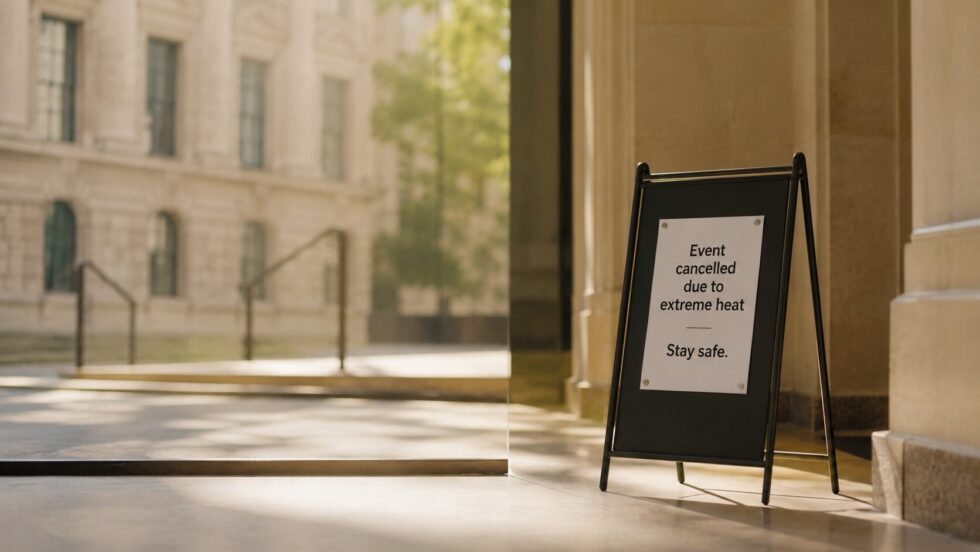
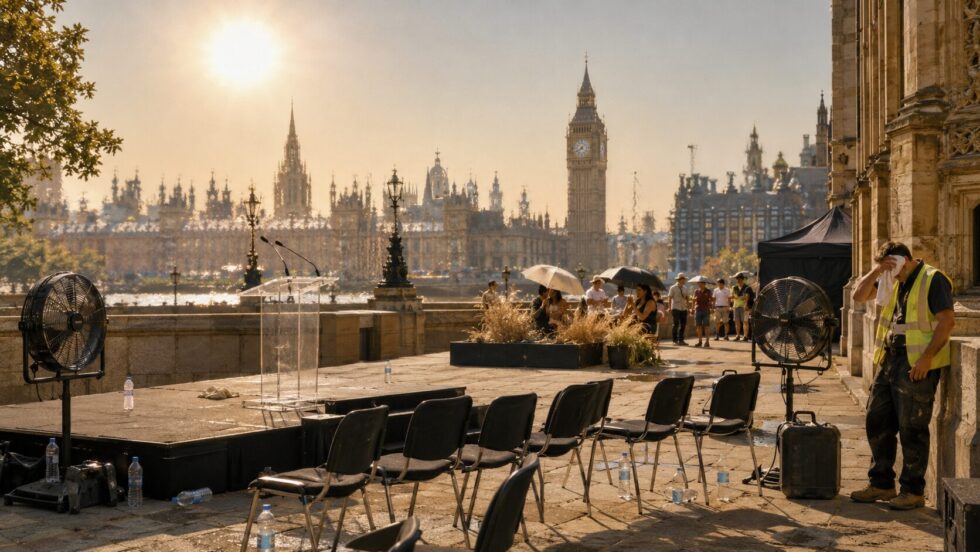
London heatwave conditions forced the cancellation of an extreme heat event at the London School of Economics on Thursday, 25 June 2026, after organisers said the venue had become too hot and posed a public health risk. The session, planned during London Climate Action Week to examine the impact of extreme heat on vulnerable people, was called off as Britain faced record June temperatures and renewed scrutiny of how prepared old buildings, schools, workplaces and public services are for hotter summers, The WP Times reported, citing Reuters.
The cancelled event was due to take place in a near-100-year-old LSE building that relies on natural ventilation and fans rather than air conditioning. The detail turned the story into a wider test case for the UK: many public buildings, homes and education venues were designed for a cooler climate and are now being exposed to longer, hotter and more disruptive heatwaves.
London Climate Action Week heatwave exposes old building risks
London Climate Action Week 2026 runs from 20 to 28 June and brings together climate, finance, business, policy and civil society figures across the capital. Organisers describe it as one of the world’s largest independent climate events, with more than 75,000 people expected across more than 1,000 events. The heatwave changed the focus of the week from future climate scenarios to immediate operational risk. A session about how societies adapt to extreme heat could not proceed because the venue itself was not safe enough during the heat. That is the central point for London. The problem is not only outdoor temperature. It is indoor heat in buildings that trap warmth, lack mechanical cooling, rely on windows and fans, and may become unsafe when rooms are crowded.
Why the LSE cancellation matters for public health
The LSE event was cancelled because organisers judged the heat inside the venue to be a public health risk, not simply an inconvenience for guests. The session had been planned to discuss extreme heat and vulnerable communities, but the conditions in the building made the risk immediate. Extreme heat can affect older people, children, pregnant women, people with heart or breathing conditions, outdoor workers and residents in poorly cooled homes. In London, the danger can rise quickly because dense buildings, traffic, hard surfaces and limited shade can trap heat across the day and keep temperatures high into the evening.
Chris Anderson, a climate expert at Practical Action, told Reuters there was “real irony” in the cancellation because the event had been designed to help vulnerable people adapt to extreme heat in a wealthy temperate country. The point underlined a practical problem for the UK: heat risk is no longer only a future climate scenario, but a present public health issue in buildings, schools, workplaces and public venues.
UK climate adaptation faces pressure after heat warning
The UK’s Climate Change Committee has warned that national adaptation is not moving fast enough for the risks already emerging. Its recent work says the country needs urgent preparation for hotter, wetter and more extreme weather, with delays likely to raise costs and increase harm to health, homes and livelihoods. The London heatwave showed why that warning matters. Climate adaptation is not only about emissions targets or long-term policy. It is about whether buildings can stay safe in high temperatures, whether schools can remain open, whether hospitals can manage heat-related pressure, and whether transport systems can continue to operate during severe weather. The committee has also warned that heat-related deaths could rise sharply by 2050 without stronger preparation. That puts heat planning into the same practical category as flood defence, emergency health planning and infrastructure resilience.
What the heatwave revealed during London Climate Action Week
The heatwave exposed several weaknesses that are now central to the UK climate adaptation debate. Older public buildings without modern cooling can become unsafe during peak temperatures. Schools and universities can struggle to keep classrooms, lecture halls and shared spaces safe. Care homes and hospitals face higher pressure because many of the people inside are already medically vulnerable.
Homes are another concern. Many UK flats and houses retain heat, especially overnight, and low-income households often have fewer options for cooling. Transport networks can also be affected when rails, roads and signalling systems are exposed to high temperatures. Outdoor workers face direct health risks, while local authorities need clear heat response plans before emergency services come under pressure. The LSE cancellation became a visible example of these risks during a week designed to discuss climate action. It showed how quickly heat can disrupt normal operations in a major city.
COP31 context adds pressure on governments and investors
London Climate Action Week took place ahead of COP31 climate talks in Turkey in November, giving the events a wider political and financial focus. Governments, companies and investors came under pressure to show how they plan to cut emissions while also funding adaptation to heat, floods, droughts and storms. U.N. Secretary-General Antonio Guterres used the week to argue that climate resilience should be treated as an asset by capital markets. He also called for more public funding for adaptation, including through taxes on fossil fuel windfall profits. For London, the finance angle is important. The city is a major centre for banking, insurance, asset management and pension funds. Extreme weather affects infrastructure, agriculture, supply chains, insurance costs and public health, making climate adaptation a financial risk as well as a public policy issue.
Business focus shifts to water, agriculture and supply chains
Companies at London Climate Action Week also faced questions over how heat and climate shocks affect their operations. Food, drink and consumer goods groups are especially exposed because high temperatures can disrupt water use, farming, logistics and production. Executives from companies including Danone and Unilever discussed investment to reduce carbon and water use in agriculture. The focus reflected a broader business concern: a heatwave or drought in one region can affect food supply, prices, manufacturing schedules and corporate risk elsewhere.
For investors, adaptation is becoming part of long-term risk planning. Climate shocks can affect asset values, insurance exposure, worker safety, supplier reliability and the cost of doing business.
London Climate Action Week was founded in 2019 and has grown into a major annual climate platform for policy, finance, business and civil society. The 2026 edition runs from 20 to 28 June and comes during a period of severe heat across the UK and parts of Europe. The cancelled LSE event had been designed to discuss extreme heat and adaptation. Reuters reported that it was due to take place in a near-100-year-old building that relies on natural ventilation and fans rather than air conditioning. Organisers called it off because the venue was too hot and posed a public health risk. The cancellation came as Britain faced record June heat and renewed scrutiny over whether the country is prepared for hotter summers. The case links directly to wider questions about old buildings, schools, hospitals, homes, transport systems and public health planning.
Read about the life of Westminster and Pimlico district, London and the world. 24/7 news with fresh and useful updates on culture, business, technology and city life: UFC Freedom 250 UK time: White House card, Trump controversy and why this is not a normal UFC night