Heathrow Gatwick thunderstorm flight delays hit London airports
Heathrow Gatwick thunderstorm flight delays caused major disruption at London’s two busiest airports on Saturday, 27 June 2026, after severe storms over south-east England and parts of Europe forced air traffic restrictions, delayed hundreds of arrivals and departures, and left passengers facing cancellations, long waits and last-minute changes, The WP Times reports.
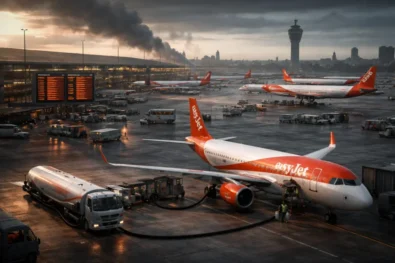
The disruption followed days of extreme heat across the UK and Europe, with thunderstorms developing over busy aviation corridors used by aircraft flying into and out of Heathrow airport and Gatwick airport. Airlines including British Airways and easyJet were affected, while passengers were told to check directly with their airline before travelling to the airport because live boards were changing through the day.
Heathrow flights delayed as air traffic restrictions reduce capacity
Heathrow flights delayed through Saturday as air traffic controllers reduced the number of aircraft that could safely move through affected airspace. The issue was not only rain over one runway or one terminal. Thunderstorms can force aircraft to avoid storm cells, fly longer routes and keep greater separation from other aircraft. That means delays build quickly at a hub such as Heathrow, where long-haul arrivals, short-haul departures, connecting passengers and crew schedules are tightly linked. A late inbound aircraft can delay its next outbound service, while a cancelled rotation can affect passengers hours later.
Heathrow airport advised passengers to check their flight status with their airline before setting off. That advice matters because airport departure boards can change after a passenger has already left home, especially when air traffic restrictions are being updated in real time.
Gatwick flights cancelled and delayed after thunderstorms
Gatwick flights cancelled and delayed across the day as the storm system affected arrivals, departures and aircraft positioning. Gatwick airport is heavily used by leisure carriers, European routes and holiday flights, so disruption quickly affected passengers heading to Spain, Greece, Italy and other summer destinations.
Some travellers reported being held on aircraft or waiting in terminals while airlines waited for updated slots. In several cases, flights could not operate as planned because the aircraft, crew or arrival slot were no longer available within the legal operating window. Gatwick airport cancelled flights were especially difficult for families and holidaymakers because replacement options during peak summer travel are limited. When weather affects several airports across Europe at once, airlines cannot simply move all passengers onto the next flight.
Why thunderstorms delay hundreds of Heathrow and Gatwick flights
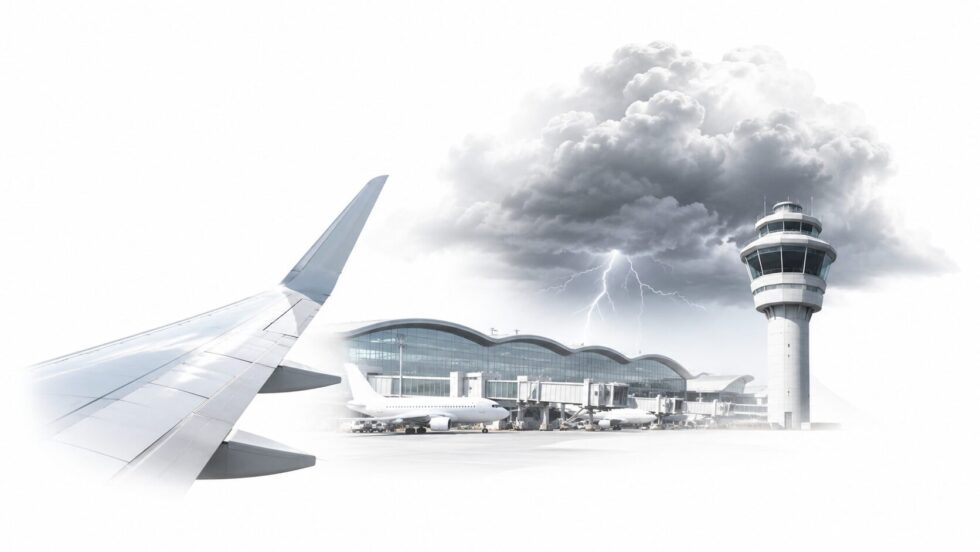
Thunderstorms are a serious aviation problem because they bring lightning, turbulence, heavy rain, strong winds and fast-changing cloud conditions. Aircraft can fly in difficult weather, but they do not fly directly through dangerous storm cells when safer routing is available.Air traffic control then has to create larger gaps between aircraft and route planes around affected areas. That reduces the number of flights that can land or take off per hour. At Heathrow and Gatwick, even a short reduction in capacity can create a large backlog because both airports normally operate close to full schedules.
The result is a chain reaction: late arrivals, delayed departures, aircraft parked out of sequence, crews reaching duty-time limits and passengers waiting for new slots.
What NATS said about the flight delays
NATS, the UK’s air traffic control service, said severe thunderstorms across south-east England and Europe were affecting flights and that aircraft needed to avoid affected areas and be spaced further apart for safety. The service said this limited how many flights could operate safely and warned that disruption could continue through the remainder of Saturday and overnight.The key point for passengers is that the restriction was safety-led. Airlines may still be responsible for care, rebooking and communication, but weather-related air traffic restrictions are usually treated differently from airline-controlled disruption when compensation is assessed.
Heathrow and Gatwick delays: what passengers should do now
Passengers due to travel through Heathrow or Gatwick should not rely only on the airport website. The airline is the main source for gate changes, cancellations, rebooking, hotel support and refund options.
| Passenger situation | What to do |
|---|---|
| Flight still listed as operating | Check airline app, email and airport board before leaving |
| Flight delayed several hours | Stay close to airline updates and keep receipts for reasonable expenses |
| Flight cancelled | Ask for rebooking, refund or rerouting options |
| Missed connection | Contact the operating airline or travel agent immediately |
| Package holiday affected | Contact the holiday provider as well as the airline |
Passengers should keep boarding passes, booking references, screenshots of delay notices and receipts for meals, transport or accommodation. These documents are useful if a claim or refund request is needed later.
Are passengers entitled to compensation
Compensation depends on the cause of the delay or cancellation. Severe weather and air traffic control restrictions are often classed as extraordinary circumstances, which can limit compensation rights. However, passengers may still have rights to care, assistance, rerouting or a refund.
That means airlines may have to provide meals, refreshments, hotel accommodation or transport where required, depending on the length of the delay and the circumstances. A refund may be available if the flight is cancelled and the passenger chooses not to travel. Travellers should separate two issues: compensation for inconvenience and the right to assistance. Even when compensation is not payable, airlines still have obligations to affected passengers.
Airlines affected by Heathrow and Gatwick disruption
British Airways was affected at Heathrow and Gatwick, while easyJet was among the airlines hit at Gatwick. Other carriers using the same airspace may also have experienced knock-on delays because the restriction was not limited to one airline. For British Airways passengers, Heathrow disruption can affect both long-haul and European services. For easyJet passengers, Gatwick disruption can affect holiday routes, aircraft rotations and package holiday schedules.
The biggest issue is aircraft positioning. If a plane due to fly from Gatwick is still stuck abroad, the departure from Gatwick may be delayed even after the local weather improves.
Why the delays may continue after the storms move away
Flight disruption often continues after the worst weather has passed. Airports and airlines have to rebuild the schedule, move aircraft into the right place, bring crews back within legal limits and clear queues of delayed passengers. At Heathrow, long-haul flights can be especially difficult to recover because replacement aircraft and crews are not always available at short notice. At Gatwick, holiday flights can face pressure because alternative seats during peak travel periods are limited.
This is why a storm in the afternoon can still affect evening and overnight flights. The airport may be open, but the network behind the flight may still be out of position.
Background: heatwave, storms and busy summer aviation
The thunderstorms came after a period of extreme heat across the UK and Europe. Hot, unstable air can help trigger severe thunderstorms when conditions change, and aviation networks are particularly vulnerable when storms form over dense routes between south-east England and north-west Europe. Heathrow and Gatwick are two of the busiest gateways in the UK. Heathrow is the country’s main long-haul hub, while Gatwick is a major airport for European, leisure and holiday traffic. When both are hit at the same time, disruption spreads quickly through airline networks. The latest Heathrow Gatwick thunderstorm flight delays show how weather, air traffic control and summer demand can combine into a wider travel problem. For passengers, the practical advice remains simple: check the airline before travelling, keep evidence of disruption, and act quickly if a cancellation or major delay appears.
Read about the life of Westminster and Pimlico district, London and the world. 24/7 news with fresh and useful updates on culture, business, technology and city life: How can London flats get air conditioning without a balcony, outdoor unit or planning trouble