NATO’s most senior military officer, Admiral Giuseppe Cavo Dragone, has said that the war in Ukraine has reached a stalemate and represents a strategic failure for Russian President Vladimir Putin. His comments came during an interview with the BBC, marking one of the clearest assessments yet from the alliance’s top brass. The news was reported by The WP Times, citing the BBC.
Admiral Dragone, who has chaired NATO’s Military Committee since January, said the alliance would continue to stand with Ukraine “until the day we have them sitting around the table for a long-lasting peace.” Speaking in Bahrain, he described the war as “a waste of lives” and said it was “almost time to sit and talk.”
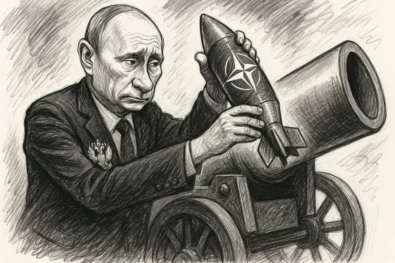
The admiral noted that Russia’s full-scale invasion of Ukraine in February 2022 had backfired strategically, pushing Finland and Sweden to join the Western alliance — an expansion that directly contradicted Moscow’s stated aims. “Despite slow, incremental advances by Russia on the battlefield, the invasion has been a strategic failure for President Putin,” Dragone said.
“They will not get a friendly or puppet government like in Belarus. Putin will not succeed,” he told the BBC.
Europe’s new wake-up call
Admiral Dragone argued that the war has acted as a wake-up call for Europe, spurring countries to take greater responsibility for their own defence. NATO members recently agreed to raise defence spending to 5% of GDP by 2035, following years of pressure from Washington and former US President Donald Trump.
He praised the growing sense of cohesion among the 32 NATO members, saying the alliance is “reliable, mature and united.” Despite political divisions within some states, such as Hungary and Slovakia, Dragone emphasised that overall unity and resolve remain strong.
“The alliance is stronger than our adversaries, and we will stay with Ukraine up to the day that peace will break out,” he added.
Threats from the East and nuclear rhetoric
On potential future threats, Dragone said that if there were to be another act of aggression, “it would likely be in the Baltic states – Estonia, Latvia or Lithuania.” However, he underscored that any such move would trigger Article 5 of the NATO treaty, obliging all member nations to defend the attacked country.
Asked about Russia’s development of long-range, nuclear-powered weapons such as the Burevestnik cruise missile and the Poseidon drone torpedo, Dragone played down concerns. “We are not threatened by them,” he said. “We are a defensive nuclear alliance, ready to protect our 32 nations and one billion people.”
Strengthening air defences
The admiral identified air defence as NATO’s top priority. Repeated drone incursions from Russia into Poland and Romania have prompted urgent efforts to strengthen the eastern flank. Dragone confirmed that NATO’s Allied Command Transformation in Norfolk, Virginia, is already developing a new initiative called “Eastern Sentry.”
This project aims to integrate all existing air defence systems across member states along NATO’s eastern border. “Airspace incursions are quite frequent,” he explained. “We escort them out, and that’s basically the game.”
Strategic failure despite no retreat
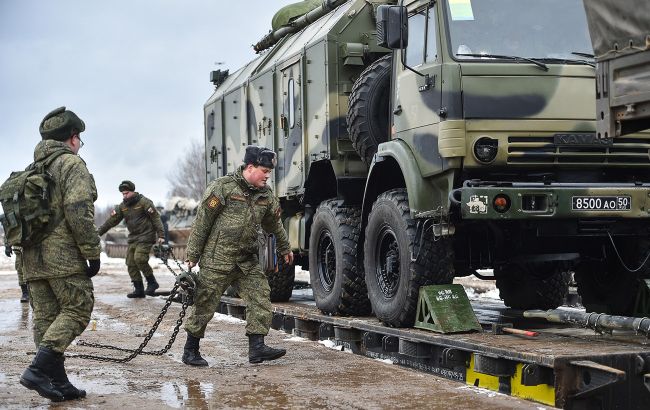
Despite continued fighting and no sign that Moscow intends to withdraw or negotiate, Dragone said the strategic picture remains unchanged. “From an operational standpoint, Russia is bogged down. It’s time to talk,” he reiterated.
The admiral’s remarks align with growing Western sentiment that the war has entered a prolonged phase of attrition — one that benefits neither side. But for NATO, the geopolitical outcome is already clear: Putin has weakened his country’s influence and strengthened the Western alliance he sought to divide.
“This is not just about Ukraine,” Dragone concluded. “It’s about defending the principles that unite us – freedom, sovereignty, and collective security.”
Read about the life of Westminster and Pimlico district, London and the world. 24/7 news with fresh and useful updates on culture, business, technology and city life: Barack Obama returns with a blistering attack on Donald Trump and a warning over democracy’s decay