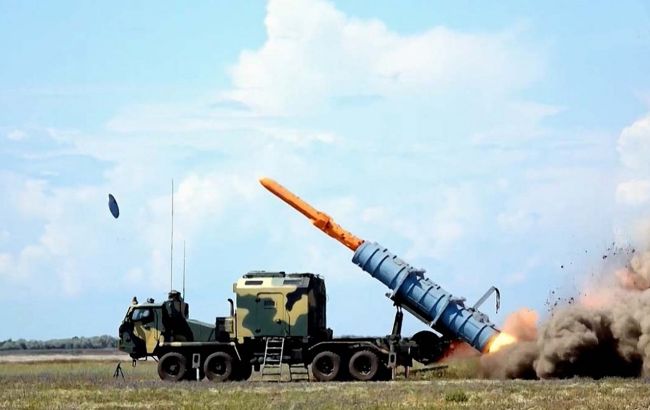
Ukrainian President Volodymyr Zelensky has released a video on his official Telegram channel showing the night-time launch of the country’s upgraded long-range Neptune missiles, marking the first publicly confirmed operational use of the new system against targets deep inside Russian territory.
As reported by The WP Times, citing the president’s Telegram channel and independent defence analysts.
What the newly released footage shows
The video captures a mobile launcher being prepared in darkness before two missiles are fired in close succession. The plume, acceleration profile and transition into level flight match the technical characteristics of the modernised RK-360L “Long Neptune” missile. Defence analysts who reviewed infrared and acoustic signatures in the footage say it is “highly consistent” with earlier verified test material released by Ukraine in 2025.
Reactions from Russia and Western intelligence
Russian authorities reported overnight explosions in the regions of Belgorod, Bryansk and Voronezh, claiming their own air defences were active but providing no evidence. Western intelligence officials, speaking anonymously, confirmed that NATO early-warning satellites detected a heat signature of a cruise missile launch from southern Ukraine at around 02:10 CET. Several subsequent impact points were registered at Russian military logistics hubs.
One senior European security official told Renewz.de:
“This is the clearest indication so far that Ukraine possesses an indigenous long-range strike capability able to reach strategic targets inside Russia.”
Why Kyiv chose to publish the video now
Security experts say the timing serves three strategic purposes:
1. Deterrence towards Russia
By demonstrating a reach of up to 1,000 km, Ukraine signals that Russian aviation bases, ammunition depots and command facilities far from the frontline are vulnerable.
2. Domestic confidence and industrial messaging
The footage highlights Ukraine’s growing ability to develop and produce complex precision systems despite the ongoing war.
3. A political message to Western partners
Kyiv demonstrates that it is not wholly reliant on Western long-range weapons, reinforcing its case for continued support.
What is the “Long Neptune”? – Technical profile
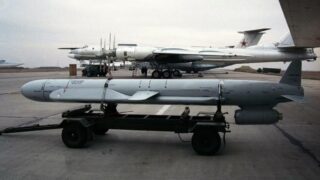
The RK-360L Neptune is a significantly upgraded land-attack variant of the R-360 anti-ship missile, originally used to strike the Russian cruiser Moskva.
Key performance estimates
| Parameter | RK-360L “Long Neptune” | R-360 Neptune |
|---|---|---|
| Range | up to 1,000 km | ~280 km |
| Warhead | ~260 kg | ~150 kg |
| Target type | strategic land targets | naval targets |
| Guidance | INS/GPS + radar + electro-optical terminal guidance | INS/GPS |
Analysts note that achieving both greater range and a heavier warhead is technically challenging, requiring improvements in engine efficiency, materials and aerodynamics.
Why the missile matters militarily
The system enables Ukraine to strike:
- airbases
- ammunition storage sites
- railway and logistics nodes
- long-range air-defence systems
- command and control hubs
With a range comparable to some Western cruise missiles, the Neptune system could significantly alter operational dynamics.
Development timeline
- March 2025 – successful combat trials.
- August 2025 – first public showing of the upgraded missile.
- 14 November 2025 – first confirmed operational use, documented by Zelensky’s video.
According to defence analysts, Ukraine is believed to have produced a limited but meaningful number of missiles.
Read about the life of Westminster and Pimlico district, London and the world. 24/7 news with fresh and useful updates on culture, business, technology and city life: Ukraine to seal historic fighter jet agreement with France, Zelensky says