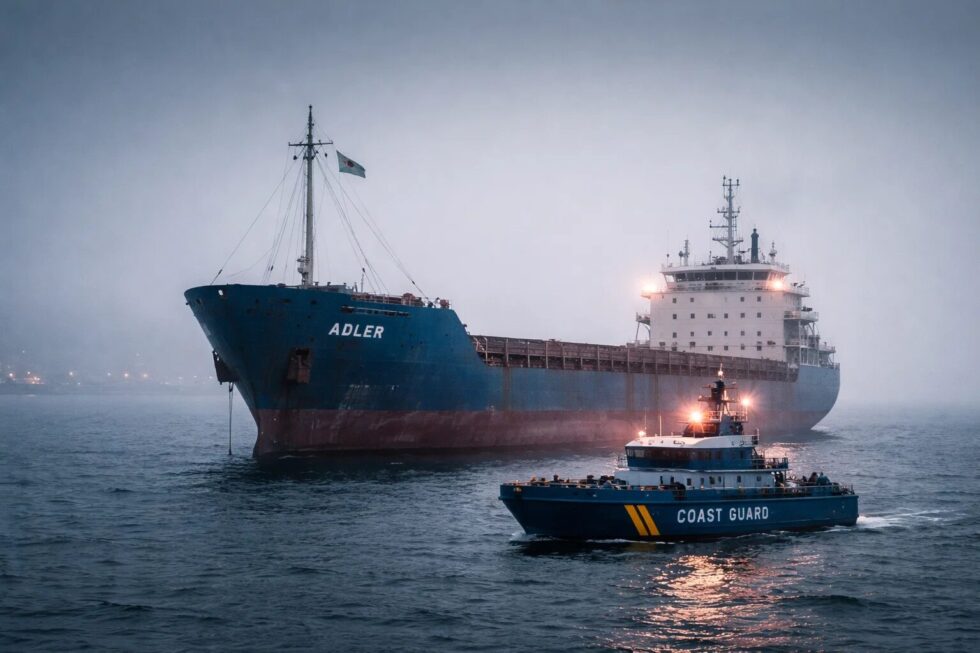
Swedish authorities have detained a Russian cargo vessel under international sanctions in Swedish territorial waters and launched a full inspection of its cargo, ownership and route. The ship, named Adler, has been anchored off the coast of Höganäs since Saturday morning after reportedly suffering an engine failure that left it unable to manoeuvre. The incident immediately triggered security and sanctions-related checks under EU regulations. The WP Times reports, citing Sweden’s public service broadcaster SVT.
According to Swedish officials, the overnight operation was led by the customs service and supported by the coastguard and specialist units. Sweden’s security police and the public prosecutor’s office are also involved in the investigation, reflecting the potential seriousness of the case. Inspections continued into Sunday morning, with authorities stressing that procedures were carried out calmly and without incident.
A spokesperson for customs said the boarding of the vessel was conducted peacefully and that the crew cooperated fully with officials. No immediate details were released regarding the nature of the cargo, as checks are ongoing. Authorities said the aim of the operation is to determine whether the ship has breached EU or US sanctions regimes or attempted to circumvent restrictions on Russian maritime trade.
The Adler is owned by the Russian company M Leasing LLC, which is listed under EU and US sanctions. Western authorities have previously linked vessels connected to the company to suspected arms-related logistics. International reports have also raised concerns that ships tied to sanctioned Russian operators may be used to transport ammunition originating from North Korea, later deployed by Russian forces in the war against Ukraine.
The Swedish operation forms part of a broader pattern of increased maritime enforcement across the European Union. Over the past year, EU member states have stepped up inspections of vessels suspected of involvement in sanctions evasion, arms trading or so-called “hybrid activities” at sea. Particular attention has been paid to ships operating on irregular routes, under opaque ownership structures or using technical faults as justification for unscheduled stops.
Similar incidents have been reported elsewhere in Europe. In October, French authorities detained a Russian oil tanker suspected of belonging to Russia’s so-called shadow fleet. Earlier this year, German officials temporarily held a vessel carrying Russian nuclear fuel in the port of Rostock. European governments say such measures are essential to enforcing sanctions and protecting maritime security in EU waters.
Read about the life of Westminster and Pimlico district, London and the world. 24/7 news with fresh and useful updates on culture, business, technology and city life: France issues statement on peace talks ahead of meeting between Zelenskyy and Macron