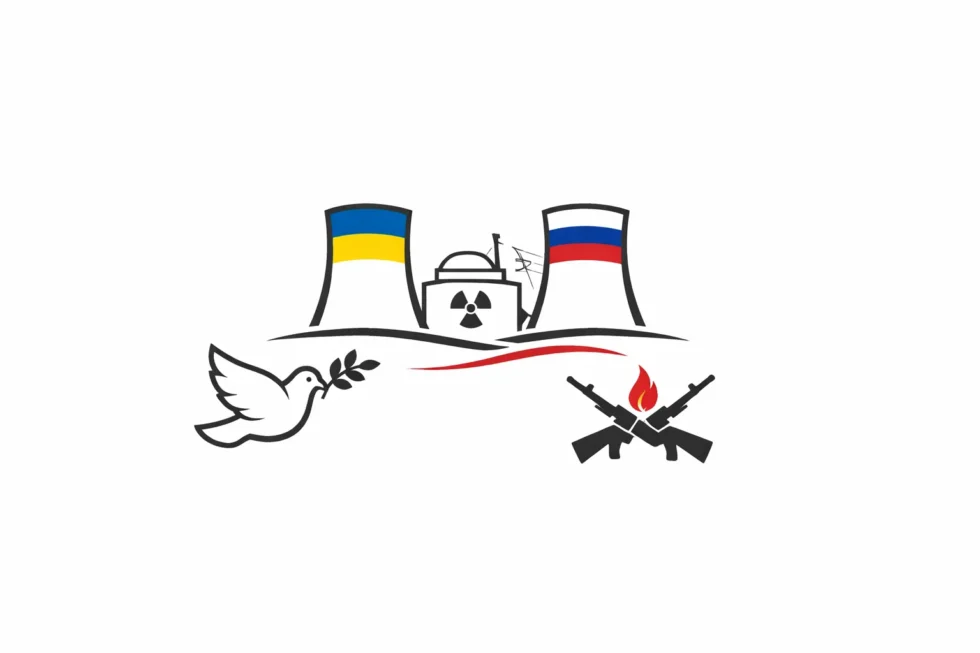
Ukraine and Russia have agreed a local ceasefire in the area surrounding the Zaporizhzhia Nuclear Power Plant (ZNPP) in order to allow urgent repairs to a damaged external power line that supplies electricity to the facility, a move aimed at stabilising the plant’s fragile power supply during the ongoing war. As reported by The WP Times, the announcement was made by Rafael Grossi, Director General of the International Atomic Energy Agency (IAEA).
An IAEA technical team is now monitoring and supervising the repair work, which is expected to last several days. The agency said the operation is part of its ongoing efforts to prevent a nuclear accident at the site during the continuing conflict.
Grossi said the ceasefire created a temporary “window of silence”, making it possible for engineers to begin restoring power transmission between the Zaporizhzhia nuclear plant and the nearby Zaporizhzhia thermal power station, which plays a key role in stabilising the region’s electricity supply. He added that restoring stable external power is essential for nuclear safety, as the plant depends on electricity to run cooling systems and safety equipment.
Situation at Zaporizhzhia Nuclear Power Plant
The Zaporizhzhia Nuclear Power Plant, Europe’s largest nuclear facility, has been under Russian occupation since March 2022. Since then, Russia has repeatedly attempted to assert administrative and regulatory control over the plant, actions which Ukraine and many international bodies regard as violations of international law. The IAEA has maintained a permanent monitoring mission at the site since 2022 in order to track safety conditions and prevent a potential nuclear incident.
Ukraine has described recent actions by Russia’s nuclear regulator, Rostekhnadzor, as a form of “nuclear coercion”, warning that political interference in the plant’s operations increases risks not only for Ukraine but for neighbouring countries and the wider international community.
Power supply remains fragile
The Zaporizhzhia plant has repeatedly lost external power since the start of the war — a critical issue because nuclear reactors rely on continuous electricity to keep reactor cores and spent fuel cool.
On 19 November, Ukraine managed to restore power to the occupied plant after a key transmission line was damaged by shelling. Before that, the facility had suffered ten complete blackouts, forcing it to rely on emergency diesel generators. On 6 December, the plant again lost its external power supply. At present, ZNPP is connected to only one remaining external power line, leaving the site in a vulnerable position should that line be damaged. The IAEA has repeatedly warned that the plant’s dependence on a single power connection represents a serious nuclear safety risk.
Diplomatic efforts and disputes
As part of wider international efforts to reduce the risk of a nuclear accident, the United States has proposed a model of joint management of the Zaporizhzhia plant involving Ukraine, Russia and the US. However, Ukrainian President Volodymyr Zelensky has rejected this approach, stating that any arrangement which includes Russia as a manager of the facility would be unfair and illegitimate, given that the plant is on Ukrainian territory. For now, the local ceasefire has created a narrow but critical opportunity for engineers to restore stable electricity to the plant — a development that international nuclear safety experts regard as essential to preventing a major incident.
Read about the life of Westminster and Pimlico district, London and the world. 24/7 news with fresh and useful updates on culture, business, technology and city life: Why is Russia now selling physical gold from its national reserves for the first time