
The United Kingdom has reached a major milestone in its life sciences strategy after regulators approved the first domestically manufactured mRNA vaccine for use in the UK. The decision, confirmed on Wednesday, 11 February 2026, marks a structural shift in how the country secures vaccines for both routine immunisation and future public health emergencies, The WP Times reports.
Approval was granted by the Medicines and Healthcare products Regulatory Agency (MHRA), allowing Moderna’s Covid-19 vaccine, Spikevax, to be supplied to the National Health Service from a newly established production facility in Oxfordshire. It is the first time an mRNA vaccine used in the UK will be produced domestically rather than sourced through international manufacturing and supply chains.
The vaccine is manufactured at the Moderna Innovation and Technology Centre, a purpose-built facility designed to produce millions of doses annually. According to government figures, the site has surge capacity of up to 250 million doses in the event of a pandemic, providing the UK with the ability to respond rapidly to future health crises without reliance on overseas production.
The Oxfordshire facility forms part of a ten-year public-private partnership between the UK government and Moderna, under which the company has committed more than £1 billion to research, development and manufacturing in Britain. Around 150 highly skilled jobs are expected to be created at the Harwell site as production ramps up and the research pipeline expands.

mRNA vaccines differ from traditional vaccines in that they do not contain live virus. Instead, they deliver genetic instructions that prompt human cells to produce a harmless fragment of a virus — such as the Covid-19 spike protein — which trains the immune system to recognise and respond to infection. The technology allows vaccines to be designed and updated more quickly than conventional methods, while remaining scalable for mass production. Health officials and industry experts say this flexibility is why mRNA platforms are increasingly viewed as central not only to controlling infectious diseases, but also to the development of future cancer treatments and personalised medicine. The approval is therefore seen as a long-term strategic investment rather than a Covid-specific intervention.
The MHRA decision carries strategic as well as medical importance. By bringing mRNA manufacturing onshore, the UK reduces its exposure to global supply chain disruptions, accelerates potential vaccine rollout during outbreaks, and strengthens its position as an international life sciences hub. Ministers have framed the project as a cornerstone of national pandemic preparedness, designed to ensure that vaccines can be designed, approved and produced domestically if global markets tighten.
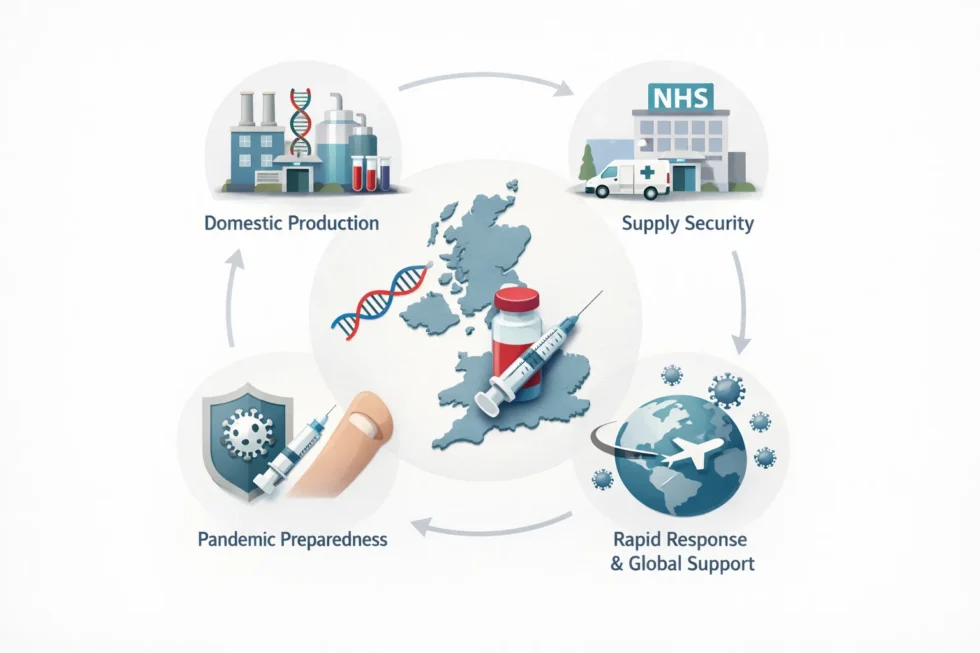
The approved Spikevax vaccine will now be incorporated into the NHS vaccination programme for 2026. Meanwhile, Moderna has indicated that the Harwell facility could support the production of next-generation mRNA vaccines beyond Covid-19, including those targeting other infectious diseases and cancer therapies. For policymakers, the approval provides a test case for how industrial strategy, regulation and public health policy can align. For patients, it offers greater certainty that critical vaccines can be delivered quickly and reliably, even during periods of global instability.
Read about the life of Westminster and Pimlico district, London and the world. 24/7 news with fresh and useful updates on culture, business, technology and city life: Why are vitamin D users in the UK warned to stop supplements when these symptoms appear