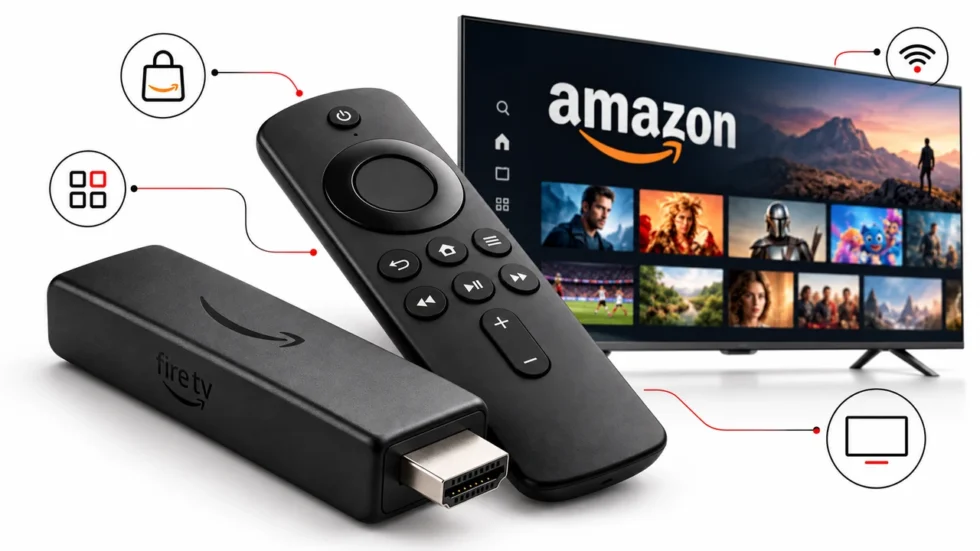
16 October 2026. Amazon's latest Fire TV Stick 4K has arrived in the UK with a significant software change that could affect millions of existing Fire TV users: the £69.99 streaming device runs Vega OS instead of Android-based Fire OS, removing the familiar option of installing Android applications from outside Amazon's official store. Launched on 30 September 2026, the third-generation Fire TV Stick 4K combines a slimmer design, Wi-Fi 6, improved navigation and a redesigned remote with an operating system that operates differently from its predecessors. Amazon presents the upgrade as a faster and more convenient way to watch television, but the move also changes what customers can install, which applications developers must support and whether an older Fire TV Stick might actually be the more suitable purchase.
The implications became clearer on 13 October, when Amazon confirmed through its official Developer Community that ordinary users would not be able to install applications outside the Amazon Appstore on Vega OS devices, with no plans to introduce general sideloading functionality. That restriction marks a departure from the flexibility traditionally associated with Android-based Fire TV hardware, particularly for people using independent streaming applications, alternative launchers, specialist media players or software unavailable through Amazon's catalogue. As The WP Times reports, the existing Fire TV Stick 4K Max still uses Fire OS 8, meaning British consumers now face a choice between newer hardware and the established Android-derived software environment. With the standard 2026 Fire TV Stick 4K launching at £69.99 and having been advertised for £32.99 during Amazon's October Prime sale, the critical question is not simply whether the new device offers good value, but whether its operating system supports everything a household expects to watch and use.
What is Amazon Vega OS, and why is Fire TV moving away from Android
Vega OS is Amazon's Linux-based operating system developed for a new generation of connected entertainment devices. It replaces the Android-derived foundation found in Fire OS on selected newer Fire TV products, giving Amazon a separate software platform for application development, distribution and device management. The distinction matters because Fire OS has historically benefited from Android compatibility: developers could adapt existing Android applications for Amazon hardware, and some users could manually install compatible Android packages, commonly known as APK files, without obtaining them through the official Amazon Appstore. Vega OS does not preserve that arrangement. Applications must be built or adapted for Amazon's new environment, and software that runs successfully on an older Fire TV device cannot automatically be transferred to a newer Vega-powered model.
Amazon began the transition with the Fire TV Stick 4K Select in 2025 before extending Vega to further streaming devices, including the Fire TV Stick HD and third-generation Fire TV Stick 4K in 2026. The company now maintains separate development resources for Vega and Fire OS, reflecting fundamental differences beneath what may appear to consumers to be a familiar Fire TV interface. Fire OS 8 is derived from Android, while Vega uses a separate application architecture supported by Amazon's developer tools and React Native framework. For customers, that distinction affects installation methods, application availability, system customisation and the long-term practicality of moving from one device to another. For developers, it introduces the need to maintain a compatible Vega application rather than assuming that an existing Android build can be distributed unchanged.
The move also gives Amazon greater control over software distributed to consumers. On Android-based Fire OS devices, installing applications from third-party sources has historically offered an alternative to the company's official store, even though technical restrictions and compatibility requirements have varied between devices and software versions. Vega adopts a more controlled approach in which supported consumer applications are distributed through Amazon's Appstore. Amazon frames that arrangement around security and reliability, but it also reduces the freedom of customers to choose their own software sources. This is particularly relevant to enthusiasts who bought Fire TV hardware because it offered more flexibility than some competing television platforms.
Importantly, the introduction of Vega does not mean Amazon has remotely converted every existing Fire TV Stick into a different operating system. The company's published specifications continue to identify several older products as Fire OS devices, including the second-generation Fire TV Stick 4K Max and earlier standard 4K models. Customers should therefore distinguish between Amazon introducing Vega on new hardware and an operating-system change affecting a device they already own. There is no basis in the current published specifications for assuming that every existing Fire OS product has been migrated to Vega, or that all future Fire TV products will necessarily follow the same release schedule. developer.amazon.comdeveloper.amazon.comdeveloper.amazon.com
Which Fire TV Stick models use Vega OS in 2026, and what do they cost in the UK?
Amazon's revised streaming-stick range places the Fire TV Stick HD below the standard Fire TV Stick 4K, with the Fire TV Stick 4K Max positioned as the higher-end option for home-cinema enthusiasts and users who want additional performance and storage. The names suggest a straightforward progression from basic streaming to more advanced hardware, but the operating systems reveal a more complicated picture. The newer HD and standard 4K models use Vega, while the currently listed second-generation 4K Max continues to run Fire OS. Older Fire TV Sticks may also be available through retailers, remaining stock, refurbished sales and the second-hand market, making it important to check the generation rather than relying on a familiar product name.
| Amazon Fire TV device | Operating system | RAM | Storage | Key distinction |
|---|---|---|---|---|
| Fire TV Stick HD (2026) | Vega OS 1.1 | 1 GB | 8 GB | HD streaming, newer software platform |
| Fire TV Stick 4K (2026, 3rd Gen) | Vega OS 2.0 | 1 GB | 8 GB | New standard 4K model, Wi-Fi 6 |
| Fire TV Stick 4K Select (2025) | Vega OS 1.1 | 1 GB | 8 GB | Earlier Vega-powered 4K option |
| Fire TV Stick 4K Max (2023, 2nd Gen) | Fire OS 8 | 2 GB | 16 GB | Android-derived system, Wi-Fi 6E |
| Fire TV Stick 4K (2023, 2nd Gen) | Fire OS 8 | 2 GB | 8 GB | Older standard 4K model |
| Fire TV Cube (2022, 3rd Gen) | Fire OS 7 | 2 GB | 16 GB | Separate premium streaming device |
Sources: Amazon's official Fire TV device specifications and Fire OS developer documentation. RAM and storage figures describe published hardware specifications, not free space available after system files and installed applications.
The new Fire TV Stick 4K launched in Britain at a reported recommended price of £69.99, although Amazon's Prime Big Deal Days promotion in early October advertised it for £32.99. That promotional figure should not be confused with the normal selling price or treated as evidence of a continuing discount on 16 October. Retail prices can change, particularly around Amazon's seasonal shopping events, and buyers comparing products should check the actual checkout price rather than assuming that a previously advertised offer remains available. Amazon's own launch announcement specified a US price of $59.99 and confirmed that the United Kingdom was among the markets receiving the device from 30 September. techradar.comaboutamazon.comdeveloper.amazon.com
Price also changes the relative value of the older Fire TV Stick 4K Max. The 2023 Max offers twice the memory and internal storage of the new standard 4K model, alongside Wi-Fi 6E and Dolby Vision support. A discounted or refurbished Max could therefore be attractive to customers seeking an Android-derived operating system, although its age, remaining software support, seller warranty and physical condition must also be considered. Conversely, households that only want straightforward access to supported services may prefer a discounted Vega-powered model, especially where its slimmer design and USB power arrangement make installation simpler.
Amazon also continues to distinguish the Fire TV Cube from its streaming-stick range. The Cube is a separate device designed for users who want a more advanced entertainment setup, including hands-free Alexa functionality and additional hardware capabilities. It should not be treated as a direct replacement for the new standard Fire TV Stick 4K merely because it continues to use Fire OS. Its form factor, requirements and pricing position it differently within the wider Fire TV family.
Can you still sideload Android apps on Amazon Fire TV Stick Vega OS?
The loss of ordinary Android sideloading is the most consequential software restriction introduced by Vega OS. Sideloading refers to installing an application through a method other than the device's standard application store. On compatible Android-based Fire TV products, owners have historically been able to install APK packages manually, provided the application and device supported the necessary installation method. This could allow access to specialist media players, independent software, utilities and other applications unavailable through Amazon's normal catalogue. The method itself is not inherently unlawful: it describes how software is installed, rather than establishing whether that software or the content it accesses is legal.
On Vega, the arrangement is fundamentally different. Android APK files are not ordinary Vega application packages, and Amazon does not support general installation of applications outside its Appstore on consumer Vega devices. The company addressed the issue directly in its Developer Community on 13 October 2026 after a Fire TV Stick 4K Select owner requested an optional, secure way to install compatible third-party applications. In response, Amazon representative Ivy explained that the Vega ecosystem was designed around Appstore distribution, and subsequently confirmed that installation outside the official store was not supported for normal consumer use. The company also stated that it had no plans to introduce wider sideloading functionality beyond development requirements. community.amazondeveloper.com
That distinction is particularly important because online discussions sometimes describe Vega as a platform on which sideloading is completely impossible. Amazon's own technical documentation is more precise. Registered developers can enable Developer Mode on supported Vega devices, authenticate through Amazon's development tools and install Vega application packages for testing. The process involves purpose-built software rather than conventional Android APKs, and it is intended to support application development before publication through the Appstore. It should not be confused with an ordinary consumer selecting an Android application file and installing it on a streaming stick. developer.amazon.com
The practical consequence depends on the software an owner uses. A household watching only officially supported streaming services may notice little difference, while someone who has built a customised entertainment system around Android applications could lose access to essential features by replacing an older Fire OS device. Alternative launchers, independently distributed media players, specialist utilities and applications maintained outside Amazon's distribution system all require careful consideration. Even if a software developer offers a version for Vega, customers must establish whether that version is actually published and available to their device.
A VPN offers a useful example. Amazon says a number of VPN providers have added applications to the Vega ecosystem, but that does not establish compatibility with every provider or every feature offered in its Android application. A customer who uses a VPN for privacy, travel or access to services should verify the exact provider's Vega support before purchasing. The same applies to software used to play personal media files, connect to a home server or access specialist subscription services. Downloading an Android APK from a provider's website is not an effective solution if the operating system cannot run that package.
There is also a broader distinction between legitimate third-party software and unauthorised television streams. Some discussions about Fire TV sideloading focus heavily on piracy, but the installation method has lawful applications and is used for a variety of independent software products. Consumers should still exercise caution over applications obtained from unfamiliar sources, especially where permissions, payment requests, security updates or content rights are unclear. Amazon's move to a more tightly controlled ecosystem changes the installation route; it does not establish that every application previously distributed outside the Appstore was unsafe.
Which streaming apps work with Vega OS in the UK?
For British households, software compatibility is more important than the number of applications advertised across Amazon's global ecosystem. The company says it has added more than 2,000 applications since introducing its first Vega-powered Fire TV product, naming Spotify, Xbox, VLC and several VPN services among the additions. Its September 2026 announcement also identified established services including Netflix, Disney+, YouTube and Prime Video as part of the broader supported experience. Those statements indicate that Vega is developing into a substantial streaming platform rather than an operating system restricted to Amazon's own content. They do not, however, establish that every application available on an older Fire TV Stick has a corresponding Vega version, or that every advertised service offers identical features in the UK.
British viewers face particularly important questions around BBC iPlayer, ITVX, Channel 4, Channel 5's streaming service, UKTV's U, NOW and specialist sports subscriptions. These services form a significant part of everyday television viewing, especially in homes where a Fire TV Stick has become the primary means of accessing both live channels and catch-up programming. An application may be available on one Fire TV generation without providing evidence of current support for a different operating system. Customers should therefore check the app's compatibility with their specific model, particularly when support pages describe Fire TV products generally rather than distinguishing between Fire OS and Vega OS.
For a household relying on BBC iPlayer and ITVX, the relevant question is not merely whether those services appear in Amazon's wider Appstore catalogue. It is whether the applications install and operate on the particular Vega-powered device being purchased, including support for live streams, sign-in, accessibility options and playback functions. The same principle applies to sports services, where a missing application or unsupported device can matter far more than modest improvements in navigation speed. Someone purchasing a Fire TV Stick specifically to watch football, Formula 1 or another subscription service should confirm device compatibility directly with the service provider rather than assuming that 4K output guarantees access to all 4K programming.
Amazon's inclusion of VLC in its announcement is significant for people with personal film and television libraries, although the availability of a media player should not be interpreted as confirmation that every file type, networking feature or playback configuration behaves identically to its Android counterpart. The same applies to other specialist media applications. File formats, digital rights management, subtitle support, local network access and server compatibility can all influence whether a new streaming device fits an existing home-entertainment setup.
Another consideration is that a streaming service's presence in an application catalogue does not necessarily mean every feature is supported. Picture quality may depend on the subscription tier and content rights; Dolby Atmos playback may depend on the particular application and connected equipment; and live television or downloads may be limited by the software provider. Viewers should distinguish between an app being available, an account being able to sign in and the full range of desired functions being supported. These are separate compatibility questions, and a device that meets the first two conditions may not necessarily satisfy the third.
For customers who use Netflix, Prime Video, Disney+ and YouTube without extensive customisation, Vega may offer a familiar experience. The greater risk arises where a Fire TV Stick has been used as a flexible Android entertainment device rather than simply as a convenient streaming interface. Before replacing it, owners should make a list of the applications they actually use, identify which are essential and confirm their availability for the new operating system. This is more reliable than counting the number of applications Amazon says are available across the platform.
Is the new Fire TV Stick 4K faster, and what changes with the hardware
Amazon is promoting the third-generation Fire TV Stick 4K as a faster and more convenient streaming device, claiming that customers can move from powering on to watching content approximately 20–40% faster than on a similarly priced 4K streaming stick from another leading manufacturer. According to Amazon's own comparisons, applications launch more than 35% faster and video playback begins nearly 20% faster. The company also compared the product with the built-in streaming interfaces of three popular 4K televisions and reported faster playback starts. These figures are relevant, but they are manufacturer-controlled results rather than independently established improvements over every earlier Fire TV Stick. The comparisons should not be interpreted as proof that Vega OS itself is universally faster than Fire OS, because differences in hardware, application design, background processes and testing conditions can all influence performance.
The new model uses a MediaTek MT8698E processor with four Cortex-A55 cores running at up to 1.7GHz, supported by 1GB of RAM and 8GB of internal storage. Amazon's specifications identify an ARM G310 V2 graphics processor, HDMI 2.1 connectivity and support for Wi-Fi 6. The device is designed for 4K playback at up to 60 frames per second, with support for HDR10, HDR10+, HLG and modern video codecs including AV1, H.265, H.264 and VP9. These characteristics provide the foundations for contemporary streaming services, although picture quality ultimately depends on the television, the selected content, the streaming application and the bandwidth available to the household. An older television without 4K resolution or HDR support will not acquire those display capabilities simply because a compatible Fire TV Stick is connected.
The memory specification deserves particular attention. At 1GB of RAM and 8GB of storage, the new standard Fire TV Stick 4K has less memory than the second-generation Fire TV Stick 4K Max, which Amazon lists with 2GB of RAM and 16GB of internal storage. The older Max also supports Wi-Fi 6E, including the 6GHz band on compatible networks. Those differences do not automatically establish that the Max will perform better in every application, because software optimisation and workload matter, but they demonstrate why release year is a poor substitute for a proper hardware comparison. Buyers who install numerous applications or place particular importance on wireless connectivity should examine the specifications rather than assuming that the newest standard 4K device is also the most capable model in the range.
The new Fire TV Stick 4K also introduces Amazon's Direct Power arrangement, allowing the device to draw power from a compatible television's USB port through the supplied cable. This can simplify installation behind wall-mounted televisions, reduce the need for a separate wall socket and make the streaming stick more convenient to transport. However, the availability of a USB port does not itself guarantee sufficient power. A television must provide the power required by the device, and users experiencing unexpected restarts, unstable performance or power warnings should follow Amazon's recommended setup rather than assuming every television USB connection will work. Direct Power is a practical benefit, but it should be considered alongside the limitations of the particular television.
Amazon has also redesigned the Fire TV Remote with an asymmetric shape, more tactile controls and a customisable star button. The button can be configured to open a favourite application or activate supported settings such as closed captions or Screen Magnifier, reducing the need to navigate multiple menus for frequently used functions. Amazon says the new remote has a distinctive Home button and integrated television controls, allowing customers to manage power, volume and mute on compatible equipment. The company has separately announced a Fire TV Remote Plus for early 2027, featuring an aluminium design and backlit controls. That future remote should not be confused with the standard remote supplied with the 2026 Fire TV Stick 4K.
Alexa+ is another part of Amazon's broader Fire TV strategy, with the company promoting more conversational content discovery and improved voice interaction. Availability, language support and individual features can differ by market and account. British buyers should therefore be cautious about assuming that every capability demonstrated in a US product announcement is immediately available in the United Kingdom. Voice controls may be useful for searching, launching applications and managing supported devices, but they do not overcome an application-compatibility problem. A sophisticated assistant cannot make an unavailable Android application run natively on Vega.
Fire TV Stick 4K vs 4K Max: which should UK buyers choose
The standard 2026 Fire TV Stick 4K and second-generation Fire TV Stick 4K Max represent two different purchasing propositions. The newer standard model combines Vega OS, Wi-Fi 6, a slimmer body, Direct Power and a redesigned remote, making it attractive to households looking for uncomplicated streaming through supported applications. The older Max offers more memory, greater internal storage, Wi-Fi 6E, Dolby Vision and an Android-derived operating system. These advantages make it particularly relevant to customers who value home-cinema features, use a larger selection of applications or depend on compatibility with software originally developed for Android. The decision should be based on the exact hardware generation rather than the assumption that a product carrying the word Max is automatically superior in every possible respect.
| Feature | Fire TV Stick 4K (2026) | Fire TV Stick 4K Max (2023) |
|---|---|---|
| Operating system | Vega OS 2.0 | Fire OS 8 |
| Android APK compatibility | No ordinary APK support | Android-derived system; restrictions still apply |
| Processor | Quad-core up to 1.7GHz | Quad-core up to 2.0GHz |
| RAM | 1GB | 2GB |
| Storage | 8GB | 16GB |
| Wireless connectivity | Wi-Fi 6 | Wi-Fi 6E |
| Maximum resolution | 4K at 60fps | 4K at 60fps |
| HDR10+ | Yes | Yes |
| Dolby Vision | Not listed for the 2026 standard model | Yes |
| Dolby Atmos | Supported audio pass-through; app and equipment dependent | Supported |
| Key attraction | Newer design and Vega experience | More storage, premium formats and Fire OS |
Sources: Amazon Fire TV device specifications, Amazon Fire OS documentation and Amazon's September 2026 product announcement. Features are hardware specifications and do not guarantee identical support across all apps or connected equipment.
Dolby Vision may be an important factor for households with compatible televisions. The format provides dynamic HDR metadata that can improve the handling of brightness and contrast in supported content, although the visible benefit depends on the display and the source material. HDR10+ also provides dynamic metadata, and the relative experience varies according to the television and streaming service. Customers should not treat the presence or absence of a particular format as the sole measure of picture quality; however, anyone who has invested in a home-cinema setup should verify that their preferred streaming hardware supports the formats they actually use. A similar distinction applies to Dolby Atmos, where the streaming service, subscription, source material and audio equipment can determine whether immersive sound is available.
For owners of a working second-generation Fire TV Stick 4K Max, replacing it with the standard 2026 model is not an obvious upgrade. The newer product introduces a different operating system and a more compact physical arrangement, but it also provides less RAM and storage. Someone satisfied with the existing Max's streaming performance and application support has little reason to replace it solely because a newer Fire TV Stick has appeared. The relevant questions are whether the household needs the new design, whether any specific application benefits from Vega and whether the old device continues to receive the software updates necessary for safe and reliable operation. The position is different for customers using an ageing HD streaming stick or a television with a slow built-in interface. Where the required services are available, a newer Vega-powered Fire TV Stick could deliver a meaningful improvement in navigation and everyday convenience. At a promotional price around £32.99, the 2026 4K model was particularly competitive during Amazon's October sale, although that temporary offer has to be separated from its reported £69.99 launch price. A substantial discount can make the hardware attractive; it cannot eliminate a software restriction that affects an essential application.
What are the best alternatives if Vega OS does not support your apps
Customers who need Android compatibility are not necessarily restricted to keeping an older Fire TV Stick. Google TV and Android TV devices provide another potential route, although they also differ in software policies, hardware specifications, application support and permitted installation methods. A device based on Google TV may be worth considering for people who use Android applications unavailable on Vega, but compatibility should still be established before purchase. It would be misleading to describe every Google TV product as offering unrestricted sideloading or to assume that software running on one Android-derived television platform will necessarily work without modification on another.
Roku devices offer a different approach, prioritising access to supported streaming services through their own operating system and application ecosystem. They may suit households looking for a straightforward way to watch established television platforms without extensive customisation. However, Roku does not provide a like-for-like replacement for Android APK installation, so it is not necessarily the answer for customers whose primary concern is the loss of sideloading. Choosing Roku instead of Vega may offer an alternative interface and selection of streaming services, but it does not restore the familiar Android software environment.
Apple TV 4K occupies another part of the market, with a premium hardware and software experience built around Apple's tvOS ecosystem. It may appeal to customers who value integration with other Apple devices, supported streaming applications and home-entertainment features. It is not, however, an Android device and should not be purchased as a solution for running Android APK files. Apple's application distribution and platform requirements are different again, meaning that buyers should compare the exact services and features they need rather than viewing every alternative as a direct substitute for Fire OS.
A particularly practical option is to retain an existing Fire OS device until there is a compelling reason to replace it. Many streaming sticks remain useful long after newer generations appear, provided their applications continue working, they receive appropriate security updates and their performance remains acceptable. Existing owners should first determine whether slow navigation is caused by limited storage, an unstable wireless connection, an outdated application or another problem that can be addressed without buying replacement hardware. An upgrade that removes access to a frequently used application is unlikely to be worthwhile merely because the new device reaches a streaming service a few seconds faster.
Purchasing older stock requires some care. Retailers may advertise different Fire TV generations under similar names, while refurbished listings can contain incomplete information about the model, supplied remote, power accessories or condition. Buyers should look for the generation and model identifier, read the product description carefully and check the seller's return terms. The same caution applies to second-hand marketplaces, where devices may have been modified, damaged or supplied without suitable accessories. A cheap Fire OS streaming stick is not necessarily good value if its support status or physical condition creates problems shortly after purchase.
What should UK customers check before upgrading to Vega OS?
The most reliable purchasing process begins with the operating system rather than the price. Customers should establish whether the advertised Fire TV Stick runs Vega OS or Fire OS, identify the exact generation and compare the software with their existing setup. Amazon's official Fire TV device specifications provide model-level information, while individual streaming providers publish their own supported-device requirements. Together, these sources offer a more dependable basis for a buying decision than a retailer's general description of a product as the latest or fastest Fire TV Stick.
Before paying, the following checks are particularly important for British households:
- Operating system and generation: Confirm whether the product is the 2026 Fire TV Stick 4K with Vega OS 2.0, an earlier Vega device or an Android-derived Fire OS model.
- UK streaming applications: Verify support for essential services, particularly BBC iPlayer, ITVX, Channel 4, NOW, sports subscriptions and any international services used regularly.
- Third-party software: Establish whether an application installed manually on an older device has an officially supported Vega version. Do not assume an Android APK will work.
- Picture and sound: Check the television's 4K and HDR capabilities, required Dolby formats, audio equipment and service subscription before paying extra for premium features.
- Memory and connectivity: Compare RAM, storage, Wi-Fi standards, power requirements and physical design rather than assuming the newest device has the highest specifications.
- Retail price and returns: Distinguish normal selling prices from temporary promotions, confirm the seller's identity and check the applicable return arrangements before replacing a working device.
Price comparison should also take account of the household's actual viewing equipment. A 4K streaming stick provides limited picture-quality advantages when attached to a television that only supports 1080p, while a more expensive device offering Dolby Vision may not justify the premium on a display that cannot reproduce the format. Conversely, a household with a modern 4K HDR television and a capable sound system may have good reasons to prioritise specific audio and video features over a minor price difference. The ideal streaming stick is not necessarily the cheapest or the newest, but the one whose software and hardware match the television and services already in use.
Consumers should also consider the difference between a hardware defect and dissatisfaction with software compatibility. In the UK, purchases from traders are subject to consumer protection rules, including the Consumer Rights Act 2015, while eligible online purchases generally carry cancellation rights under the Consumer Contracts Regulations 2013. These rights have different conditions and should not be reduced to a blanket promise that an opened streaming stick can always be returned for any reason. Buyers concerned about compatibility should check the retailer's published return policy and applicable statutory rights, particularly when ordering from a third-party marketplace seller.
For customers purchasing specifically because a particular application is advertised as supported, it is sensible to retain the original product listing, order confirmation and relevant compatibility information. If the product does not perform as described, those records can help establish what was represented at the point of sale. This is different from simply discovering after purchase that an application never advertised as compatible is unavailable. Confirming compatibility beforehand remains the most effective way to avoid unnecessary returns or disputes.
The broader lesson is that software support has become one of the most important specifications of a streaming device. For years, Fire TV buyers could focus primarily on video resolution, processing speed, storage and price because successive devices shared a broadly familiar Android-derived foundation. Vega changes that calculation. Two Fire TV Sticks may connect to the same television, display similar menus and provide access to many of the same subscription services while differing substantially in what their owners are permitted to install. That is a meaningful purchasing distinction, not simply a technical detail.
Amazon Fire TV Stick Vega OS: frequently asked questions
Does the new Fire TV Stick 4K run Android?
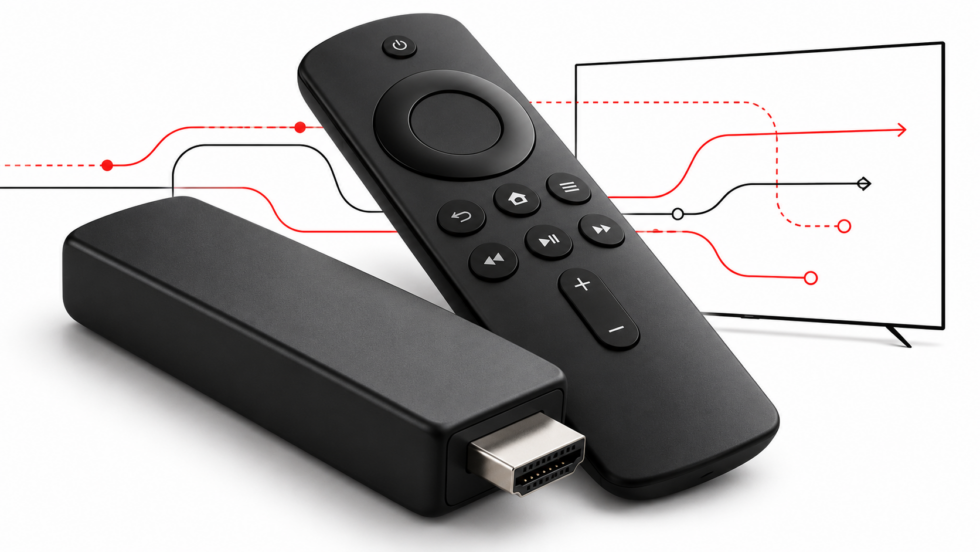
No. Amazon's third-generation Fire TV Stick 4K, released in 2026, uses Vega OS 2.0 rather than Android-derived Fire OS. Its application environment differs from older Fire TV models, including the second-generation Fire TV Stick 4K Max. An Android application that works on an older Fire TV Stick cannot automatically be installed on the Vega-powered model.
Can you install APK files on Vega OS?
Vega OS does not provide ordinary consumer compatibility with Android APK files. Amazon confirmed on 13 October 2026 that applications outside the Amazon Appstore are not supported for general consumer installation. Registered developers can use a separate development workflow to install and test Vega application builds, but this does not restore unrestricted Android sideloading.
Does BBC iPlayer work on Vega OS?
BBC iPlayer is a major UK streaming service, but availability must be verified for the exact Vega-powered device rather than inferred from its presence on older Fire TV products. Customers should consult the current UK Amazon Appstore listing and BBC's supported-device information. The same approach applies to ITVX, Channel 4 and other broadcaster applications.
How much is the new Fire TV Stick 4K in the UK?
The third-generation Fire TV Stick 4K launched in September 2026 at a reported UK price of £69.99. It was also advertised for £32.99 during Amazon's October Prime Big Deal Days promotion. Those figures are historical launch and promotional prices rather than a guarantee of the current selling price, which can change.
Is Vega OS faster than Fire OS?
Amazon claims that its new Fire TV Stick 4K launches applications more quickly and starts playback sooner than certain competing products in its own tests. However, those comparisons do not establish that Vega OS itself is faster than Fire OS in every situation. Actual performance depends on the specific hardware, application and network conditions.
Is the Fire TV Stick 4K Max still using Fire OS?
Yes. Amazon's published device specifications identify the second-generation Fire TV Stick 4K Max from 2023 as a Fire OS 8 product. That is the operating system specified for the current model and does not establish which software platform Amazon might choose for a future successor.
Will Amazon bring sideloading back to Vega OS?
Amazon's official response on 13 October 2026 stated that there were no plans to introduce general sideloading outside development requirements. The company encouraged users seeking unavailable applications to contact the relevant developers about bringing compatible software to Vega. No confirmed date or announced plan for unrestricted consumer installation has been identified.
Is it worth upgrading to the 2026 Fire TV Stick 4K?
For households using supported streaming applications, particularly those upgrading from ageing or slow devices, the newer model may offer useful improvements in design and convenience. Owners of a working Fire TV Stick 4K Max or another Fire OS device should be more cautious if they rely on Android applications, alternative launchers or advanced customisation. Compatibility should determine the decision before processing speed or promotional discounts.
Should UK buyers upgrade to Amazon Fire TV Stick Vega OS
Amazon's move to Vega OS represents a significant change in the Fire TV range, even though the new products may appear familiar to customers who simply want to watch Netflix, Prime Video or other major streaming services. The 2026 Fire TV Stick 4K delivers a slimmer design, modern connectivity and a redesigned remote, while Amazon is continuing to expand its compatible application catalogue. For many households, those improvements may be sufficient, particularly where a promotional price makes the device attractive and all essential services are available.
The position is less straightforward for existing owners who have deliberately chosen Fire TV because of its Android-derived flexibility. Amazon's confirmation that ordinary sideloading will not be supported on Vega establishes a clear limitation, while the second-generation Fire TV Stick 4K Max remains an alternative for users who want the current Fire OS environment. A newer release date does not guarantee more memory, greater application compatibility or a better experience for every household. Until the applications and features required by an individual buyer are confirmed, replacing a reliable Fire OS device with Vega is not necessarily an upgrade. For British consumers, the operating system is now as important as the streaming stick's price, picture quality or processing speed.
Materials used: Amazon News, 29 September 2026, Amazon Fire TV Device Specifications, Amazon Fire OS Overview, Amazon Developer Community, 13 October 2026, Amazon Vega Developer Documentation, TechRadar, UK launch prices and October promotion.
Read about the life of Westminster and Pimlico district, London and the world. 24/7 news with fresh and useful updates on culture, business, technology and city life: The Music of Tim Burton at indigo at The O2: which film scores feature, when are doors and how do fans get there