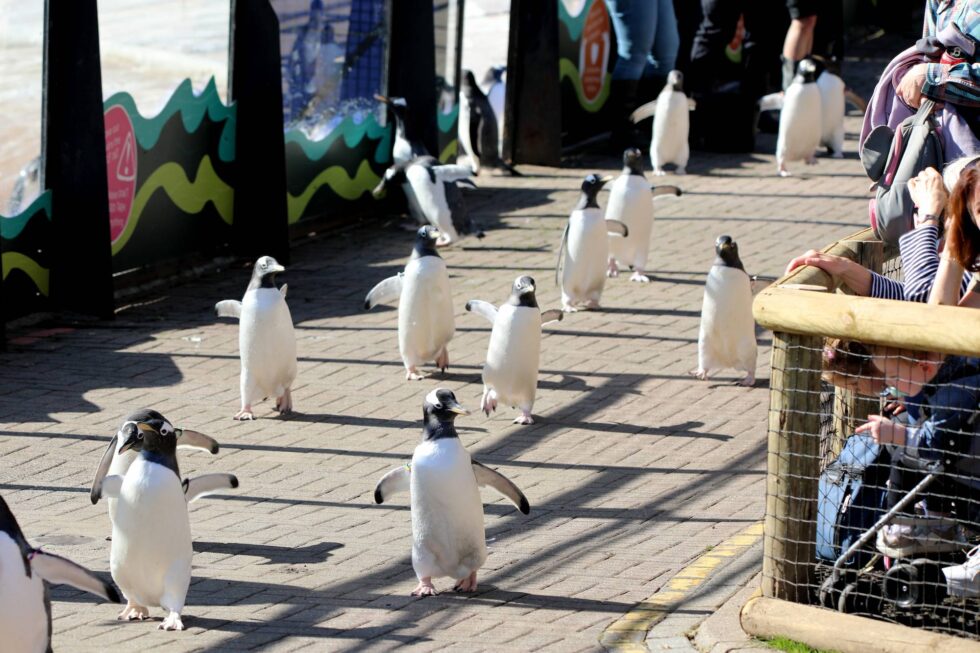
EDINBURGH — January 2026 — Edinburgh Zoo in Scotland has officially suspended its world-famous penguin parade, known as the Wee Waddle, after a sharp surge in bird flu (avian influenza) cases across the UK triggered emergency biosecurity protocols for all captive birds. The move impacts one of Scotland’s most visited wildlife attractions and follows new veterinary risk assessments warning that penguins at Edinburgh Zoo could be exposed to the virus through outdoor visitor pathways, footwear contamination and open-air contact — The WP Times reports, citing Edinburgh Zoo.
A virus once contained, now omnipresent
Public health and veterinary data show that avian influenza — particularly highly pathogenic strains — has become significantly more widespread across the UK, prompting stringent government measures. Strict biosecurity standards have been imposed on poultry keepers and wildlife institutions to curb transmission.† The precise number of national outbreaks has not been published in full by government sources, but zoological and agricultural officials describe the situation as “persistently elevated,” with confirmed cases in both commercial and backyard flocks.
Authorities have repeatedly warned that avian influenza can spread through airborne particles, contact with fluids or contaminated surfaces, and even on shoes, clothing and equipment. For zoos — which house diverse and often vulnerable species in proximity — that risk cannot be taken lightly.
Why penguins are uniquely vulnerable
Unlike many birds kept in secure aviaries, penguins participating in the Wee Waddle were led out of their primary enclosure into more open, public-facing areas. While protective barriers and limited access zones were implemented, zoological veterinarians feared these interactions increased the potential for viral exposure.
Penguins are also less resilient to viral infections compared with some other bird species, meaning even a single case could quickly spread among the colony. For Edinburgh Zoo, which serves as a centre for penguin conservation and research, the stakes are exceptionally high.
Zoo responds with enhanced biosecurity
The Royal Zoological Society of Scotland (RZSS) — the charity that runs Edinburgh Zoo — has responded by adopting what it describes as an “emergency-level biosecurity regime.” This includes:
- Expanded disinfection and sanitation stations across key areas of the zoo
- Restricted access to bird enclosures
- Regulation of staff movement and equipment transfers
- Enhanced monitoring for signs of illness in all avian species on site
In a statement quoted by multiple outlets, Jo Elliot, curator for RZSS, said:
“Due to an increased risk of avian influenza in the UK we have made the decision to postpone our Wee Waddle for the foreseeable future.
We have strengthened our bio-security measures on-site to keep all of our bird species safe from the virus. While we know the Wee Waddle is a firm favourite with our visitors, protecting all of our animals is always our top priority.” (The Independent)
A tradition with deep roots
The original penguin parade at Edinburgh Zoo began almost accidentally in 1949, when a keeper left the gate open and several penguins waddled through the zoo’s grounds. Visitors were enchanted, and the impromptu procession quickly became a daily ritual. Over the decades it grew into one of Scotland’s most photographed wildlife experiences — an event rivalled only by the Zoo’s reputation for conservation and scientific research.
The parade was suspended in 2020 due to Covid-19, and only returned in a modified form in 2024 as the Wee Waddle, with added safety measures and restricted scheduling to protect penguin well-being.
Public reaction and broader implications
Local residents and visitors expressed disappointment at the news but generally supported the decision, recognising that animal health must take precedence over tradition. “Sad to see this go, but safety first for our wee gems,” commented one social media user, reflecting a common sentiment.
The suspension also illustrates a broader challenge facing wildlife institutions: managing emerging zoonotic diseases in an environment of climate change, global travel and shifting ecosystems. Zoos around the world have increasingly adopted precautionary practices to safeguard their collections, but outbreaks of highly pathogenic viruses continue to test those defences.
What happens next
Edinburgh Zoo has confirmed that the Wee Waddle will not return until national avian-influenza alert levels fall and veterinary authorities formally lift current biosecurity restrictions. The decision will be guided by UK animal-health surveillance data, outbreak trends in Scotland and ongoing risk assessments for captive bird populations, rather than by visitor demand or seasonal scheduling.
Until that point, all penguin movements will remain confined to protected enclosures, with staff operating under enhanced hygiene, footwear controls and monitoring protocols designed to prevent any viral transmission. Zoo veterinarians will continue daily health checks, and any sign of respiratory or behavioural changes in birds would trigger immediate isolation procedures.
While the zoo remains fully open to the public, visitor access near bird habitats will stay tightly managed, reflecting a sector-wide shift toward permanent disease-prevention strategies in wildlife institutions.
More broadly, the cancellation highlights how modern conservation has entered a new phase, in which threats such as avian influenza, zoonotic spillovers and climate-driven disease spread now rank alongside habitat destruction and biodiversity loss. For zoos, wildlife parks and breeding centres, protecting endangered species increasingly means defending them not just from environmental change — but from invisible biological risks that can shut down even the most cherished traditions overnight.
Read about the life of Westminster and Pimlico district, London and the world. 24/7 news with fresh and useful updates on culture, business, technology and city life: Stratford station safety: Will London Underground (LU) and TfL deliver new Piccadilly Line trains, 5G and Superloop in 2026
Cover photo: Edinburgh Zoo / Royal Zoological Society of Scotland (RZSS)