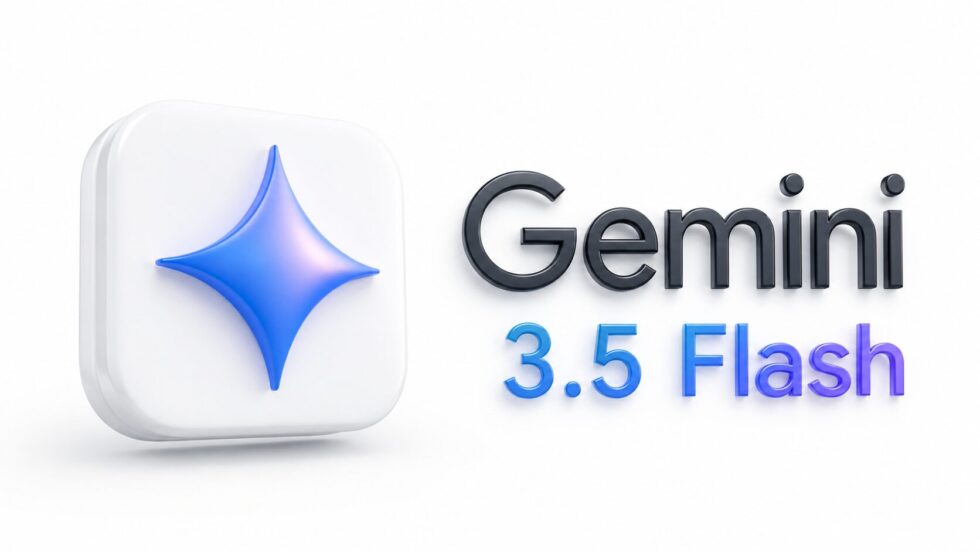
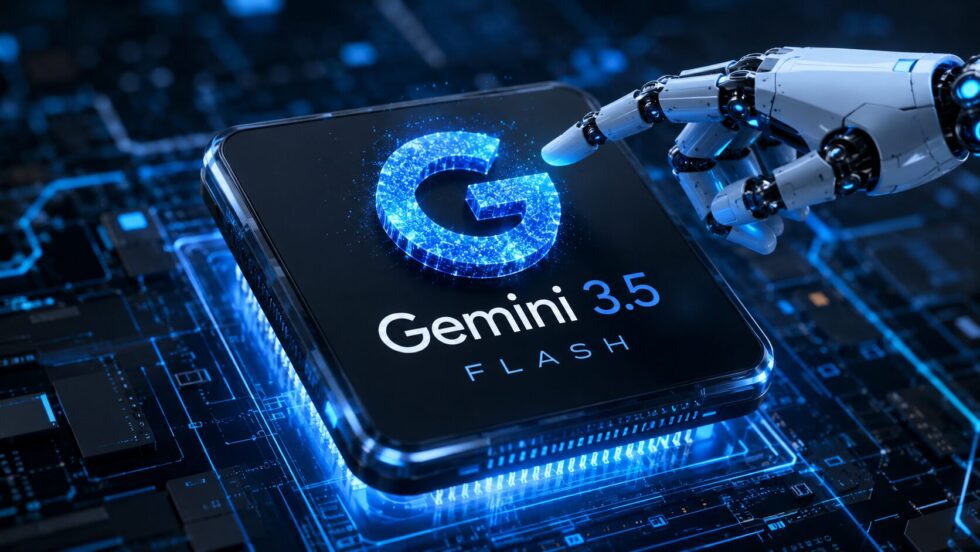
Google has introduced Gemini 3.5 Flash, a new artificial intelligence model the company says is designed for faster coding, long-running workflows and autonomous AI agents. The launch took place during Google I/O 2026, where the company presented a broader strategy focused on “agentic AI” — systems capable of carrying out tasks, coordinating tools and managing complex workflows with limited human intervention. Google described Gemini 3.5 Flash as a model optimized for speed, reasoning and multi-step execution, positioning it as the default model inside several Gemini and Search experiences, as The WP Times reports. The rollout signals one of the clearest shifts yet in Google’s AI strategy, moving from chatbot-style interactions toward systems designed to actively perform digital work across consumer and enterprise environments.
The company said Gemini 3.5 Flash is now available through Gemini applications, Google AI Studio, Gemini Enterprise and developer APIs. Google executives also confirmed the model is deeply connected to new products unveiled during I/O, including Antigravity 2.0 and Gemini Spark, both aimed at building persistent AI agents capable of operating across workflows for extended periods. During presentations at the conference, Google demonstrated AI systems coordinating software tasks, using tools autonomously and assisting with long-duration coding operations.
Why Google Is Focusing On “Agentic AI” Instead Of Traditional Chatbots
Google used this year’s I/O conference to repeatedly emphasize the term “agentic AI,” reflecting a broader industry transition away from purely conversational systems. Rather than positioning Gemini only as an assistant answering prompts, Google now describes its AI models as systems capable of planning, executing and coordinating actions across software environments. The company says Gemini 3.5 Flash was specifically optimized for these workflows because autonomous agents require both reasoning quality and low latency. According to Google, the model is designed to support “complex long-horizon tasks” and multi-step operations that can continue over extended periods of time.
Google DeepMind executives said speed is central to the model’s architecture because agent-based systems may launch multiple simultaneous operations. These can include retrieving information, validating outputs, generating code or interacting with tools in parallel.
Google claims Gemini 3.5 Flash improves execution efficiency while maintaining stronger reasoning performance than earlier Gemini Flash generations. The company also said the model outperforms previous Gemini versions in coding and multimodal tasks during internal evaluations.
The company’s messaging reflects a growing industry belief that the next major stage of AI competition will depend not only on language generation quality, but on whether systems can reliably complete real tasks inside digital environments.
Google Says Gemini 3.5 Flash Was Built For Multi-Step Workflows
During I/O presentations, Google executives described Gemini 3.5 Flash as a model engineered for “action” rather than simple interaction. According to the company, the model supports persistent workflows, tool usage and coordinated AI operations across multiple tasks. Google also linked the launch to enterprise use cases including coding, research support and large-scale workflow management.
Google demonstrated several examples during the conference, including AI agents collaborating on software development tasks within the Antigravity platform. In demonstrations presented on stage, agents worked on separate coding components before combining outputs into larger software systems. While Google referenced internal tests involving operating-system-related workflows, the company did not publicly release independent technical verification of those demonstrations.
The focus on coding is particularly significant because software development has become one of the fastest-growing AI sectors globally. Large technology companies are increasingly competing to position their models as infrastructure tools for developers rather than consumer chat interfaces alone.
Antigravity 2.0 Becomes A Core Part Of Google’s AI Ecosystem
One of the most important infrastructure announcements during Google I/O was the expansion of Antigravity into a broader platform for agent-based development. Google introduced Antigravity 2.0 as a standalone desktop environment focused on AI agent workflows and software orchestration.
According to Google, Antigravity was developed alongside Gemini 3.5 Flash so that AI agents could operate inside what executives described as a more “natural environment” for execution tasks. The platform is designed to support workflows where multiple agents coordinate actions simultaneously.
Google says the environment supports:
- coding workflows
- autonomous tool usage
- software testing
- research coordination
- file organization
- parallel task execution
- multimodal interactions
- long-duration agent sessions
The company also suggested Antigravity could become a broader framework for enterprise AI deployment. Google Cloud executives stated that developers can already use Gemini 3.5 Flash with Antigravity through the Gemini Enterprise Agent Platform and Google AI Studio.
Gemini Spark Signals Google’s Move Toward Persistent Consumer AI
Alongside Gemini 3.5 Flash, Google announced Gemini Spark, a new AI assistant designed to proactively manage digital tasks for users. Unlike traditional assistants that wait for prompts, Gemini Spark is being positioned as an always-available system capable of handling workflows continuously in the background.
Google executives described Spark as part of the company’s transition toward persistent AI infrastructure integrated across Search, Workspace and connected services.
According to Google, Gemini Spark will support tasks including:
- scheduling assistance
- digital organization
- workflow automation
- information monitoring
- Search coordination
- app interactions
- task reminders
- AI-driven recommendations
The launch reflects a wider trend across the AI sector where companies increasingly compete around proactive automation rather than standalone chatbot interfaces.
Search Is Becoming One Of Google’s Main AI Battlegrounds
Google also confirmed that Gemini 3.5 Flash is becoming the default model for AI-powered Search experiences and AI Mode. Several publications covering I/O described the rollout as the company’s biggest Search redesign in decades.
The updated Search experience includes:
- AI-generated responses
- intelligent search interactions
- information agents
- mini-app generation
- multimodal query support
- AI-assisted shopping tools
- conversational search experiences
Google says the redesigned Search architecture is intended to move beyond traditional link retrieval into systems capable of helping users complete tasks directly inside Google products.
This transition may have significant implications for publishers, advertisers and digital traffic ecosystems because AI-generated Search experiences can fundamentally change how users interact with websites and online information.
Google Says Gemini 3.5 Flash Prioritizes Speed And Efficiency
One of Google’s central arguments during I/O was that Gemini 3.5 Flash balances strong reasoning capabilities with significantly faster execution speeds.
According to Google’s official developer documentation, the model supports:
- multimodal input
- structured outputs
- code execution
- long context windows
- tool use
- function calling
- file search
- URL context support
Google also states the model is designed to support “frontier intelligence with action,” describing Gemini 3.5 Flash as part of a broader family of systems optimized for multi-step workflows.
The company claims the model improves efficiency for agentic tasks because large autonomous systems may require repeated reasoning loops across many subtasks. Faster execution speeds can therefore reduce operational costs and improve responsiveness inside enterprise environments.
Independent technical evaluations released after I/O remain limited, however, and many of the performance claims currently originate from Google’s own benchmark testing and conference demonstrations.
Enterprise AI Automation Is Emerging As A Major Commercial Focus
Although consumer AI products attracted significant attention during I/O, many of Google’s presentations focused heavily on enterprise use cases.
Google executives said Gemini 3.5 Flash is already being integrated into enterprise workflows through Google Cloud and Gemini Enterprise products. The company particularly emphasized coding operations, research support and large-scale data analysis tasks.
The broader enterprise AI market has become increasingly competitive as companies search for tools capable of automating repetitive workflows while reducing infrastructure costs.
Google appears to be positioning Gemini 3.5 Flash as suitable for:
- developer environments
- research operations
- enterprise automation
- AI-assisted productivity
- cloud workflow orchestration
- data processing tasks
- coding infrastructure
- internal AI agents
The company also confirmed that Gemini 3.5 Pro is expected to launch later and will work alongside Flash-based systems. According to Google executives, larger reasoning-focused models may eventually supervise faster execution-focused AI agents inside coordinated environments.
AI Safety Concerns Continue To Grow As Agent Systems Expand
Google’s AI expansion also arrives during a period of increasing scrutiny around AI safety, transparency and user protection.
At I/O, Google said Gemini 3.5 Flash includes stronger protections related to cybersecurity misuse and harmful requests involving dangerous materials or illegal activity. The company also stated the model is designed to better handle sensitive conversations rather than relying exclusively on blanket refusals.
The discussion around safety has become more urgent as AI systems move closer to autonomous operation. Agent-based systems can potentially perform sequences of actions independently, increasing concerns among regulators and researchers around oversight and accountability.
Areas frequently discussed by AI researchers include:
- cybersecurity abuse
- automated misinformation
- unauthorized automation
- social engineering risks
- data privacy issues
- manipulation concerns
- workflow misuse
- uncontrolled autonomous behavior
Academic research published in recent months has also highlighted broader concerns around generative Search systems, including transparency and source reliability. One recent study examining Google AI Overviews and Gemini-based search systems found substantial differences between traditional search results and AI-generated outputs.
Another research paper involving Gemini Flash systems explored how AI agents can autonomously generate execution frameworks to improve performance in interactive environments.
Those developments illustrate how rapidly AI systems are evolving from static assistants into dynamic software agents capable of increasingly complex behavior.
Google’s I/O 2026 Announcements Show The Company’s Long-Term AI Direction
Taken together, the announcements at Google I/O 2026 reveal a much broader strategic direction than a simple chatbot upgrade.
Google is increasingly building an ecosystem where AI systems function as:
- autonomous digital agents
- workflow coordinators
- coding assistants
- Search orchestrators
- persistent productivity systems
- multimodal execution tools
- enterprise automation layers
- continuous background assistants
Gemini 3.5 Flash sits at the center of that strategy because it combines coding support, multimodal capabilities and low-latency execution inside one model family.
At the same time, the rollout places Google deeper into competition with OpenAI, Microsoft, Anthropic and other AI developers racing to dominate the next generation of AI infrastructure. The battle is no longer only about who builds the smartest chatbot. Increasingly, the competition is about who builds the most useful autonomous systems capable of performing real-world digital work safely, efficiently and at scale.
Read about the life of Westminster and Pimlico district, London and the world. 24/7 news with fresh and useful updates on culture, business, technology and city life: How to Get iOS 26.5 on iPhone: Top New Features, RCS Encryption, Apple Maps Ads and USB-C Updates