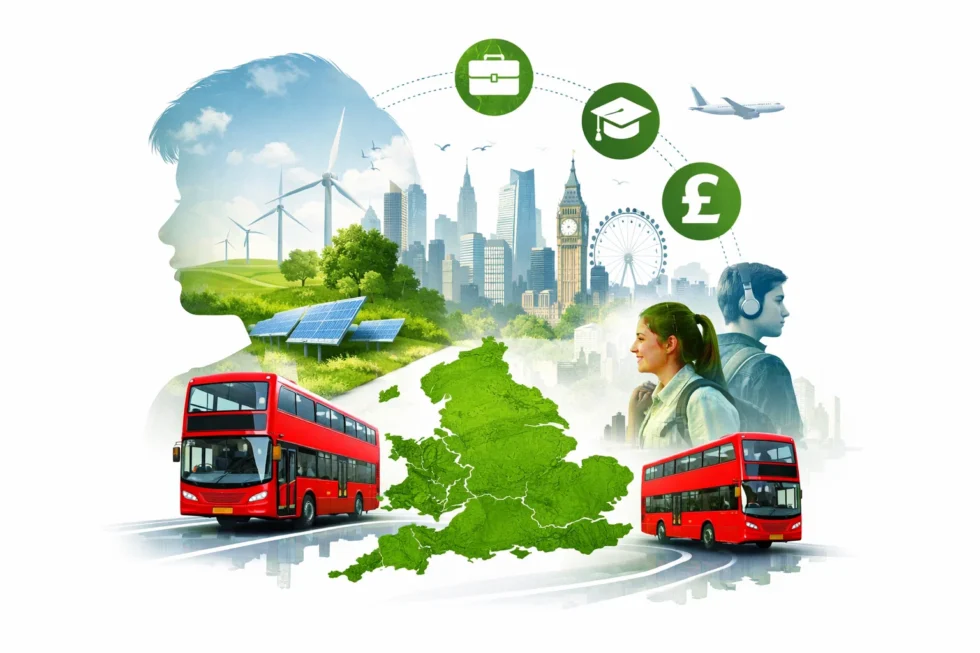
The Green Party free bus travel proposal for young people in England has been formally unveiled as a transport policy designed to cut youth travel costs and widen access to work, education and training. Under the plan, everyone aged under 22 would be able to use local buses without paying fares — extending benefits that currently apply nationwide in Scotland and, in a more limited form, to under-18s in London. Green Party leader Zack Polanski announced the initiative on Saturday, saying high living costs and expensive bus tickets are preventing many young people from reaching jobs, apprenticeships and college courses. The WP Times reports, citing Sky News, which reported the policy announcement on Saturday 17 January 2026.
“Young people are increasingly shut out of employment and training by the cost of living crisis, which often hits the youngest the hardest,” Mr Polanski said.
The party is pitching the proposal as an England-wide scheme that would mirror Scotland’s system, where free bus travel for under-22s has been in place since 2022. Supporters say a universal offer could ease household budgets, boost youth employment and encourage greater public transport use across England.
What the Green Party is proposing
At the centre of the policy is a universal free bus pass for young people in England. The Greens say the aim is to replace a patchwork of local discounts with one standard national entitlement for those aged under 22. Youth travel support currently varies sharply depending on where a young person lives:
- London: under-18s already travel free on buses
- Scotland: all under-22s receive free bus travel nationwide
- England (outside London): discounts depend on local councils and bus operators
The Green Party says uneven provision creates unfair regional differences and leaves many young people facing high daily travel costs simply to reach school, college, training or entry-level work.
“This Labour government has made a dire situation for young people even worse with the poorest getting even poorer and rich getting even richer,” Mr Polanski said.
“Free bus travel for the young is one part of improving the lives of younger people and showing what a richer and greener country looks like if we invest in people and not hand over our assets to the super-rich and corporations.”
Why transport costs matter for young people
Campaigners argue that bus fares are a significant, recurring expense for teenagers, students and young workers — particularly for those who do not have access to a car, cannot afford one, or live in areas with limited alternatives. They say rising ticket prices can make it harder for young people to:
- take part-time jobs
- travel to college or university
- attend apprenticeships
- access training courses
- reach interviews and work placements
In rural areas and smaller towns, buses are often the only practical public transport option. Campaigners say affordability therefore becomes more than a convenience issue: it can determine whether opportunities are realistically reachable.
Economic case behind the scheme
The Green Party argues the plan would deliver longer-term economic benefits by making it easier for young adults to take up work and education opportunities. The party says reduced travel costs would support participation in the labour market and, by extension, local economies. The Greens cite research by consultancy firm KPMG estimating that:
- 2.2 million commuters rely on buses to get to work
- Bus commuters generate around £72 billion in collective income each year
Supporters of the proposal say extending free travel to under-22s could, in theory:
- increase youth employment
- reduce car use and congestion
- support local businesses by improving footfall
- make public transport in England more accessible
- cut household living costs
- encourage greener travel habits over time

Comparison with Scotland and London
Advocates frequently point to Scotland as evidence that a national scheme can operate at scale. Since 2022, Scotland’s free bus travel offer for under-22s has been used for millions of journeys by school pupils, students and young workers.
In London, Transport for London (TfL) already provides free bus travel for under-18s. Supporters say the policy helps young people move across the capital safely and affordably, without relying on parents for lifts or facing cost barriers that can limit participation in education, work or social life.
The Green Party says England should adopt a consistent national standard, rather than relying on a mix of local concessions, discounts and operator-specific offers that vary from place to place.
Challenges and funding questions
The proposal is likely to face immediate scrutiny over funding and delivery, particularly given wider pressures on local transport networks.
Key questions include:
- how the scheme would be funded
- whether bus services would need to be expanded to cope with demand
- whether operators could manage higher passenger numbers without service reductions elsewhere
Many bus routes in England have faced reductions in recent years, and local authority budgets remain under strain. Critics argue that introducing free fares without additional investment risks putting pressure on already stretched services, especially in areas where buses run infrequently. The Green Party says increased economic activity and higher bus usage would help offset the upfront costs over time, though the detailed funding mechanism would be central to any future implementation.
Practical benefits if the plan is introduced
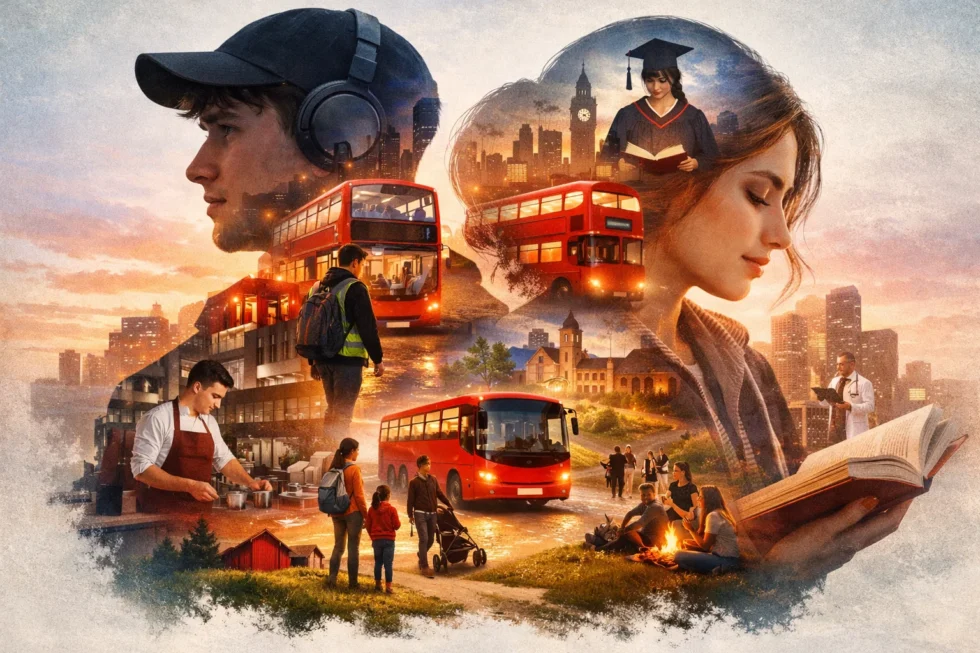
Supporters say a national under-22 free bus travel scheme could have immediate, practical effects by removing a routine cost that shapes day-to-day decisions for teenagers, students and young workers. They argue that, for many households, the change would not be abstract: it would determine whether a young person can accept a part-time shift, attend a training course, or travel to an interview without factoring in multiple fares each week. They say the likely day-to-day impacts would include:
- easier access to part-time and full-time jobs, especially where shifts start early or finish late
- lower travel costs for college and university students, as well as apprentices and trainees
- improved mobility in rural areas and smaller towns, where bus routes are often the only viable public transport option
- greater independence for young people and young families, including travel to childcare, health services and essential appointments
- reduced reliance on parents or relatives for lifts, particularly where journeys involve long distances or multiple connections
- more opportunity for social, cultural and community participation, which supporters say can be limited when travel costs become a barrier
Table: Current youth bus travel rules in the UK
| Region | Age group | Current benefit |
|---|---|---|
| London | Under-18s | Free bus travel |
| Scotland | Under-22s | Free nationwide bus travel |
| England (outside London) | Varies | Operator discounts only |
| Wales | Selected areas | Partial concessions |
What happens next for the Green Party under-22 free bus travel plan in England
The proposal is not government policy and would require a clear delivery model before it could be introduced across England. In practice, a national under-22 free bus travel scheme would need funding decisions, agreements with bus operators and administrative arrangements to issue and verify eligibility — with local authorities likely to play a central role in how any pass is implemented and enforced.
Any move from party pledge to operating policy would also depend on whether the UK government chose to support a nationwide framework, or whether councils and combined authorities would be expected to negotiate and deliver the scheme locally. That would include decisions on how operators are reimbursed for fare revenue, whether extra capacity is needed on busy routes, and how the scheme would work alongside existing concessions and local discounts.
The Green Party says it will continue campaigning for free bus travel for under-22s in England as part of a wider programme aimed at improving opportunities for young people and strengthening public transport provision.
Read about the life of Westminster and Pimlico district, London and the world. 24/7 news with fresh and useful updates on culture, business, technology and city life: How to vote in Westminster London local elections 2026: deadlines and voter ID rules – full guide UK