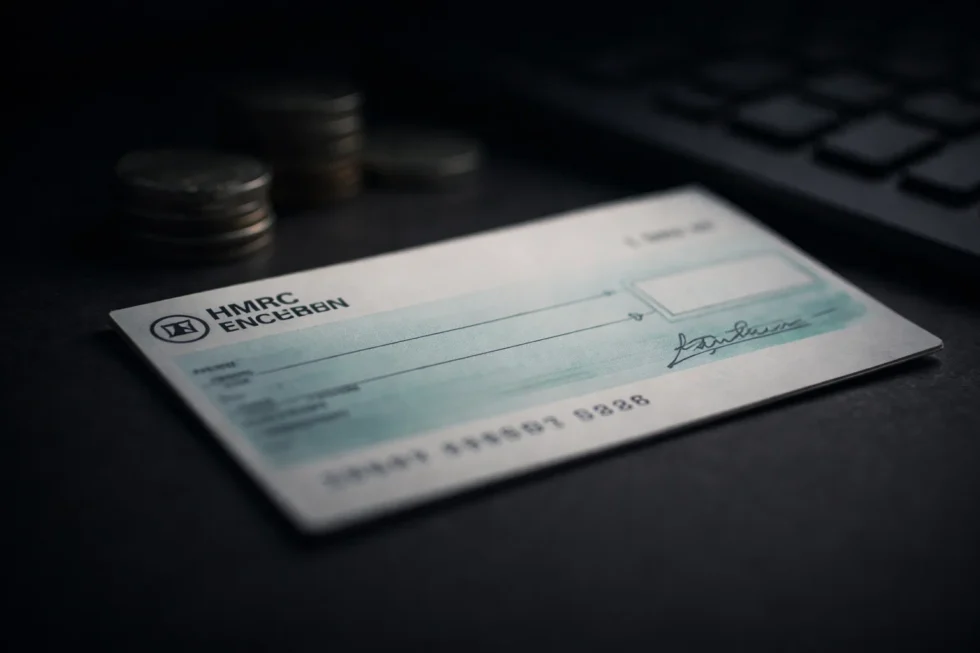
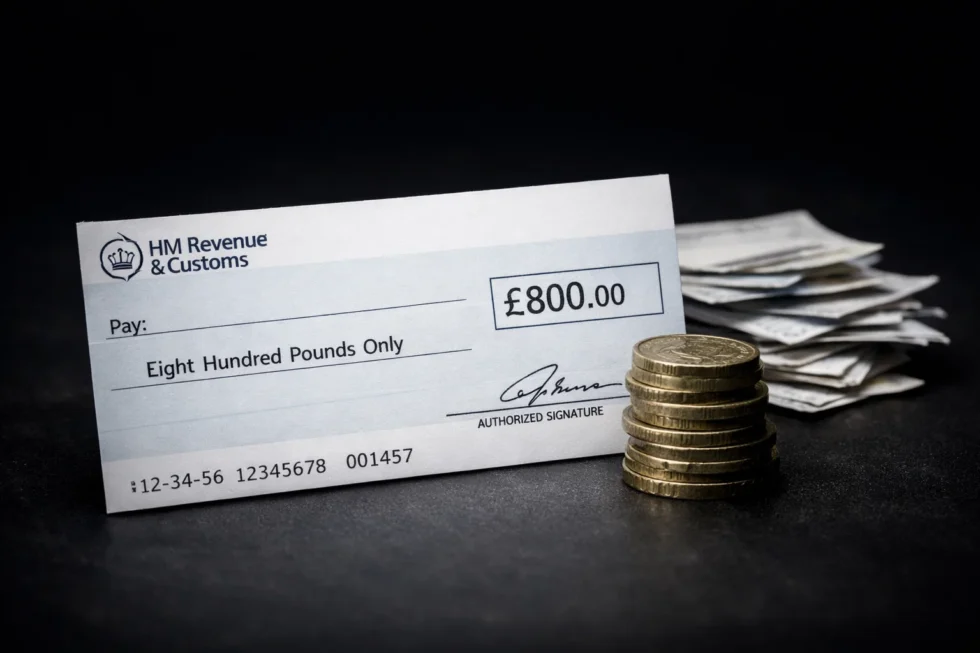
HMRC still sending cheques is leaving a substantial share of UK tax refunds unclaimed, with 178,180 taxpayers failing to cash payments issued by HM Revenue & Customs, according to figures published on 12 April 2026. The data shows that £144 million in repayments has not been accessed despite being formally issued, reflecting a persistent gap between tax calculation and final settlement within PAYE and self-assessment processes, reported by The WP Times.
The figures confirm that HMRC issued 1,746,720 cheques over the latest reporting year, with around one in ten remaining uncashed. The average missed repayment is approximately £800 per taxpayer. These outcomes are structurally linked to how the UK tax system processes overpayments, which are common and typically arise when individuals change jobs mid-year, are assigned incorrect tax codes, or receive income from multiple sources without real-time adjustment. Under current procedures, taxpayers are first notified of an overpayment through a P800 letter, usually sent from June following the end of the tax year in April. They are asked to claim their refund digitally via bank transfer. Where no response is received within a defined period, HMRC issues a cheque to the address on file, creating a dependency on accurate records and timely action by the recipient.
Key figures and operational data (UK, latest reporting year)
- Total cheques issued: 1,746,720
- Uncashed cheques: 178,180
- Total value unclaimed: £144,000,000
- Average missed payment: ~£800
- Share uncashed: ~10%
- Taxpayers not yet migrated to digital system: ~20%
- Cheque validity period: typically 6 months
- Transition target to digital-first system: April 2027
Robert Salter, a partner at Blick Rothenberg, said: “It is certainly a bit problematic that HMRC continues to use cheques to settle tax refunds in so many cases.” His comment reflects the scale of issuance rather than the existence of cheques themselves, which remain a fallback mechanism where digital payment details are not available or cannot be verified.
Shaun Moore, tax and financial planning expert at Quilter, said the data points to broader structural constraints. “The data highlights how some parts of the tax system are still struggling to keep pace with a digital economy,” he said, adding that overpayments are “common” and unlikely to disappear, making the repayment mechanism critical to timely resolution. The process itself introduces several failure points that explain why funds remain unclaimed. Letters may not be opened, addresses may be outdated, or recipients may not act within the cheque validity period. Once a cheque expires, it cannot be cashed and must be reissued upon request, extending the timeline further.
Where the process breaks down in practice
- P800 notification not opened, delayed in post or overlooked, meaning the taxpayer never initiates the digital claim
- Address on HMRC records no longer current, leading to correspondence and cheques being sent to the wrong location
- No response within the initial claim window (typically around 21 days), triggering automatic cheque issuance instead of bank transfer
- Cheque received but not deposited, often due to low usage of branch banking or lack of awareness of digital cheque deposit options
- Six-month validity period expires before the cheque is processed, rendering it unusable
- Repayment then shifts into a manual cycle, requiring the taxpayer to contact HM Revenue & Customs and request reissuance, adding further delay and verification checks
HMRC has been reducing cheque usage since 2024, shifting towards bank transfers as the default repayment method. However, the transition remains incomplete, with approximately one-fifth of taxpayers not yet moved to the updated system. Until migration is complete, cheque issuance continues as a fallback where digital payment cannot be completed.
An HMRC spokesperson said: “The vast majority of pay as you earn repayments are issued via bank transfer, which is now the default option, and the quickest and most secure way for customers to receive their money.” The spokesperson added that customers can still request a cheque, but “it’s their responsibility to cash it if they choose this method.” From a financial systems perspective, the data reflects a hybrid model in transition. Digital payments dominate, but legacy processes and incomplete data maintain the role of cheques. The result is not a loss of entitlement but a delay or interruption in access, dependent on taxpayer action.
For individuals, the implication is administrative rather than financial: the entitlement remains intact, but access depends on timely interaction with the system. Unclaimed refunds do not lapse automatically, however once a cheque expires, repayment moves into a manual process requiring a new request through HM Revenue & Customs. Over time, verification becomes more complex, as older records may require additional checks or supporting evidence, making early action materially more efficient for securing payment.
Read about the life of Westminster and Pimlico district, London and the world. 24/7 news with fresh and useful updates on culture, business, technology and city life: Will HMRC’s 2026 penalty points system make UK taxpayers pay £200 for late returns