Housing market and housing market slump uk are now moving from slowdown to visible stress after March data showed UK house prices falling, mortgage pricing worsening and buyer confidence weakening as the economic fallout from the Iran conflict fed directly into inflation expectations and borrowing costs. Halifax said average UK house prices fell 0.5% in March to £299,677, while Reuters on 8 April 2026 reported that the decline reversed February’s 0.3% riseand undercut economist expectations; in the same period, The Guardian and Reuters both linked the shift to the market shock created by the conflict and the repricing of mortgages across Britain, reported by The WP Times.
The immediate issue is not only price direction but financing. Reuters reported on 9 April 2026, citing the latest RICSsurvey, that new buyer demand, sales expectations and price sentiment all weakened materially in March, with the net balance for house prices at -23, the weakest reading since January 2024, while the forward-looking price balance fell to -43, the lowest since August 2023. That is the clearest sign so far that the UK spring market has been interrupted not by a seasonal lull, but by a fresh affordability shock.
Housing market slump UK: what happened in March and why it matters now
The first hard signal came from Halifax. Reuters reported on 8 April that Halifax recorded a 0.5% month-on-month fallin March, taking the average UK house price down to £299,677, with annual growth slowing to 0.8%. The Guardian published matching figures the same day and said the drop pushed average prices back below the £300,000 line just as the spring selling season began.
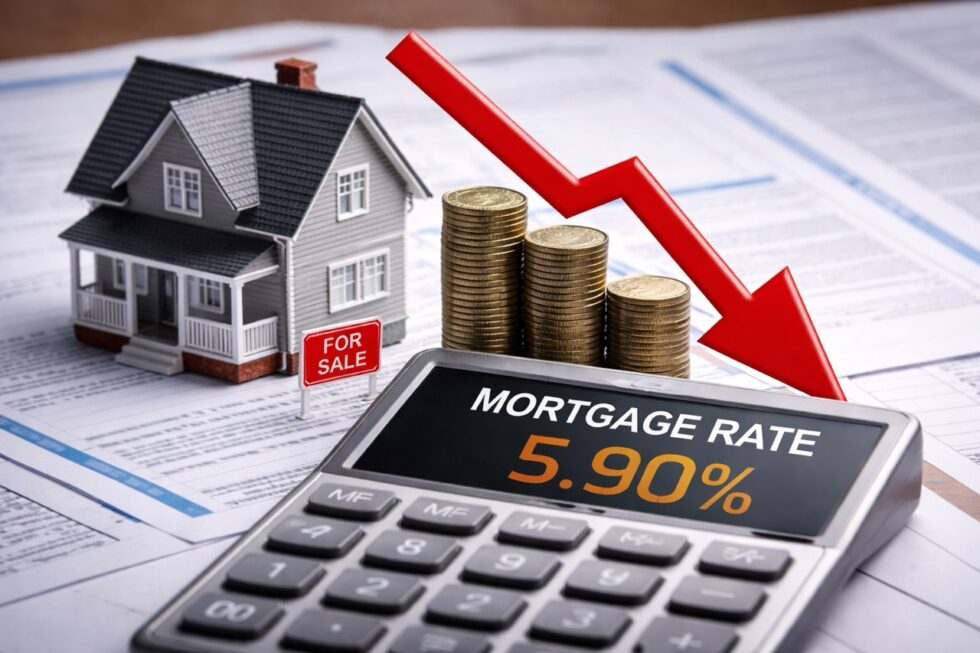
What changed was the cost of money. The Guardian reported on 8 April that the average two-year fixed mortgage rate had risen to 5.84%, the highest since 2024, after energy-price fears and inflation expectations climbed. A follow-up Guardian piece on 12 April described the practical result on the ground: fewer listings, slower chains, buyers hesitating and sellers in cities including Canterbury feeling trapped as deals became harder to hold together.
This matters because the housing market rarely turns on headline prices alone. It usually turns first through sentiment, then mortgage availability, then transaction volumes, and only afterwards through broader repricing. That sequence now appears to be underway. Reuters said the March RICS survey showed that the earlier recovery in housing had been derailed by the jump in borrowing costs tied to higher swap rates.
The numbers now shaping the market
| Indicator | Latest confirmed reading | Source | Publication date |
|---|---|---|---|
| Average UK house price | £299,677 | Halifax via Reuters / The Guardian | 8 Apr 2026 |
| Monthly house-price change | -0.5% in March | Halifax via Reuters / The Guardian | 8 Apr 2026 |
| February move before reversal | +0.3% | Reuters | 8 Apr 2026 |
| Annual house-price growth | 0.8% | Reuters / The Guardian / LBC | 8 Apr 2026 |
| Average 2-year fixed mortgage rate | 5.84% | The Guardian | 8 Apr 2026 |
| House-price sentiment balance | -23 | Reuters citing RICS | 9 Apr 2026 |
| Future price expectations balance | -43 | Reuters citing RICS | 9 Apr 2026 |
Mortgage rates, Iran shock and why buyers stepped back
The market narrative changed because geopolitical risk fed directly into household borrowing costs. The Guardian reported on 7 April that oil had surged above $110 a barrel during the most volatile phase of the Iran-related market reaction. On 8 April, The Guardian then reported that Brent crude had dropped 15.5% to $92.28 after a ceasefire announcement, but that did not immediately repair UK mortgage pricing or confidence.
That lag is crucial. Mortgage pricing in Britain does not instantly fall just because oil retreats for a day. Reuters reported that swap rates — a core reference point for mortgage pricing — remained well above pre-conflict levels even after the ceasefire move, which is why the housing market did not stabilise straight away. In other words, the ceasefire helped markets breathe, but not enough to restore affordability in the property market.
The Guardian’s 12 April reporting adds the missing human layer. In Canterbury, estate agents described vendors cutting expectations, valuations being marked down and chains becoming more fragile. The article said first-time buyers were especially exposed because they are the most rate-sensitive part of the market and have the least room to absorb a sudden repricing of monthly costs.
What the pressure points look like in practice
- buyers who agreed terms in February are now facing worse mortgage pricing in April
- first-time buyers are being hit hardest because deposit buffers are smaller
- sellers are delaying cuts, which slows transactions before it fully hits headline prices
- estate agents are reporting weaker confidence, especially in southern markets
- fragile chains are more likely to fail when affordability changes mid-process
These are the mechanics of a slowdown that becomes a slump: not a crash headline first, but a collapse in momentum.
Treasury risk and the wider UK economy
The housing slowdown is no longer just a property story. The Telegraph reported on 12 April 2026 that Treasury stamp-duty revenues risk falling by more than £3bn below expectations as sales weaken and prices come under pressure. That matters because housing transactions spill into removal firms, furnishings, renovations, legal work and consumer spending more broadly. The broader economic backdrop is already fragile. Reuters said the housing deterioration came as markets reassessed whether the Bank of England would be able to cut rates this year at all. The Guardian likewise reported that the conflict-driven rise in energy costs had darkened the inflation outlook and weakened confidence across the economy, not only in housing.
That leaves the UK in an awkward position. If inflation stays sticky, borrowing costs remain high and the housing market stays heavy. If growth weakens faster than expected, the pressure shifts from affordability to jobs and household resilience. Either way, April has started with a property market that is materially weaker than investors, lenders and sellers expected at the start of the year.
What happens next for the housing market
For now, the cleanest conclusion is that the UK market has not broken, but it has clearly lost momentum. Reuters’ RICS-based reporting shows sentiment worsening sharply; Halifax’s March figures confirm prices falling; and The Guardian’s field reporting from 12 April shows that sellers and agents are already feeling the consequences in live transactions. That combination is usually more important than any single monthly index.
If oil volatility eases and swap markets calm, mortgage pricing could stabilise. If not, the spring market may remain stalled into late Q2, with the South and higher-priced areas more exposed than regions where affordability is less stretched. At this stage, the evidence supports one conclusion: the housing market slump UK story is no longer theoretical — it is already showing up in prices, sentiment, mortgage costs and expected tax receipts.
Read about the life of Westminster and Pimlico district, London and the world. 24/7 news with fresh and useful updates on culture, business, technology and city life: HMRC still sending cheques: 178,000 taxpayers miss £800 rebates as £144m goes unclaimed in 2026