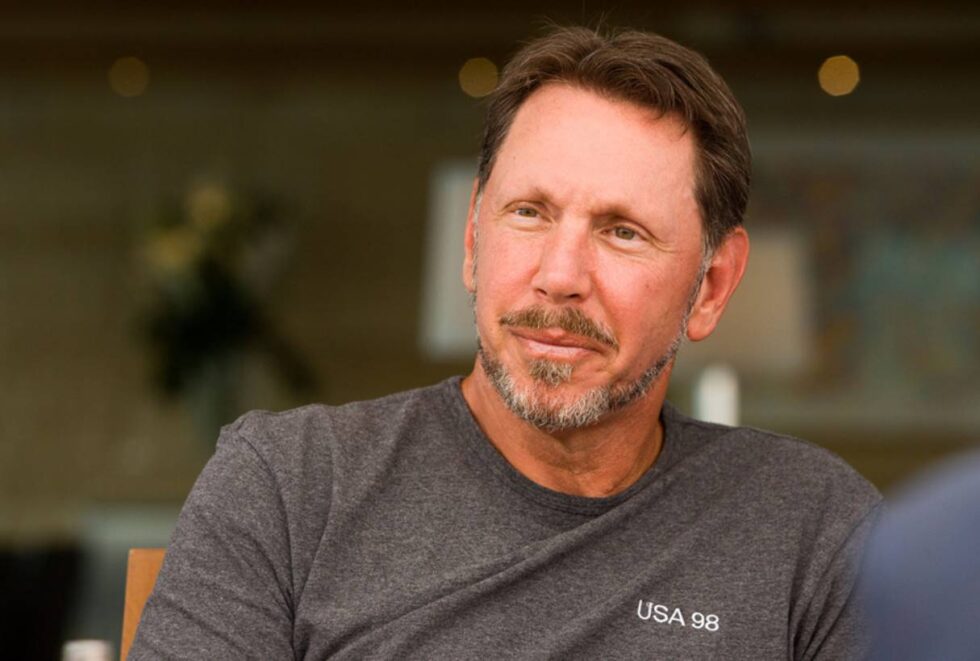
For a brief but symbolic moment in September 2025, Larry Ellison, co-founder of Oracle, surpassed Elon Musk to become the world’s richest individual. The shift followed a dramatic surge in Oracle’s share price, adding more than $100 billion to Ellison’s fortune. The WP Times reports, citing ет. The Times of India+2Indiatimes, that the event highlights not only the volatility of global wealth rankings but also the growing influence of enterprise technology and artificial intelligencet.
A Silicon Valley outsider turned giant
Larry Ellison, born in 1944 in New York and adopted as a child, built his career as a twice-dropped-out student who later transformed the software industry. In 1977, he co-founded Oracle, betting on relational database systems when the market was still sceptical. Over decades, Oracle grew into one of the most powerful technology companies in the world, serving governments, banks, telecoms and Fortune 500 firms with data solutions.
Unlike many of his contemporaries, Ellison deliberately avoided the limelight of consumer technology. Instead, he concentrated on business-to-business infrastructure, where contracts are long-term and switching costs are high. That strategic choice gave him financial stability and sustained wealth growth even during tech downturns.
Why Oracle’s surge reshaped the wealth leaderboard
- Cloud and AI momentum
Oracle’s latest quarterly results revealed aggressive expansion in cloud services and artificial intelligence solutions. Analysts highlighted its partnerships with OpenAI and growing demand from enterprise clients. Investors responded with enthusiasm, pushing the stock up nearly 40% in a single day. - $100 billion wealth gain
Ellison, holding more than 40% of Oracle’s shares, added over $100 billion to his net worth almost overnight. His fortune briefly stood at around $393 billion, overtaking Elon Musk’s fluctuating wealth tied heavily to Tesla. - Tesla’s volatility
By contrast, Musk’s fortune faced downward pressure as Tesla stock suffered from slowing electric vehicle demand and rising competition. His other ventures, including SpaceX and X (formerly Twitter), remain high-risk and capital-intensive.
Ellison versus Musk: two different paths to power
- Ellison’s model: stability, B2B dominance, conservative innovation with steady dividends to shareholders.
- Musk’s model: disruption, consumer focus, high visibility but also extreme volatility.
While Musk thrives on public attention, Ellison is known for strategic silence, occasionally punctuated by sailing or yachting competitions. His influence lies not in tweets but in contracts that run into billions and infrastructure that governments and corporations cannot easily replace.
The symbolism of September 2025
Although Ellison’s stay at the top was short-lived—Musk reclaimed first place within 24 hours—the symbolic weight is significant. It marks a shift in technological prestige: from flashy consumer brands to critical infrastructure powering AI and cloud computing.
Analysts argue that the next decade may favour firms like Oracle, Microsoft and Amazon Web Services over purely consumer-driven giants. Ellison’s rise illustrates how enterprise technology, once seen as background noise, is now at the centre of geopolitical and economic competition.
What happens next
- Oracle’s trajectory: sustained growth if it maintains its AI partnerships and expands in Europe and Asia.
- Musk’s response: pressure to stabilise Tesla and deliver consistent margins, while SpaceX continues to draw massive capital needs.
- Global wealth rankings: likely to remain fluid, reflecting not only stock market swings but also structural shifts in technology.
For Ellison, even a temporary number one spot confirms that the quiet power of enterprise software can outweigh the loudest voices in tech.
Unlike Elon Musk’s high-profile ventures, Ellison has cultivated an aura of quiet dominance, steering Oracle with the precision of a strategist rather than the theatrics of a showman. His fortune is tied not to speculative consumer trends but to the essential arteries of the global economy: databases, cloud platforms and artificial intelligence infrastructure. Colleagues describe him as relentless, often contrarian, and unafraid to challenge conventional wisdom — qualities he himself once summed up by declaring, “The only way to get ahead is to find errors in conventional wisdom.” That ethos, combined with an unshakable belief in data as the new oil of the digital age, has made him not just temporarily richer than Musk, but arguably more influential in defining the technological order of the twenty-first century.
Read about the life of Westminster and Pimlico district, London and the world. 24/7 news with fresh and useful updates on culture, business, technology and city life: Don’t Push the Horses: How Unified Heavyweight Champion Oleksandr Usyk Turned a Ukrainian Proverb into a Global Meme