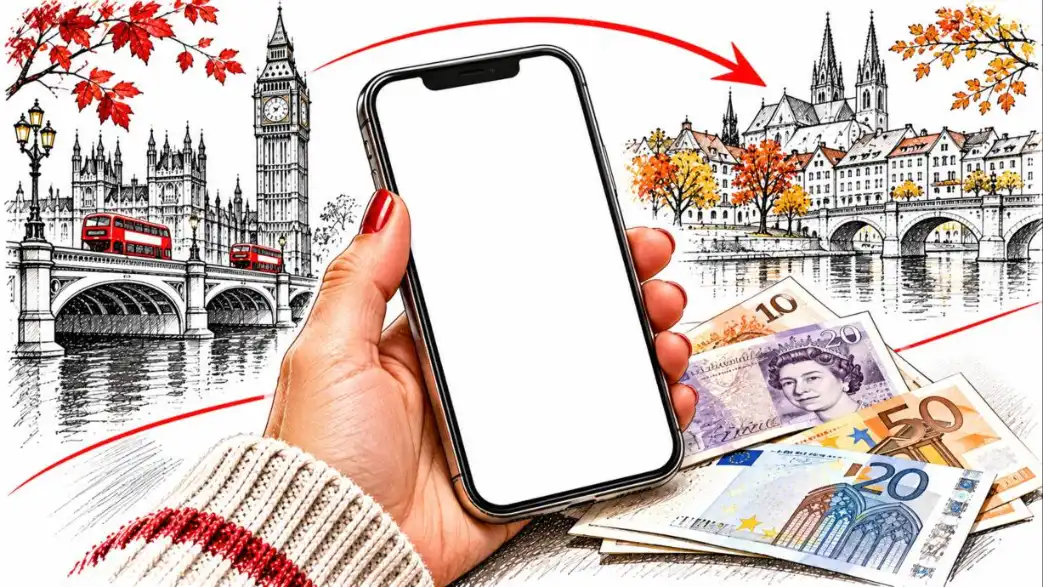
Anyone who wants to send money from the UK to Europe in 2026 will find very different costs depending on the provider, and the biggest difference is usually hidden in the exchange rate rather than in the fee. In a comparison carried out in June 2025 for a £250 transfer from pounds to euros, the total cost ranged from £0.73 with Revolut and £1.41 with Wise to £6.37 with Barclays, £8.87 with Lloyds and £10.73 with PayPal, according to research published by Wise. High-street banks typically add a margin of around 3 to 5% to the mid-market exchange rate on euro conversions, while digital providers such as Wise and Starling show the conversion fee separately. With the Bank of England raising Bank Rate to 4% on 5 November and sterling moving against the euro, the choice of provider can make a noticeable difference to how many euros arrive, as the Westminster newsroom of The WP Times reports.
The total cost of a transfer is made up of two parts: any fixed or percentage fee charged for the payment, and the exchange rate applied, which may be the mid-market rate or a less favourable rate that includes a margin. Some banks advertise free international payments online but recover their costs through the exchange rate, while specialist providers tend to use the mid-market rate and charge a transparent fee. Speed also varies: euro payments to European accounts through the SEPA system often arrive the same or next working day, whereas urgent SWIFT payments or branch transfers can cost £15 or more. Before Christmas, when many households send money from the UK to Europe as gifts for relatives in Poland, Romania, Spain or Italy, the safest approach is to compare the final amount in euros that the recipient will receive, check the provider is authorised by the Financial Conduct Authority, and avoid paying by credit card, which can be treated as a cash advance.
Send money from the UK to Europe: the costs compared
Comparisons of what it costs to send money from the UK to Europe change daily as exchange rates move, so any table is a snapshot. The figures below come from research carried out by Wise in June 2025 using live accounts. Wise is itself a provider, so readers should treat the ranking with that in mind, but the spread between providers is consistent with other comparisons.
Cost of sending £250 in euros
| Provider | Total cost for £250 to EUR |
|---|---|
| Revolut | £0.73 |
| Starling | £1.36 |
| Wise | £1.41 |
| HSBC | £1.74 |
| Monzo | £2.07 |
| Xoom by PayPal | £5.08 |
| Western Union | £6.19 |
| Barclays | £6.37 |
| NatWest | £6.86 |
| RBS | £7.07 |
| Halifax | £8.86 |
| Lloyds | £8.87 |
| Post Office | £9.21 |
| PayPal | £10.73 |
Why the exchange rate matters more than the fee
The mid-market rate is the midpoint between buying and selling prices on the currency markets and is the rate shown on financial news sites. Providers that add a margin of 3% to this rate effectively charge £30 on a £1,000 transfer, even if the payment is advertised as free.
Specialist providers usually show the fee separately. NimbleFins found Wise's conversion fee for pounds to euros at around 0.41 to 0.43% plus a small fixed charge in January 2026, while Starling charges 0.4% with a minimum of 30p and states that it adds no exchange rate markup.
Banks, apps and money transfer services
There are three main ways to send money from the UK to Europe: a traditional bank transfer, a digital account or app, and a money transfer service with cash collection. Each way to send money from the UK to Europe suits a different type of sender.
High-street banks
- Many banks offer online euro payments to European accounts without a separate fee, but the exchange rate usually includes a margin.
- Barclays has listed online payments to Europe at no fee and branch SEPA payments at £15, according to NimbleFins.
- RBS has listed standard digital payments at no fee, urgent payments at £15 and phone or branch payments at up to £30.
- Metro Bank has listed digital euro payments at 20p.
- Large transfers, such as house purchases, may be easier through a bank, but it is worth asking for the exchange rate in advance.
Digital providers and transfer services
Digital providers such as Wise, Revolut, Starling and Monzo generally offer the lowest costs for everyday amounts, with transfers made through an app. Revolut's pricing depends on the plan and on whether the conversion takes place during the week or at the weekend, when a markup can apply.
Services such as Western Union and PayPal's Xoom allow cash collection or transfers to people without a bank account in some countries, but in the comparison they were more expensive than the digital providers. PayPal was the most expensive option tested for a payment in euros.
"Wise is on average 4x cheaper for a £250 transfer."
(Wise, UK price comparison research based on data collected in June 2025, published on wise.com)
How fast money arrives in Europe
How quickly you can send money from the UK to Europe depends on the payment network used. Since the UK left the European Union, UK banks still have access to the euro payment system SEPA, which makes euro transfers to European accounts relatively quick.
SEPA and SWIFT
| Network | Used for | Typical speed | Typical cost |
|---|---|---|---|
| SEPA | euro payments to accounts in the euro area and wider SEPA zone | same day to one working day | low or free, plus exchange rate |
| SWIFT | other currencies and some non-euro countries | one to several working days | higher, intermediary bank charges possible |
| Provider networks | apps such as Wise and Revolut using local accounts | often within hours | transparent fee |
Non-euro countries
If you send money from the UK to Europe to countries outside the euro area, such as Poland, Romania, Hungary, Czechia or Sweden, it is usually cheaper to send money in the local currency rather than in euros. Converting twice, from pounds to euros and then from euros to zloty or lei, can mean paying two margins.
Our detailed guide to the cheapest way to send money to Poland from the UK explains the options for zloty transfers.
Safety, limits and rules
Cost is not the only consideration when you send money from the UK to Europe. Money transfer providers must be authorised or registered with the Financial Conduct Authority, and checks on larger payments are a normal part of anti-money laundering rules.
What protection applies
- Check the provider on the FCA register before sending money.
- Payment and e-money firms must safeguard customer funds, but these are not covered by the Financial Services Compensation Scheme in the same way as bank deposits.
- Bank deposits are protected by the FSCS up to £120,000 per person per authorised bank, a limit raised from £85,000 on 1 December 2025.
- Providers can ask for proof of the source of funds for larger transfers, which can delay payments.
- Double-check the recipient's IBAN and name, as payments sent to the wrong account can be difficult to recover.
Scams to watch for
Requests to send money from the UK to Europe urgently, especially to a new account or to someone met online, are a common feature of fraud. Authorised push payment fraud rose 19% to £576.4m in 2025, according to UK Finance.
Anyone asked to pay a relative's new bank account should confirm the request by phone using a known number. More advice is in our report on Christmas delivery scams 2026.
Tips for getting more euros for your pounds
Small changes in how and when you send money from the UK to Europe can add up, especially for regular payments to family members abroad.
Practical checklist
- Compare the amount the recipient will receive, not just the fee.
- Check the mid-market rate on a financial news site before sending.
- Avoid converting at weekends with providers that add a weekend markup.
- Send in the recipient's local currency when the country does not use the euro.
- Do not pay by credit card, as many card issuers treat money transfers as cash advances with extra fees and interest.
- To send money from the UK to Europe in large sums, ask a bank or specialist broker for a fixed rate quote.
Regular payments and family support
People who send money from the UK to Europe every month to support relatives can set up recurring transfers with some apps. This makes costs predictable, but the exchange rate on each date will differ.
Our wider guide to the best money transfer apps in the UK in 2026 compares features beyond Europe.
Sending money to Europe: questions and answers
What is the cheapest way to send money from the UK to Europe
In the June 2025 comparison by Wise, digital providers such as Revolut, Starling and Wise were the cheapest for a £250 transfer in euros, costing between about £0.73 and £1.41.
Do UK banks charge for euro transfers
Some offer online euro payments without a fee, but the exchange rate often includes a margin of around 3 to 5%.
How long does a transfer to Europe take
Euro payments through SEPA usually arrive the same or next working day. Other currencies and SWIFT payments can take longer.
Is it safe to use money transfer apps
Any firm you use to send money from the UK to Europe must be authorised or registered by the FCA and safeguard customer money. Check the FCA register before using a new service.
Should I send euros or local currency to Poland
When you send money from the UK to Europe for a Polish recipient, sending in zloty usually avoids a second conversion and is often cheaper for the recipient.
Background: sterling, the euro and the November rate rise
The Bank of England raised Bank Rate from 3.75% to 4% on 5 November 2026 after inflation rose to 3.5% in September. Interest rate decisions influence the value of the pound, so for anyone planning to send money from the UK to Europe the timing of large transfers can matter.
More on the decision is available in our report on the Bank of England interest rate decision in November 2026, and on household finances in our guide to Pension Credit 2026.
Sources used: Wise, NimbleFins, Revolut, Starling Bank, Financial Conduct Authority, Financial Services Compensation Scheme, UK Finance, Bank of England, MoneyWeek