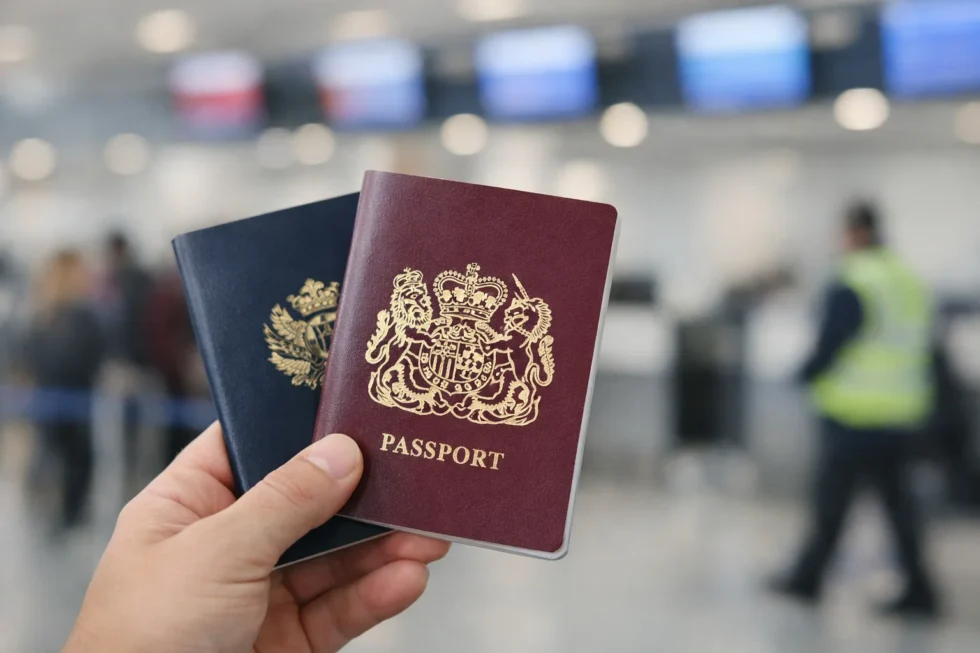
25 February 2026 marks a decisive shift in how British dual nationals must enter the United Kingdom, after the government confirmed stricter enforcement of passport checks at the point of departure. From that date, British citizens who also hold another nationality will no longer be allowed to travel to the UK using only a foreign passport, even where that passport normally permits visa-free entry. Airlines, ferry operators and international rail carriers will be legally required to refuse boarding to passengers who cannot present a valid British passport or other recognised proof of the right to enter the UK at check-in. This is reported by The WP Times newsroom, citing official Home Office guidance issued to international carriers.
The change forms part of the full operational rollout of the UK’s Electronic Travel Authorisation (ETA) regime and reflects updated enforcement instructions circulated by the Home Office to airlines and border authorities. While the rule itself is not new in law, the government has confirmed that carrier-side checks will now be actively enforced, shifting responsibility to transport operators to verify a passenger’s right of entry before travel begins.
What changes for UK dual nationals from 25 February 2026
From 25 February 2026, British citizens who also hold citizenship of another country must enter the UK using one of three accepted forms of documentation:
- a valid British passport
- a valid Irish passport
- a foreign passport containing a certificate of entitlement confirming the holder’s right of abode in the UK
Relying solely on a foreign passport — even from countries such as the United States, Canada, Australia, Japan or EU member states — will no longer be sufficient if the traveller is a British citizen. The rule applies regardless of how a person has previously travelled to the UK and regardless of whether past entries were made without issue. The enforcement date marks a shift from discretionary border checks to mandatory verification before departure.
Why airlines will enforce the rule — not UK border officers
A central feature of the new policy is that enforcement responsibility shifts to carriers, including airlines, ferry companies and international rail operators. Carriers are legally required to ensure that passengers meet UK entry requirements before travel. Under the new framework, this obligation becomes stricter because:
- British citizens cannot apply for an ETA
- travellers using foreign passports will not have a recognised digital travel authorisation
- airlines face financial penalties for transporting passengers without valid entry rights
As a result, checks will take place before boarding, not on arrival. A British dual national who presents only a foreign passport may therefore be refused boarding even if they would otherwise be admissible at the UK border. Industry guidance circulated to carriers makes clear that past travel history will not override current documentation requirements.
How the ETA system led to this change
The passport rule change is directly linked to the UK’s Electronic Travel Authorisation (ETA) system, which has been gradually introduced since 2025. The ETA applies to nationals of countries that do not require a visa for short stays in the UK. It functions as a pre-travel digital clearance, similar to the US ESTA or the upcoming EU ETIAS. However:
- British and Irish citizens are exempt from ETA requirements
- a British citizen travelling on a foreign passport is not eligible to obtain an ETA
- border systems cannot automatically distinguish such travellers from standard visitors
According to official guidance, this created a structural gap in border control processes. A British citizen entering on a foreign passport could appear, in digital systems, to be a visitor with limited leave to remain. The Home Office says the updated enforcement is designed to support “a more streamlined and secure border system” and to remove ambiguity over a traveller’s lawful right to live in the UK.
Who is affected by the new UK passport rules
The changes will apply to British citizens who also hold another nationality and who have previously entered the UK using a non-British passport.
This includes British nationals living permanently overseas, those who routinely travel on a foreign passport, and individuals who acquired British citizenship by descent or have never held a British passport. The rules also affect people who hold multiple nationalities and have alternated between passports when travelling. Government estimates indicate that around 1.2 million British citizens hold dual nationality. Significant numbers are resident in the European Union, North America, Australia, New Zealand and parts of Asia, including Japan and Singapore.
For many of those affected, entering the UK on a foreign passport has long been a routine and largely unchallenged practice. From late February 2026, that will no longer be permitted under the new rules.
British dual nationals face stricter document checks for UK travel from 25 February 2026
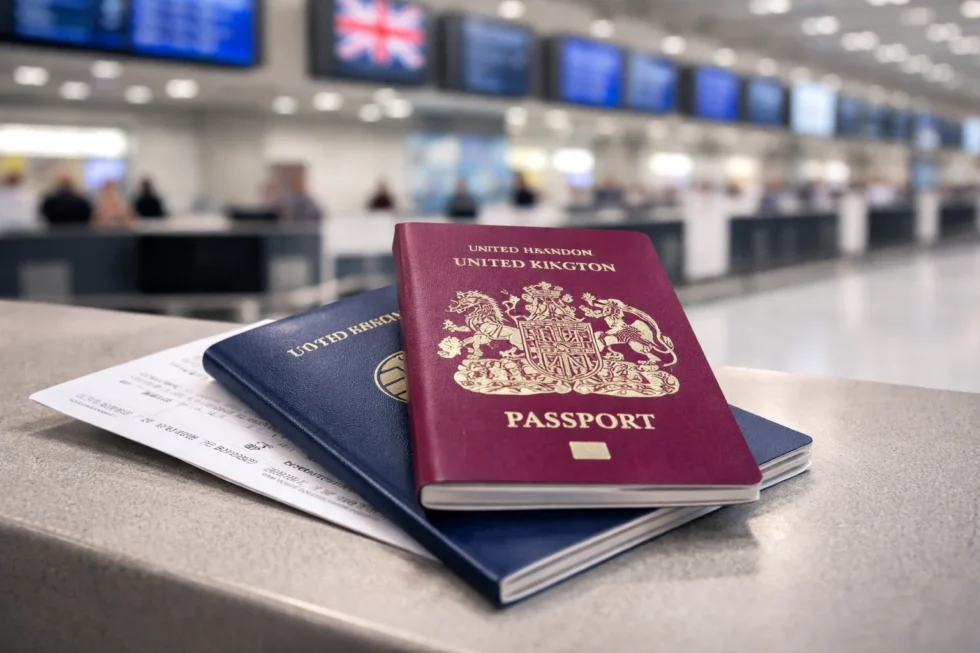
From 25 February 2026, British citizens who also hold another nationality will be required to enter the United Kingdom using recognised proof of British status, regardless of how their citizenship was acquired. The change applies equally to British citizens by descent and those who acquired citizenship otherwise.
Under existing nationality law, British citizens are expected to enter the UK as British nationals. While this principle has long existed in legislation, enforcement has historically been inconsistent. From late February 2026, the UK government will move towards systematic pre-departure enforcement, with airlines required to verify documentation before travel begins.
According to guidance referenced by the Home Office and UK Visas and Immigration, British citizens are not eligible for an Electronic Travel Authorisation (ETA). As a result, travelling to the UK solely on a foreign passport may lead to disruption where a passenger is identified as holding British citizenship.
Who is affected
The requirement applies to:
- British citizens who also hold another nationality
- Individuals who previously entered the UK using a non-British passport
- British citizens by descent, including those who inherited citizenship through a parent
- British citizens residing overseas who routinely travel on a foreign passport
The rules apply regardless of how British citizenship was acquired. There is no exemption for citizens by descent, overseas-born citizens or long-term non-residents.
What documents are accepted
British dual nationals must present one of the following when travelling to the UK:
- a British passport
- an Irish passport
- a certificate of entitlement (right of abode) endorsed in a foreign passport
A certificate of entitlement confirms a permanent right of abode in the UK. It is commonly used by British citizens living abroad who prefer not to hold or renew a British passport. The current application fee is £589. In urgent cases — such as the loss or expiry of a passport shortly before travel — emergency travel documents remain available for single journeys.
What happens without the correct documents
From 25 February 2026, passengers who present only a foreign passport when travelling to the UK may encounter a range of pre-departure enforcement measures. These may include:
- refusal of carriage by the airline at the airport
- inability to complete online or automated check-in, where documentation cannot be validated
- last-minute cancellation or enforced rebooking, often at the passenger’s expense
Under UK carrier liability rules, airlines are legally required to verify that passengers hold valid permission to enter the UK before departure. Where this requirement is not met, carriers may face financial penalties and are therefore unlikely to transport passengers whose eligibility cannot be confirmed.
As a result, in most cases, travel will be prevented before reaching the UK border, with decisions taken at check-in or boarding rather than on arrival. The government has not published detailed operational guidance setting out how airlines will identify British citizenship in every scenario, including cases involving dual nationals travelling on a foreign passport. Identification may occur through a combination of passenger data, document checks and carrier compliance systems. However, responsibility for compliance rests with the passenger. The absence of clear airline-level procedures does not remove the obligation to hold recognised proof of the right to enter the UK at the point of travel.
Travel before the enforcement date
Journeys that begin on or before 24 February 2026 are not affected. British dual nationals who enter the UK before that date may continue to travel on a foreign passport and may remain in the UK after the new rules take effect, provided the journey started before the cut-off point. The new checks apply only to journeys starting from 25 February 2026 onwards.
Why Irish citizens are exempt
Irish citizens are not affected by the change. Under the Common Travel Area, Irish passport holders retain the right to enter, live and work in the UK without additional authorisation. This arrangement remains unchanged.
Wider policy context
The changes form part of a broader shift in UK border policy towards pre-departure enforcement, reducing reliance on discretionary decisions at the physical border. Under this approach:
- eligibility is assessed before travel begins
- airlines act as the first compliance checkpoint
- document-based verification replaces case-by-case assessment on arrival
The model aligns UK practice more closely with systems already used for visa nationals and ETA-eligible travellers.
UK passport rules for dual nationals from 25 February 2026
From 25 February 2026, stricter document checks will apply to British citizens who also hold another nationality when travelling to the UK. The rules affect how passengers are assessed before departure, what documents airlines are required to verify, and what happens when a traveller presents only a foreign passport. Below are the key questions travellers are asking — and what the rules mean in practice.
Who is affected by the new rules
The rules affect British citizens who also hold another nationality and who travel to the UK from overseas. This includes individuals who routinely enter the UK using a non-British passport, whether for convenience or because they reside permanently outside the UK. The requirement applies to all British citizens, regardless of residence, length of stay, or frequency of travel.
When do the rules take effect
The changes apply to journeys starting on or after 25 February 2026. Travel that begins on or before 24 February 2026 is not affected, even if the passenger remains in the UK after the enforcement date. The determining factor is the start date of the journey, not the date of arrival or departure from the UK.
Can British citizens use an ETA instead
No. British citizens are not eligible for an Electronic Travel Authorisation (ETA). ETAs apply only to non-visa nationals who are not British citizens. A British citizen travelling on a foreign passport cannot rely on an ETA as an alternative to holding recognised proof of British status.
Which documents are accepted for travel to the UK
British dual nationals must hold one of the following documents:
- a British passport
- an Irish passport
- a certificate of entitlement (right of abode) endorsed in a foreign passport
A certificate of entitlement confirms a permanent right to enter and live in the UK and is commonly used by British citizens living overseas who do not hold a valid British passport.
What happens if someone travels with only a foreign passport
From 25 February 2026, a passenger who presents only a foreign passport may be:
- refused boarding by the airline
- unable to complete online or automated check-in
- required to cancel or rearrange travel at short notice
Airlines are required to verify eligibility before departure. In most cases, passengers without acceptable documentation will be stopped before reaching the UK border, rather than being assessed on arrival.
Do the rules apply to British citizens by descent
Yes. The requirement applies equally to British citizens by descent and to those who acquired citizenship by birth in the UK or by naturalisation. How citizenship was acquired is not relevant for the purposes of these travel checks. All British citizens are expected to enter the UK as British nationals or to hold recognised proof of the right of abode.
Are Irish citizens affected
No. Irish citizens are exempt. Under the Common Travel Area arrangements, Irish passport holders continue to have the right to enter, live and work in the UK without additional authorisation. These arrangements are unchanged.
Read about the life of Westminster and Pimlico district, London and the world. 24/7 news with fresh and useful updates on culture, business, technology and city life: British passport rule change for british dual citizenship from 25 February 2026