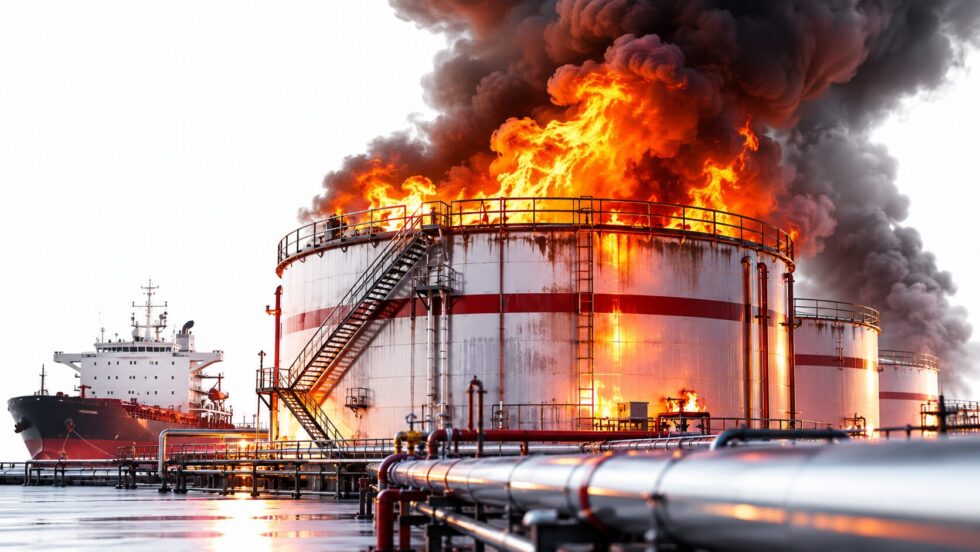
Ukraine St Petersburg drone strike hit a major oil terminal in Russia’s second city overnight into Saturday, 4 July 2026, in one of Kyiv’s clearest long-range attacks on Moscow’s Baltic energy network. Russian officials confirmed that the St Petersburg oil terminal was struck and said there were no casualties, while Ukraine said the operation targeted port oil infrastructure funding Russia’s war and also hit Kronstadt, an important military target near the city, The WP Times reports.
The attack came as Ukraine has intensified strikes on Russian energy infrastructure in 2026, aiming to disrupt fuel supplies, export revenue and logistics far from the front line. St Petersburg is more than 850km from Ukraine’s border, making the strike both a military operation and a political signal before renewed diplomatic pressure around the war.
What happened in the Ukraine St Petersburg drone strike
Russian and Ukrainian officials said drones struck St Petersburg and the surrounding Leningrad region overnight into 4 July 2026. St Petersburg governor Alexander Beglov said the city had faced a “large-scale” drone attack and confirmed that the city’s oil terminal had been hit. He said there were no casualties and that the immediate aftermath had been dealt with. Leningrad region governor Alexander Drozdenko said a drone also struck the area of Vysotsk port, around 170km north-west of St Petersburg on the Baltic Sea. Vysotsk is a strategically important port because it handles oil, grain, coal and liquefied natural gas. Russian officials did not give full details of the damage at Vysotsk.
| Detail | Reported information |
|---|---|
| Date | Overnight into Saturday, 4 July 2026 |
| Main confirmed hit | St Petersburg oil terminal |
| Wider target zone | St Petersburg and Leningrad region |
| Additional reported area | Vysotsk port, about 170km north-west of St Petersburg |
| Ukrainian claim | Port oil infrastructure and Kronstadt were targeted |
| Russian claim | 72 drones shot down over the region |
| Casualties | None reported in St Petersburg |
| Key context | Ukraine is expanding long-range strikes on Russian energy assets |
Why the St Petersburg oil terminal matters for Russia news
The St Petersburg oil terminal matters because it sits inside Russia’s Baltic logistics system, not near the Ukrainian border. A successful strike there shows that Ukraine can threaten infrastructure close to one of Russia’s most important cities, forcing Moscow to defend assets far from the battlefield. Ukraine’s military described the terminal as one of Russia’s major oil facilities. Kyiv’s logic is clear: oil terminals, refineries and fuel depots help Russia earn money, move fuel and support the war economy. A strike on such a site is designed to create disruption beyond the immediate fire or physical damage.
For Russia, the problem is not only one terminal. The wider challenge is cumulative. Every successful Ukrainian drone strike forces repairs, emergency fuel management, air-defence redeployment and public explanations. That is why energy infrastructure has become one of the most important fronts away from Donetsk, Zaporizhzhia and Kharkiv.
What Ukraine said about the St Petersburg drone strike
Volodymyr Zelenskyy said Ukrainian forces hit port oil infrastructure that generates revenue for Russia’s war. He also said there were hits on Kronstadt, describing it as an important military target more than 850km from Ukraine’s border. That phrase is important because Ukraine is presenting the attack as part of its wider “long-range sanctions” strategy. In other words, Kyiv is trying to do with drones what Western sanctions attempt to do financially: reduce Moscow’s ability to turn energy infrastructure into war funding. Russia has not publicly confirmed Ukraine’s claim about Kronstadt. That should be kept separate from the confirmed oil terminal hit. The St Petersburg terminal strike was acknowledged by Russian officials; the Kronstadt part remains a Ukrainian claim.
What Russia said after the oil terminal was hit
Russian regional officials said air defences had shot down 72 Ukrainian drones over St Petersburg and the wider Leningrad region. Beglov said residents were advised to follow safety instructions during the drone threat, while Drozdenko reported minor damage in several settlements. Moscow’s broader line has been to minimise the strategic effect of Ukrainian strikes on energy infrastructure. Vladimir Putin has previously described attacks on Russian energy facilities as not critical, but Russia has also moved to support its domestic fuel market through legal and tax measures. Reuters reported that Putin signed a law amending the tax code to support fuel supplies after growing pressure on the market.
Why Ukraine is targeting Russian oil infrastructure in 2026
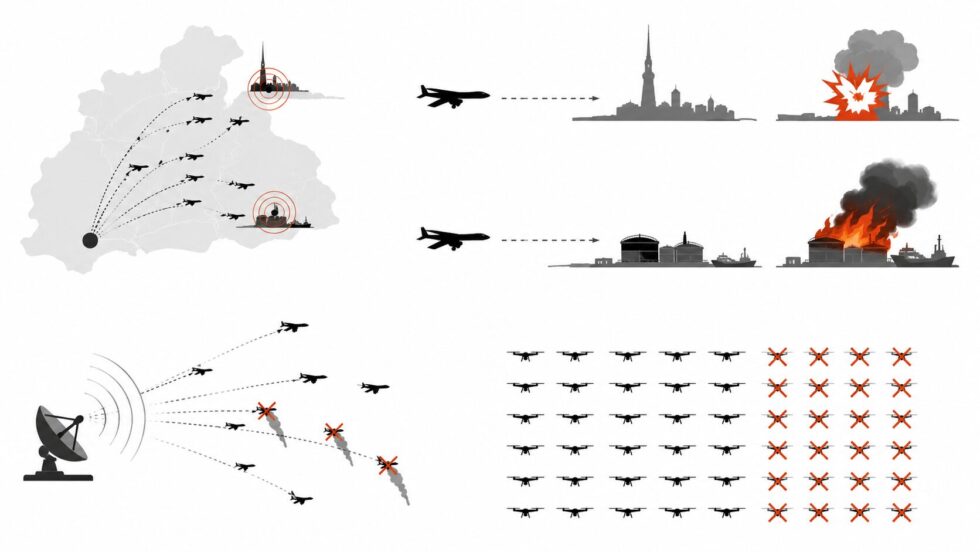
Ukraine has stepped up long-range drone attacks against Russian oil infrastructure because fuel is central to Moscow’s war. Refineries, terminals and depots support military logistics, civilian supply, export flows and state revenue. Kyiv argues that these are legitimate targets when they help finance or sustain Russia’s invasion. The campaign also creates political pressure inside Russia. Fuel shortages are difficult to hide because they affect drivers, businesses, transport companies and regional authorities. Unlike battlefield losses, petrol disruption can be felt across Russia’s 11 time zones.
For Ukraine, this is a relatively low-cost way to stretch Russia’s defences. Drones are cheaper than missiles and can be launched in waves. Even when many are intercepted, a small number reaching fuel infrastructure can cause fires, delays and repair costs.
The St Petersburg strike came after a period of heavy Russian attacks on Ukraine and amid renewed disputes over control of front-line towns. Ukraine denied Russian claims that Kostiantynivka in Donetsk region had fallen, while Russia continued to claim advances in eastern Ukraine.
This is why the timing matters. Russia wants to show battlefield momentum. Ukraine wants to show that Moscow’s rear areas are vulnerable and that the war is not cost-free for Russia’s economy. Long-range drone strikes allow Kyiv to change the map of pressure even when the ground war is slow and costly. For British readers, the key point is strategic rather than technical. Ukraine is not only defending trenches and cities; it is trying to weaken the system that keeps Russia’s war running. The St Petersburg attack is part of that wider campaign.
What is confirmed and what remains unclear
Several facts are now clear. The attack happened overnight into Saturday, 4 July 2026. The St Petersburg oil terminal was hit. Russian officials said there were no casualties in the city. Officials also reported drone activity and a strike around Vysotsk port. Ukraine said Kronstadt was hit, but Russia has not confirmed that claim. What remains unclear is the full scale of damage. Russian officials have not released detailed repair estimates, operational impact assessments or full images from the affected sites. Ukraine has every reason to emphasise the success of the attack; Russia has every reason to minimise it. That means the safest reading is this: the strike was operationally significant because it reached a high-value Baltic energy area, but the full economic effect will depend on how long infrastructure is disrupted and whether follow-up attacks continue.
Ukraine hit St Petersburg’s oil terminal overnight into 4 July 2026 as part of a wider long-range drone operation against Russian energy and military-linked infrastructure. Russia confirmed the oil terminal was struck and reported no casualties, while Ukraine said port oil infrastructure and Kronstadt were targeted. The strategic purpose is to pressure Russia’s fuel network, war revenue and domestic logistics far from the front line.
Sources used: Reuters, Sky News, BBC, The Guardian, Associated Press, Ukrainian presidential statements, Russian regional officials’ statements.
Read about the life of Westminster and Pimlico district, London and the world. 24/7 news with fresh and useful updates on culture, business, technology and city life: Why is El Niño raising power risks in Colombia as new energy projects fall behind schedule