Ukrainian President Volodymyr Zelensky arrives in Warsaw on Friday for his first face-to-face meeting with Poland’s new president, Karol Nawrocki — a visit widely seen as diplomatically delicate from the outset. Taking place four months after Nawrocki assumed office, the meeting comes amid rising political tensions and shifting public sentiment on both sides of the border. The visit was reported by The WP Times, citing information from France 24.
Although the two leaders spoke by phone following Nawrocki’s election victory, it has taken months for an in-person meeting to materialise. According to Polish media, the president declined at least three invitations to travel to Kyiv, signalling instead that he expected Zelensky to come to Warsaw. In Kyiv, the move was interpreted as a deliberate display of distance and a cooling of political goodwill.
Since Russia’s full-scale invasion of Ukraine in February 2022, Poland has been one of Kyiv’s most critical allies, serving as a logistical, military and humanitarian hub. More than one million Ukrainian refugees have crossed into Poland, and the vast majority of Western military assistance continues to transit Polish territory. Yet Nawrocki’s presidency has marked a noticeable shift in tone in bilateral relations.
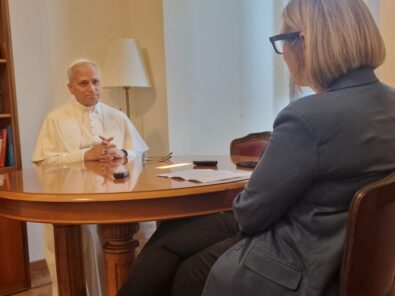
A nationalist-leaning historian by background, Nawrocki has repeatedly argued that support for Ukraine must not come at the expense of Polish national interests. He has criticised Kyiv for what he describes as insufficient gratitude for Poland’s extensive military and humanitarian support and for treating Warsaw as a “junior partner”. In a recent interview, he stressed that Poland seeks a relationship of equals rather than one-sided commitments.
History remains one of the most sensitive fault lines. Nawrocki has accused Ukraine of failing to fully acknowledge responsibility for the killing of around 100,000 Poles in Volhynia between 1943 and 1945, describing the events as a genocide of the Polish people. While pledging to raise these issues consistently, he has also insisted that historical disputes do not fundamentally undermine Poland’s strategic backing of Ukraine against Russian aggression.
The Polish president has also voiced opposition to the “unconditional” accession of Ukraine to the European Union and NATO and has categorically ruled out deploying even a single Polish soldier to Ukraine once the war ends. His stance reflects a broader rise in scepticism within Polish society, increasingly amplified by far-right political forces.
On the Ukrainian side, confidence has clearly eroded. Opinion polls suggest that trust in the Polish president has fallen to 44 per cent in Ukraine — roughly 20 percentage points lower than during the presidency of Andrzej Duda, with whom Zelensky maintained a notably close relationship. Analysts argue that Poland now plays a less influential role for Kyiv on the international stage, no longer speaking with the same clarity or unity as before.
Further complications stem from domestic political tensions in Warsaw. Nawrocki has frequently adopted positions at odds with those of Prime Minister Donald Tusk’s centrist government, creating uncertainty among Poland’s international partners. Tusk publicly warned that if the president does not wish to actively assist Ukraine policy, he should at least refrain from obstructing the government’s efforts.
Ukrainian analysts do not expect Zelensky’s visit to produce an immediate breakthrough, but they see it as strategically important. The trip is viewed as an attempt to establish a workable dialogue between two leaders with markedly different political visions. As several observers note, even limited cooperation is preferable to none — particularly against the backdrop of an ongoing war and an increasingly uncertain security outlook for the region.
Background: when were relations last this strained
The last time relations between the presidents of Poland and Ukraine were comparably tense was in the early 2000s, when unresolved historical disputes and political mistrust hampered close strategic cooperation. That period gave way to a far more constructive phase after Andrzej Duda took office in 2015. Zelensky’s visit to Warsaw now signals that this chapter has closed, ushering in a new and significantly more challenging phase in bilateral relations.
Read about the life of Westminster and Pimlico district, London and the world. 24/7 news with fresh and useful updates on culture, business, technology and city life: What changes in the UK Settlement and ILR reform, and why the 10-year rule matters