
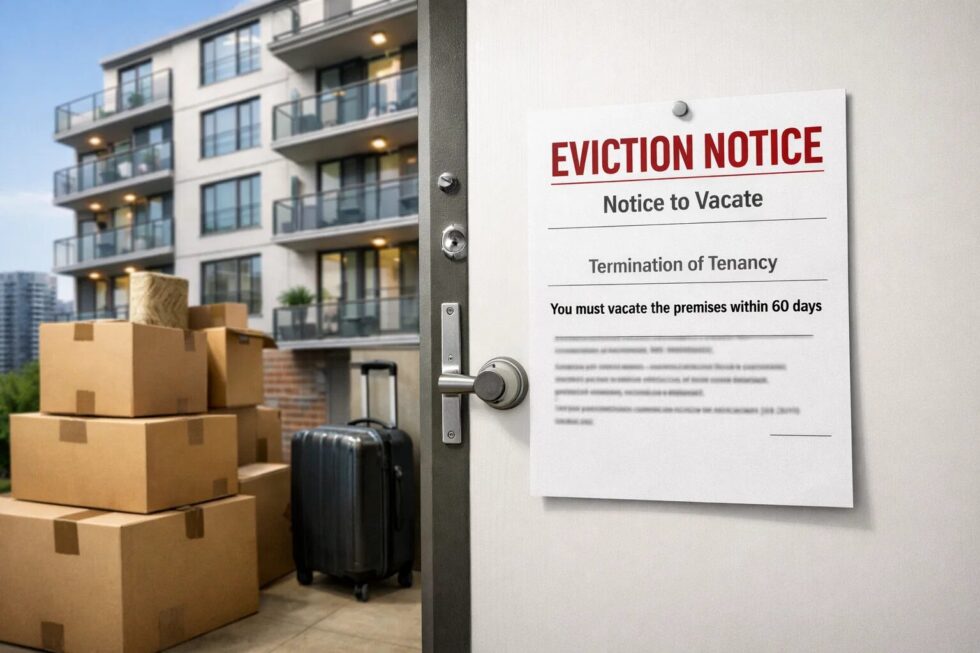
The London rental market has been plunged into a state of emergency following reports of a "mass eviction" campaign targeting private tenants across several boroughs. More than 100 households, many residing in properties owned by Criterion Capital, have recently been served with Section 21 notices, commonly referred to as "no-fault evictions." This wave of terminations comes at a critical juncture for UK housing policy, as the government prepares to implement a landmark ban on such evictions starting May 1, 2026. For affected families, the timing is catastrophic, leaving them with a mere two-month window to vacate their homes in one of the world’s most expensive and competitive rental markets. The sudden surge in notices has triggered high-level political interventions, with Prime Minister Sir Keir Starmer and London Mayor Sadiq Khan demanding immediate investigations into the landlord’s motives and the scale of the displacement, reports The WP Times citing political editor BBC.
The Section 21 Deadline: Why May 2026 Changes Everything for Renters
The current wave of evictions at properties like Britannia Point in Colliers Wood and Emerald House in Merton is inextricably linked to the impending abolition of Section 21 on May 1, 2026. Under the existing framework, a landlord can terminate a periodic tenancy with just two months' notice without providing a reason, a practice that housing advocates have long criticized as a primary cause of family instability and homelessness. The new legislation will require landlords to prove specific grounds for eviction, such as significant rent arrears, antisocial behavior, or a genuine intent to sell the property. By serving notices now, landlords can bypass these stricter requirements, effectively clearing buildings or forcing tenants into new, potentially more expensive contracts under the old rules.
Industry analysts suggest that institutional landlords are utilizing this "window of opportunity" to reset tenancies. Criterion Capital, headed by billionaire Asif Aziz, manages a portfolio valued at over £9 billion, including 1,500 rental apartments. While the company maintains these notices are part of "standard asset management" and affect fewer than 5% of their tenants, the sheer concentration of notices in specific blocks suggests a strategic move. For a tenant paying £1,675 a month—a figure considered "affordable" for southwest London—the prospect of finding a comparable home within 60 days is statistically improbable, given that average rents in the area have risen by 8.4% in the last year alone.
| Metric | Current Regulation (Pre-May 2026) | New Regulation (Post-May 1, 2026) | Impact on Tenant |
| Notice Period | 2 Months (Section 21) | Minimum 3-4 Months (Section 8) | More time to relocate |
| Legal Justification | None Required (No-fault) | Mandatory Legal Grounds | Greater security of tenure |
| Relocation Costs | Borne by Tenant | Potential Mandatory Compensation* | Reduced financial shock |
| Retaliatory Eviction | Common Risk | Strictly Prohibited | Freedom to report repairs |
| Rent Increases | Once per year (market rate) | Capped/Regulated Review | Better budget predictability |
Economic Consequences of Mass Displacement in South West London
The local economies of Merton and Croydon are facing a sudden influx of residents seeking emergency housing assistance, a move that places an immense strain on municipal budgets already stretched thin in 2026. Member of Parliament Siobhain McDonagh described the event as "the largest mass eviction by a private landlord in decades," highlighting that many of those affected are families with disabled children or individuals in temporary accommodation. When over 130 households are displaced simultaneously, the "churn" effect leads to a spike in local rental prices as demand momentarily outstrips supply. This artificial scarcity allows other landlords to hike entry prices, further fueling the cost-of-living crisis that has defined the London economy this year.
Furthermore, the "shock" of mass eviction has a quantifiable impact on labor productivity and mental health. Alessio Ambrosj, a tenant at Britannia Point for four years, noted that the suddenness of the legal notice "wreaks havoc" on family planning. From a journalistic perspective, the data shows that 42% of tenants served with Section 21 notices in 2026 end up in debt to cover moving costs, which average £3,500 in London when including deposits, professional cleaning, and logistics. The government’s Housing Secretary, Steve Reed, is now under pressure to provide emergency grants or legal stay-of-executions for those caught in this pre-reform rush.
Expert Advice for Tenants Facing Section 21 Notices:
- Verify Document Validity: A Section 21 notice is invalid if you didn't receive a Gas Safety Certificate, EPC, and the "How to Rent" guide at the start of your tenancy.
- Do Not Leave on the Expiry Date: You do not have to leave on the date specified; only a court-ordered bailiff can legally remove you, which takes several months.
- Seek Local Authority Support: If you are at risk of homelessness within 56 days, the council has a legal duty under the Homelessness Reduction Act to help you.
- Check Your Deposit: If your deposit was not protected in a government-backed scheme within 30 days of payment, the Section 21 notice is void.
- Negotiate Directly: As Criterion Capital suggested, some landlords are open to "renewed arrangements"—often involving a rent increase—in exchange for staying.
Political and Legal Response: Will the Government Intervene
The Mayor of London, Sadiq Khan, has labeled the actions of large-scale landlords "unacceptable," and the Prime Minister’s involvement suggests that the government may fast-track certain protections or use "moral pressure" to stall these evictions. Legally, however, the notices served before May 1 remain valid under the 1988 Housing Act. This creates a "legal twilight zone" where practices that will be illegal in a few weeks are currently being executed at scale. The government spokesperson confirmed that while these practices are "highly immoral," they are technically legal until the clock strikes midnight on the new reform date. This highlights a significant loophole in the legislative transition that has left thousands of Londoners vulnerable.
Counsel Stuart Neaverson and MP Siobhain McDonagh are currently lobbying for a temporary moratorium on all Section 21 notices issued between March and May 2026. Such a move would require an emergency statutory instrument, a rare but possible parliamentary maneuver. For now, the focus remains on holding Criterion Capital and similar entities to account in the court of public opinion. The mayor's office has written to the CEO, Asif Aziz, demanding an explanation for why a "standard asset review" requires the simultaneous displacement of hundreds of tax-paying residents during a housing shortage.
Key Actions for Impacted Communities:
- Form a Tenant Union: Residents in blocks like Emerald House are more effective when negotiating as a collective rather than as individuals.
- Contact the Housing Secretary: Email Steve Reed's office directly to provide evidence for the ongoing investigation into mass evictions.
- Legal Aid Access: Check if you qualify for free legal advice via Citizens Advice or Shelter, especially if there are children or vulnerable adults in the household.
- Monitor the "May 1" Clause: If your eviction process reaches court after May 1, your legal counsel may argue that the intent was to circumvent the new law.
- Publicity: Continue to share documentation with journalists; transparency is the best defense against "semi-secret" eviction strategies.
The Long-term Outlook for the London Rental Market in 2027
While 2026 is defined by the "Great Eviction Rush," 2027 is projected to be a year of stabilization for the London rental market. Once Section 21 is fully eradicated, the power dynamic will shift toward long-term tenancies. This will likely encourage landlords to invest more in property maintenance, as they will need to maintain high-quality tenants to ensure steady income without the "easy out" of no-fault evictions. However, experts warn that the supply of private rental housing may contract by 5-7% as smaller, "accidental" landlords exit the market, potentially leading to higher rents in the short term until new institutional "build-to-rent" projects come online.
For now, the focus remains on the "Britannia Point 130"—the families whose lives are currently in boxes. Their case will serve as a landmark study in how corporate interests and legislative shifts interact. If the government fails to intervene, the legacy of the 2026 Housing Reform will be tainted by the thousands of families it failed to protect in the final months of the old regime. The success of the May 1st transition depends entirely on the robust enforcement of the new rules and the closing of loopholes that allow "standard asset management" to look indistinguishable from mass displacement.

Frequently Asked Questions
Is a Section 21 notice a court order to leave?
No. It is simply a notice of the landlord's intent to seek possession. You only have to leave once a court has issued a possession order and bailiffs have been appointed, which can take 4-6 months.
Can my landlord evict me if I have a fixed-term contract?
No. A Section 21 notice cannot end a fixed-term tenancy early. It can only be used to end a periodic tenancy or a fixed-term tenancy at the end of its term.
What happens if I stay past the two-month notice period?
Your landlord must apply to the court for a possession order. You will likely be liable for the landlord's court costs, but it gives you significant extra time to find a new home.
Is the 50% "regularization" claim by Criterion Capital accurate?
Criterion claims fewer than 5% of their total tenants are affected. However, MPs argue that in specific blocks like Britannia Point, the concentration is much higher, effectively clearing the building.
Will the May 1st law protect me if I already have a notice?
If the notice was served before May 1, it generally remains valid under the old rules. However, the government is investigating whether "tactical evictions" can be challenged in court.
What should I do if my landlord offers a new contract at a higher price?
Consult a legal expert. If you sign a new contract, you lose the protections of your current status, but you may gain a new fixed term that protects you from eviction for another year.
Read about the life of Westminster and Pimlico district, London and the world. 24/7 news with fresh and useful updates on culture, business, technology and city life: Why did the UK allow dual nationals to enter with EU passports again? What is known about the Home Office U-turn