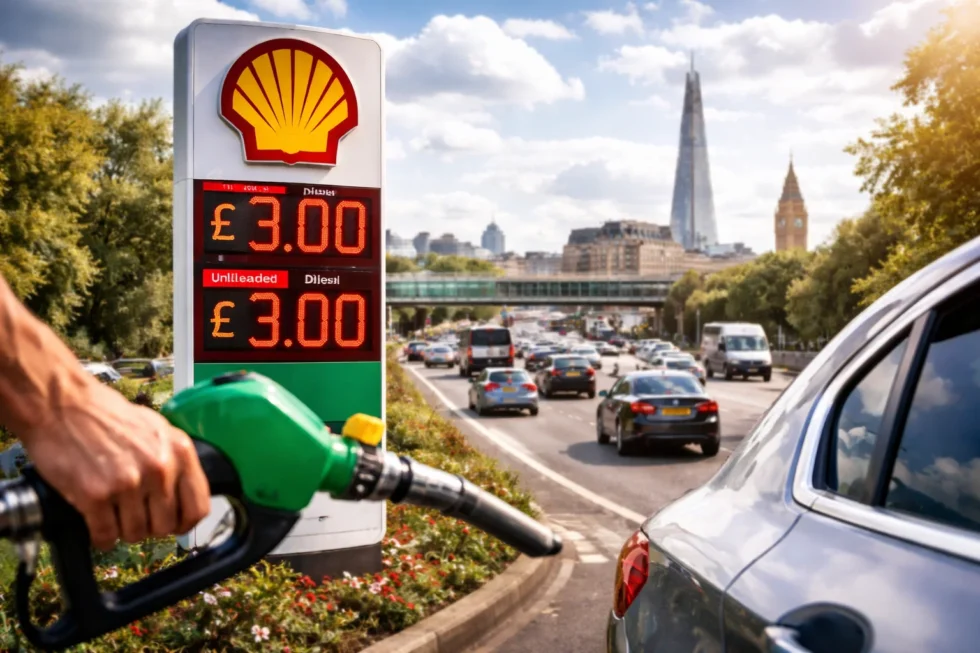
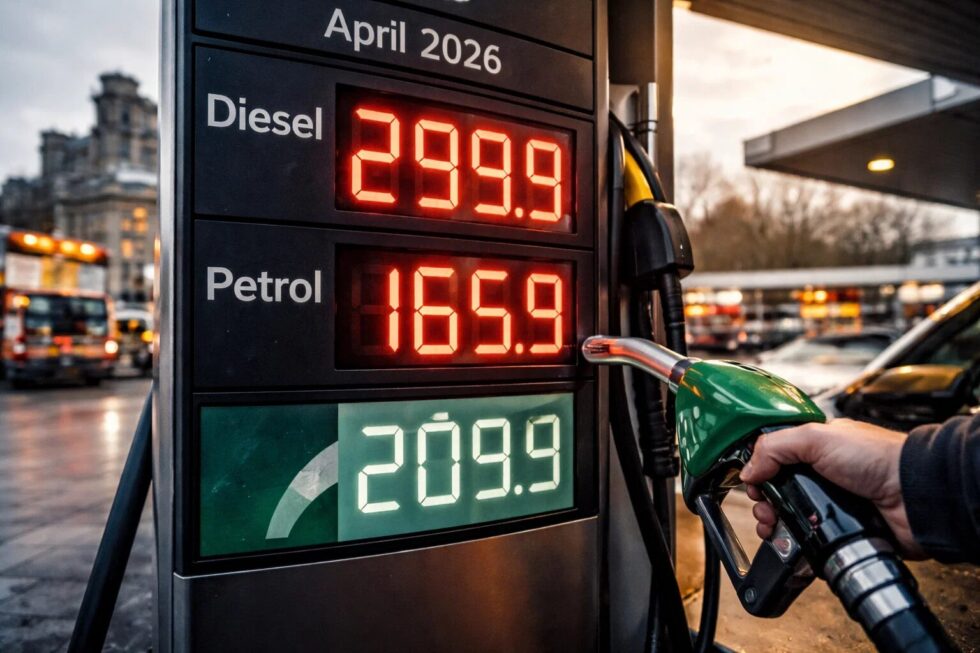
British motorists are facing an unprecedented financial squeeze this Easter weekend as the price per litre of fuel at Britain's most expensive filling station has surged to a staggering £2.999, effectively hitting the £3 mark for the first time in UK history. This sharp escalation, recorded in early April 2026, follows a period of intense volatility in global oil markets triggered by the escalating conflict in the Middle East, which has seen diesel prices climb by 30% in a matter of weeks and petrol reaching a two-year high.
For the average UK household, 80% of whom remain dependent on private vehicles according to official transport surveys, this surge translates to an additional £25–£40 per tank, severely impacting disposable income during a primary national holiday period. The ripple effect is already being felt across the logistics and retail sectors, with the Road Haulage Association warning of imminent inflationary pressure on supermarket goods due to rising delivery overheads, reports The WP Times, via TheSun.
Geopolitical Volatility and the March 2026 Price Surge
The current crisis is not merely a seasonal fluctuation but a direct consequence of shifting geopolitical alliances and supply chain disruptions in the Persian Gulf. In March 2026, the UK experienced the fastest monthly increase in fuel costs since records began, surpassing the price shocks seen during the initial stages of the 2022 energy crisis. Industry experts note that the Brent Crude benchmark has consistently traded above $115 per barrel throughout the spring, driven by concerns over tanker safety in the Strait of Hormuz. For British drivers, this has manifested as a "perfect storm" where high global demand meets a restricted supply of refined products, particularly diesel.
"March was truly unprecedented—fuel prices have never risen this quickly in a single month. The spike drivers experienced in March 2026 is significantly higher than what was seen at the start of the war in Ukraine," stated Simon Williams, Head of Policy at the RAC.
Comparative Fuel Price Analysis: April 2026 vs. Historic Averages
- Current Average Diesel: 185.23p (up 30% since the start of regional conflict).
- Current Average Petrol: 154.45p (up 16% month-on-month).
- Highest Recorded Price: 299.9p (Sloane Avenue, Chelsea).
- Motorway Service Average: 200.9p (recorded at M61 Rivington Services).
- Inflationary Impact: Estimated 1.2% contribution to the national CPI for Q2 2026.
The Motorway Premium: Why Service Stations Are Hitting £2 per Litre
While the Chelsea station remains a statistical outlier, the broader reality for Easter travelers is the widespread adoption of the £2 per litre benchmark for diesel at motorway service areas (MSAs). Drivers at the EG Euro Garages site at Rivington Services on the M61 were shocked to see standard diesel listed at 200.9p, a price point previously reserved for high-octane performance fuels. This "motorway premium" is attributed to higher land rents and the requirement for MSAs to remain operational 24/7, though consumer groups argue that the lack of competition on major arterial roads allows for predatory pricing during peak travel windows.
| Location Type | Petrol Price (Avg) | Diesel Price (Avg) | Trend (April 2026) |
| Supermarket Forecourt | 149.9p | 178.5p | Upward |
| Independent Urban | 158.2p | 186.4p | Volatile |
| Motorway Services (MSA) | 175.6p | 200.9p | Record High |
| Luxury Districts (London) | 299.9p | 299.9p | Peak |
Regulatory Response and the CMA Fuel Finder Scheme
In response to the "sky-high" prices, the Competition and Markets Authority (CMA) has accelerated the rollout of its mandatory open-data scheme, requiring all retailers to provide real-time price updates. Under the Digital Markets, Competition and Consumers Act, fuel retailers found to be unfairly padding margins face fines of up to 1% of global turnover. Practical advice for drivers in 2026 is to utilize official "Fuel Finder" apps which integrate this CMA data, allowing users to identify price discrepancies of up to 35p per litre between stations located only a few miles apart.
Practical Recommendations for Reducing Fuel Expenditure
- Avoid Motorway Refills: Plan your journey to exit the motorway and find a supermarket station; the 10-minute detour can save £15 on a 60-litre tank.
- Loyalty Integration: Utilize supermarket loyalty apps (Tesco, Sainsbury's, Morrisons) which, as of 2026, offer integrated fuel discounts of up to 5p per litre.
- Speed Regulation: Maintaining a steady 60mph instead of 70mph on motorways improves fuel efficiency by approximately 9% in standard internal combustion engines.
- Weight Reduction: Removing roof racks and clearing heavy items from the boot can reduce fuel consumption by 2% in urban stop-start traffic.
The Economic Burden on UK Households and Small Businesses
The social implications of £3 petrol are profound, particularly for rural communities where public transport infrastructure remains underdeveloped. The Office for National Statistics (ONS) reported in March 2026 that transportation costs now represent the second-largest expenditure for British families after housing. Small businesses, especially those in the "last-mile" delivery sector, are facing a liquidity crisis as fuel cards reach their limits faster than invoices can be paid. If prices do not stabilize by the summer, there is a significant risk of a "spending freeze" across other sectors of the economy as consumers reallocate funds to essential commuting.
"With eight out of ten people dependent on their vehicles, these costs must be really telling for households and businesses alike. We are seeing a direct correlation between fuel price hikes and reduced high street spending," — RAC Long-term Study 2026.
Risks and Market Forecasts for Summer 2026
- Risk of Supply Shortage: If regional tensions escalate further, rationing or "limited purchase" policies could be introduced at the discretion of the Department for Energy Security and Net Zero.
- Price Floor: Analysts suggest that unless Brent Crude drops below $95, the national average for diesel is unlikely to fall below 175p in the near term.
- Inflationary Spiral: Increased haulage costs are predicted to add 0.5% to food inflation by June 2026.
The Logistics of the Crisis: The Crude Oil Supply Chain Disruption
The current £3 per litre peak in Chelsea is the visible tip of a much deeper structural failure in the 2026 global energy supply chain. According to the International Energy Agency (IEA), the maritime insurance premiums for tankers traversing the Suez Canal have increased by 400% since January 2026. This logistical surcharge is passed directly to UK refineries, which are already operating at 94% capacity to compensate for the loss of Russian and Iranian distillates. For the UK consumer, this means that even if crude oil prices stabilize, the "refinery margin"—the cost of turning oil into petrol—remains at a historic high of 22p per litre, compared to the 2024 average of 12p.
- Insurance Risk: High-risk premiums on Middle Eastern routes add an estimated 4p to every litre at the pump.
- Refinery Bottleneck: Limited European refining capacity has created a "diesel-first" priority, keeping petrol prices artificially high.
- Sterling Weakness: As the Pound fluctuates against the US Dollar (the currency of oil), the UK’s "import parity" cost remains volatile.
- Inventory Levels: UK strategic fuel reserves are currently at 65 days, leading to "just-in-time" delivery models that cannot absorb sudden price shocks.
The "Ghost Stations": Rural Fuel Deserts and Economic Isolation
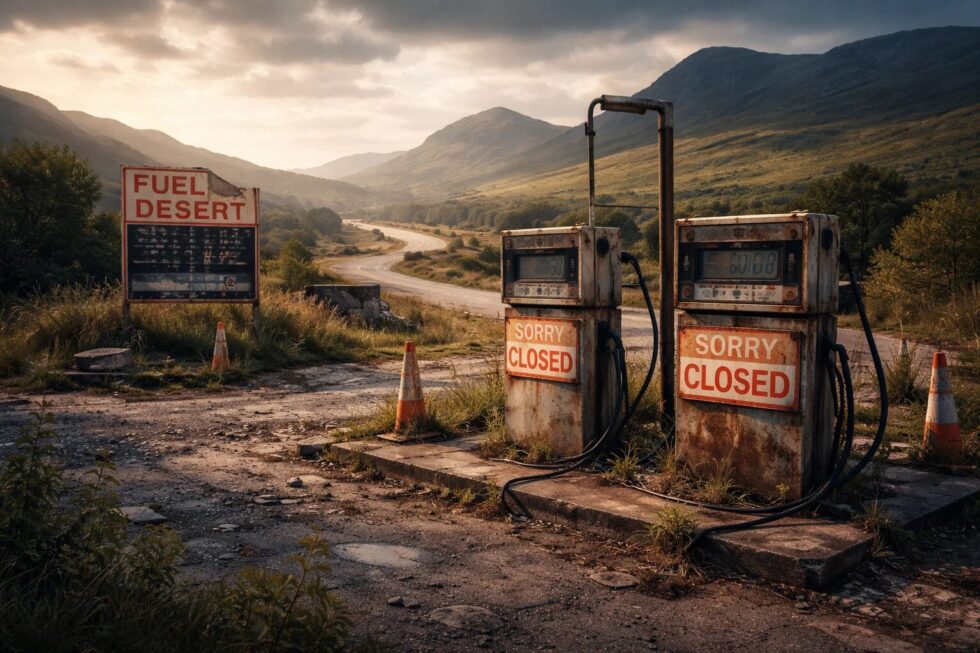
While London drivers face high prices, rural communities in Cornwall, Cumbria, and the Scottish Highlands are facing the total closure of independent forecourts. The Petrol Retailers Association (PRA) reports that since the beginning of 2026, over 150 independent stations have ceased trading because they cannot afford the upfront "bond" payments required to buy fuel at current wholesale rates. This creates "Fuel Deserts," where residents must drive up to 25 miles just to find a working pump, further increasing their total monthly expenditure.
| Region | Distance to Nearest Station (Avg) | Avg. Price (April 2026) | Economic Status |
| Greater London | 0.8 miles | 165.4p (Non-Luxury) | High Access |
| Scottish Highlands | 18.2 miles | 192.8p | Fuel Desert |
| South West England | 6.4 miles | 179.2p | Vulnerable |
| Wales (Rural) | 9.1 miles | 184.5p | Vulnerable |
Technical Efficiency: The Impact of E10 and Premium Fuels in 2026
A common mistake among UK motorists during this Easter crisis is the "Premium Fuel Fallacy." Despite the £2.99 price tag for super-unleaded at high-end stations, standard E10 petrol remains the mandatory baseline for most vehicles. However, with the 2026 environmental mandates, the ethanol content in E10 is being strictly monitored for its "energy density." Technical tests conducted by the Driver and Vehicle Standards Agency (DVSA) show that in temperatures below 8°C, E10 fuel can result in a 3% drop in MPG compared to 2024 blends.
- MPG Monitoring: Use your car’s trip computer to track "Real-World MPG" rather than relying on manufacturer stickers.
- Premium vs. Standard: Only use high-octane (97/99) fuel if your engine is high-performance or turbocharged; for most hatchbacks, it offers zero financial benefit.
- Tire Pressure: A 5 PSI drop in tire pressure can increase fuel consumption by 2%—essential to check before long Easter journeys.
- Aerodynamics: At £3 per litre, driving with windows down at motorway speeds creates "drag" that costs roughly 3p per mile.
The Rise of "Fuel Sharing" and Micro-Commuting Communities
In response to the 2026 fuel crisis, a new social trend has emerged across the UK: Digital Carpooling. Apps specifically designed for the "Easter Getaway" are seeing record downloads as families split the £180 cost of a full tank for long-distance trips. Furthermore, some UK local authorities have introduced "Emergency Fuel Grants" for essential workers (nurses, police, teachers) to subsidize their commute during this period of extreme volatility.
- Community Hubs: Facebook and WhatsApp groups for "School Run Sharing" to reduce the number of daily trips.
- Corporate Shuttles: Major UK employers in industrial parks are reinstating private bus services to bypass employee fuel costs.
- The "Work-From-Home" Spike: A noticeable 8% increase in remote work requests was recorded by HR firms in late March 2026 as petrol hit the 160p average.
- EV Adoption Pulse: Orders for second-hand Electric Vehicles (EVs) have surged by 19% this month as drivers look for long-term protection against oil market instability.
Frequently Asked Questions
Why did the fuel price hit £3 at the Chelsea Gulf station?
The location on Sloane Avenue has extremely high operating costs and serves a luxury demographic, allowing the station to pass on the full impact of the current global oil price spike directly to the consumer.
Is fuel cheaper at supermarkets in 2026?
Yes, data from the CMA shows that supermarket forecourts remain on average 8–12p cheaper per litre than branded urban stations, and up to 50p cheaper than motorway services.
Has the government cut fuel duty recently?
The current 5p fuel duty cut remains in place as of the March 2026 Budget, but its impact has been largely neutralized by the rapid rise in wholesale oil prices.
What is the "CMA Fuel Finder"?
It is a government-mandated system that forces petrol stations to share their current prices in real-time with third-party apps, helping drivers find the cheapest fuel nearby.
Will prices go down after Easter?
Market analysts from the International Energy Agency (IEA) suggest that prices will remain high as long as the conflict in the Middle East continues to disrupt supply lines.
Is it legal to charge £2.99 per litre?
UK retailers are free to set their own prices, provided they do not engage in price-fixing or anti-competitive behavior. The CMA monitors these prices to ensure fair market practice.
Read about the life of Westminster and Pimlico district, London and the world. 24/7 news with fresh and useful updates on culture, business, technology and city life:
Read about the life of Westminster and Pimlico district, London and the world. 24/7 news with fresh and useful updates on culture, business, technology and city life: Diesel prices UK surge as Northern Ireland sees 35% rise after Iran conflict