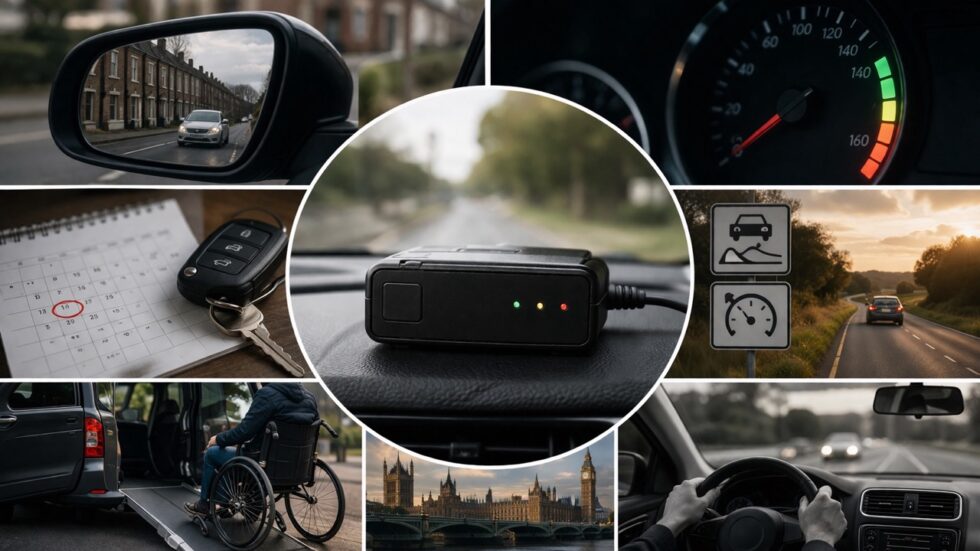
From 13 April 2026, a major new rule took effect for Motability users in Britain: all customers starting their first Motability Scheme lease for a car or Wheelchair Accessible Vehicle now begin with the Drive Smart telematics system, meaning a black box becomes part of the lease from day one. The change expands a policy that had already applied to customers under 30 and to leases with a named driver under 30, and it shifts the scheme more firmly towards behaviour-based monitoring at the same time as wider Motability cost and mileage changes are already scheduled for 1 July 2026. The immediate April change is therefore not a minor technical update but the start of a tighter operating framework around how disabled drivers are assessed, supported and, in some cases, sanctioned, The WP Times reports.
What matters most for drivers now is that the April rollout concerns monitoring and eligibility conditions, while the July package concerns cost, mileage and excess-use charges. Official Motability material says Drive Smart is intended to support safer driving and build confidence, particularly at the start of a lease, but campaigners argue that the new structure risks placing disabled people under constant scrutiny and could restrict work, medical travel and everyday independence. That dispute has sharpened because the telematics rollout lands just weeks before the scheme moves to a lower annual mileage allowance and a far higher excess mileage charge for new orders.
Motability black box rules April 2026: what changed on 13 April and who is affected
The rule that changed in April is specific and already live. Motability’s official announcement states that from Monday 13 April 2026, Drive Smart is being introduced for people leasing their first car or WAV on the Motability Scheme. It also confirms that Drive Smart already applies to all customers under 30 and to leases that include a named driver under 30, meaning the April step broadens an existing telematics policy rather than inventing a completely new one.
In practical terms, this means a black box is no longer limited to younger-driver cases. A first-time customer entering the scheme from 13 April can now expect telematics to be part of the lease setup as standard. Motability describes the system as a way to help people “drive smart from day one”, but the operational consequence is that driver behaviour is now captured and reviewed through a structured monitoring model tied to the lease. What the system is designed to follow includes driving behaviour such as speed, braking and smoothness, with feedback delivered through the Drive Smart app. Motability says younger drivers remain a particular focus because data shows they are more likely to be involved in accidents, and it frames telematics as standard practice across fleet insurance and the wider insurance industry.
Who is affected now
- Customers starting their first Motability car lease
- Customers starting their first WAV lease
- All customers under 30
- Any lease with a named driver under 30
That makes the April rule important well beyond one age category. For many users, especially first-time customers, it changes the basis on which access to a Motability vehicle begins.
How Drive Smart works, what it records and why critics say the April rule goes further than a safety check
Motability’s Drive Smart system uses telematics technology linked to a mobile app. The scheme says it provides feedback on driving behaviour and is aimed at helping drivers build confidence and reduce accidents. Official descriptions highlight behaviour measures such as acceleration and braking, and campaign reporting says the system can also feed into weekly colour-based ratings.
Campaigners have raised the sharpest concerns about how those scores may be used in practice. Disability News Service reported that Disabled People Against Cuts (DPAC), in a letter to Motability Operations chief executive Andrew Miller dated 31 March 2026, warned that the rollout could profoundly affect disabled people’s independence. The campaign group argued that factors such as driving late at night, driving for long periods without a break, or patterns of necessary travel could be interpreted in ways that do not match the realities of disabled people’s lives.
The criticism is not abstract. DPAC specifically questioned the idea that a rule triggering concern over driving after 10pm could effectively act like a curfew for disabled people working late or taking part in normal social life. It also questioned how a driver is supposed to stop after an hour if they are on a motorway, a dual carriageway or caught in traffic where pulling over immediately would not be safe. Those concerns go to the heart of the argument over whether telematics in this context is simply about safer driving or whether it becomes a behavioural control mechanism.
Motability’s official response is that it recognises the importance of the scheme to disabled people’s independence and that Drive Smart is one of the tools being used to manage rising insurance costs and encourage safer driving. It also says it would welcome the opportunity to meet DPAC and discuss the changes.
What drivers should understand about the black box issue now
- The April rule is already in force
- It applies to first leases, not only to younger drivers
- Motability says the purpose is safety and affordability
- Critics say the practical effect may be surveillance, stress and restriction
That is why the story matters now. The black box rule is not only about technology fitted to a vehicle; it is about the conditions under which disabled people can continue using a scheme designed to support independent mobility.
What else is changing for Motability drivers from July 2026 and why April is only the start
The April telematics change lands in the middle of a much wider Motability reset. Official scheme guidance says that for new orders placed on or after 1 July 2026, the annual mileage allowance will fall to 10,000 miles a year, equivalent to 30,000 miles over a three-year lease and 50,000 miles over a five-year WAV lease. At the same time, the excess mileage charge for new orders rises to 25p per mile including standard-rate VAT, or 21p where VAT concessions apply.
That is a substantial tightening from the current published limits for many existing leases, which Motability’s FAQ says have allowed up to 60,000 miles over a three-year lease and 100,000 miles over a five-year lease, with a 5p-per-milecharge above that. In effect, the new rules halve the headline mileage allowance for the standard three-year comparison and multiply the excess rate fivefold in the standard case.
Motability says these July changes are linked to UK government tax decisions announced at Budget 2025. Government documents state that the reform removes certain VAT and Insurance Premium Tax reliefs for qualifying leasing schemes from 1 July 2026, with exceptions for vehicles designed for, or substantially and permanently adapted for, wheelchair or stretcher users. Motability’s own changes page says the organisation is altering mileage and pricing structures because of these tax changes and wider cost pressure.
Campaigners say the combination is the real issue. DPAC argues that a lower mileage ceiling, higher excess charges and black box-based behavioural scrutiny together create barriers to work, healthcare access and social participation. Its letter describes the new excess mileage structure as putting “a price on independence” and “a penalty for living a full and necessary life”. Motability counters that around three in four customers travel within the new mileage allowance and says an exceptions process will be introduced for very limited circumstances before July.
Key dates and figures drivers need to know
| Rule or change | Date | What it means |
|---|---|---|
| Drive Smart for first leases starts | 13 April 2026 | Black box for first-time car and WAV leases |
| Mileage allowance changes | 1 July 2026 | New orders move to 10,000 miles a year |
| Excess mileage charge rises | 1 July 2026 | New orders charged 25p per mile incl. VAT, or 21p with VAT concessions |
| Tax relief reforms take effect | 1 July 2026 | VAT/IPT changes reshape scheme costs |
The practical takeaway in April is clear. The black box rule is the first live stage of a broader policy shift inside Motability. For drivers, families and carers, the urgent question is no longer whether the scheme is changing, but how quickly they need to adapt to a model in which behaviour, mileage and cost are being tightened at the same time.
Read about the life of Westminster and Pimlico district, London and the world. 24/7 news with fresh and useful updates on culture, business, technology and city life: What is behind Kemi Badenoch’s plan to rethink licence points for minor 20mph speeding in UK