Nissan has unveiled the all-electric Juke as a volume-critical entry into Europe’s rapidly expanding B-segment EV crossover market, marking a decisive break from combustion-based architectures and repositioning one of its most recognisable models for an era defined by electrification mandates and cost pressure. Built on the CMF-EV platform and confirmed for production at the Nissan Sunderland Plant, the model is scheduled to reach European markets in spring 2027, with the programme forming a central pillar of Nissan’s regional industrial and regulatory response. The WP Times reports that the launch reflects a broader strategic shift as legacy manufacturers accelerate EV deployment under tightening EU emissions targets and intensifying competition across compact segments.
The third-generation Juke represents a structural reset rather than a lifecycle update, transitioning from ICE and hybrid architectures to a fully integrated electric platform shared with next-generation models such as the Nissan Leaf. Beyond drivetrain electrification, the model incorporates system-level changes including vehicle-to-grid capability, software-defined architecture and revised packaging efficiency, positioning it not simply as a replacement product but as part of a wider reconfiguration of how vehicles interact with energy, infrastructure and digital ecosystems.
Nissan Juke EV 2026: platform, batteries and core engineering
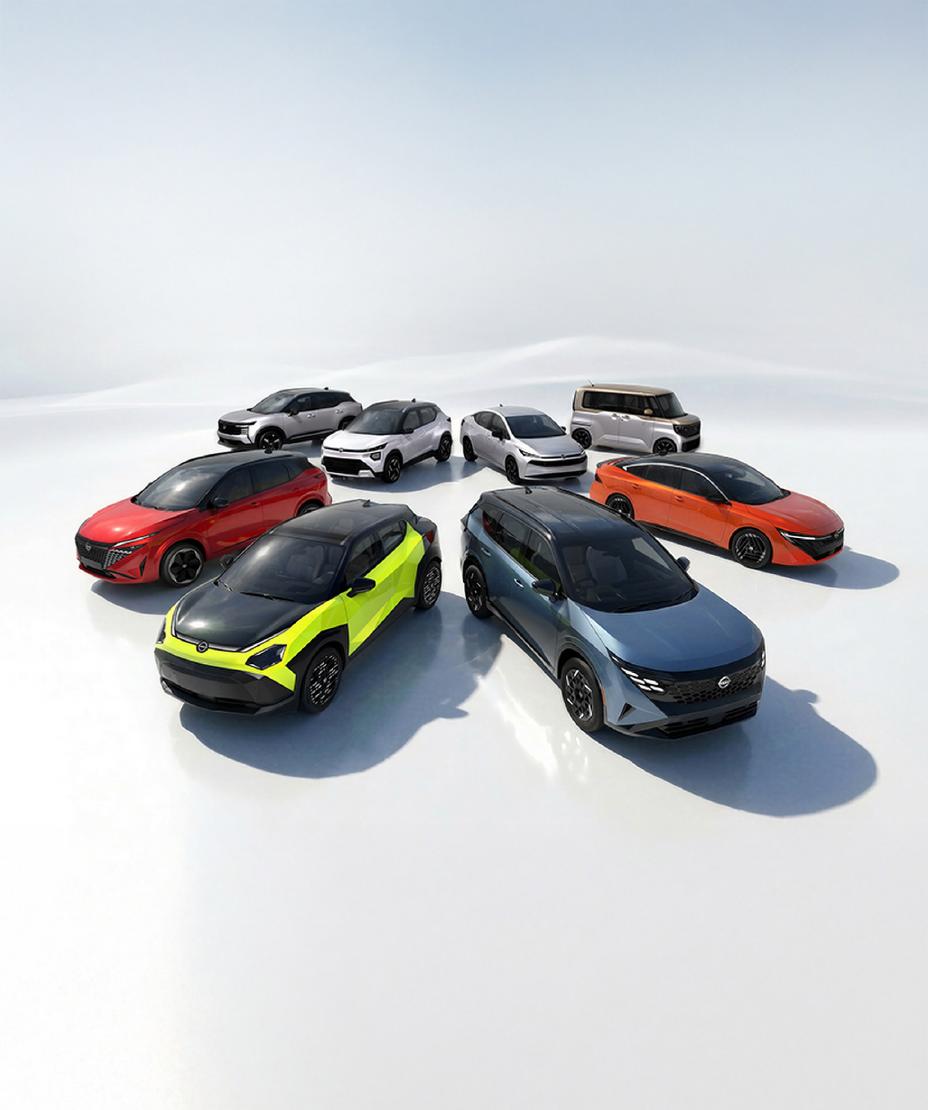
The new Juke EV is underpinned by the CMF-EV architecture — a modular electric platform already used in models like Nissan Ariya — allowing improved packaging, efficiency and scalability across segments. This shift enables a completely different vehicle structure compared with previous petrol and hybrid Juke generations. From a technical standpoint, the powertrain strategy closely mirrors that of the latest Nissan Leaf, but adapted for a smaller, lighter crossover format.
Core technical configuration expected:
- Dual battery options (estimated):
- ~52 kWh (standard range)
- ~75 kWh (long range)
- Liquid-cooled NMC battery chemistry
- Front-wheel drive electric motor setup
- Estimated power outputs below Leaf levels (~174–215 bhp range, detuned)
- Integrated 3-in-1 unit (motor, inverter, gearbox)
The use of a shared EV platform reduces development costs while enabling flexible production scaling across Europe. Engineers also confirm that tuning will prioritise agility and responsiveness, aligning with the Juke’s positioning as a more dynamic, urban-focused vehicle.
Design, size and interior: shift beyond previous generations
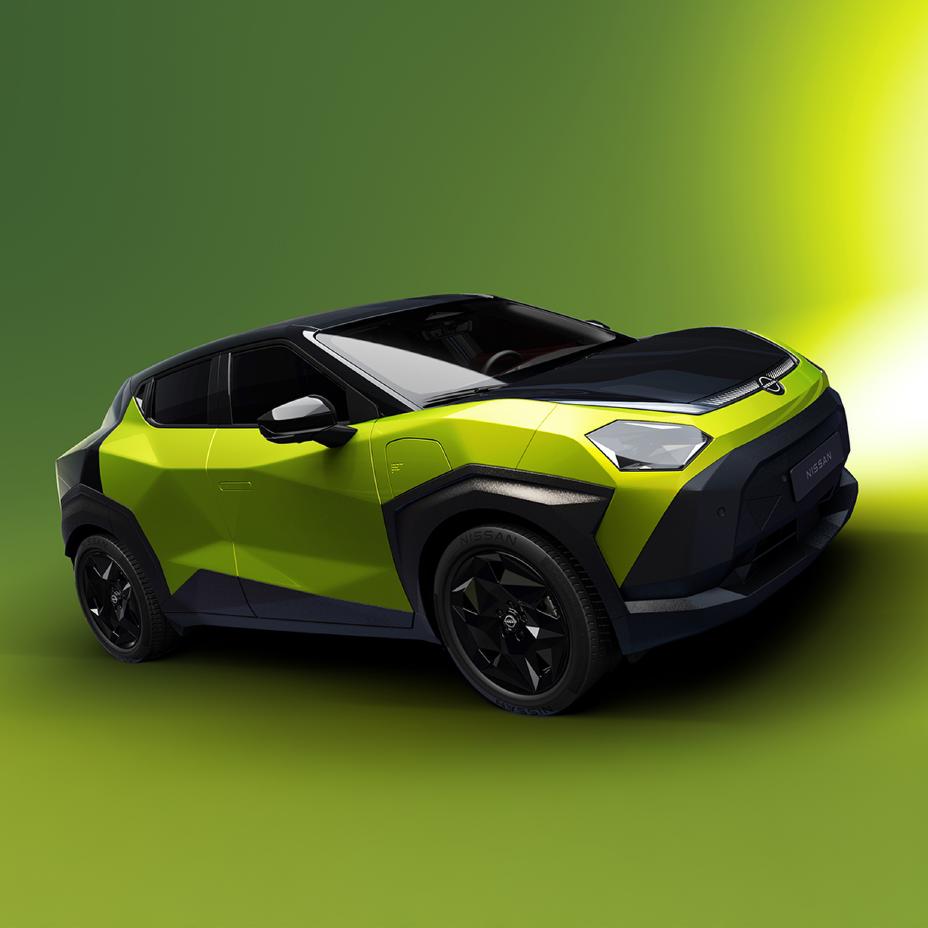
The new model introduces a substantially revised exterior and body structure, influenced by geometric and origami-inspired design cues first previewed in concept form. Unlike previous facelifts, this is a full redesign with a new body-in-white and updated proportions.
Key design and usability changes:
- Slightly increased overall size (~4.2m length expected)
- Improved cabin space due to EV packaging
- Sharper, angular exterior geometry
- Reduced mechanical constraints vs combustion layouts
- More aerodynamic profile for efficiency gains
Inside, the vehicle adopts a digital-first cockpit aligned with Nissan’s newer EV models.
Technology and interior features:
- Dual 14.3-inch displays (instrument + infotainment)
- Google-integrated operating system
- Built-in navigation optimised for charging routes
- Over-the-air (OTA) software updates
- Enhanced connectivity and driver assistance systems
This represents a clear transition from the older Juke’s compact, design-led interior towards a more functional and technology-driven environment.
UK production and European strategy: Sunderland as EV hub
Production of the Juke EV will take place at Nissan’s Sunderland plant in the UK — a facility already central to the company’s European EV manufacturing strategy.
Strategic importance of Sunderland
| Factor | Detail |
|---|---|
| Location | Sunderland, United Kingdom |
| Existing production | Leaf, Qashqai |
| New role | Core EV production hub |
| Timeline | Pilot production begins 2026 |
| Full launch | Spring 2027 |
The decision reinforces the UK’s position within Nissan’s global EV network despite broader industry uncertainty. It also aligns with the company’s EV36Zero initiative, which integrates manufacturing, battery production and renewable energy systems.
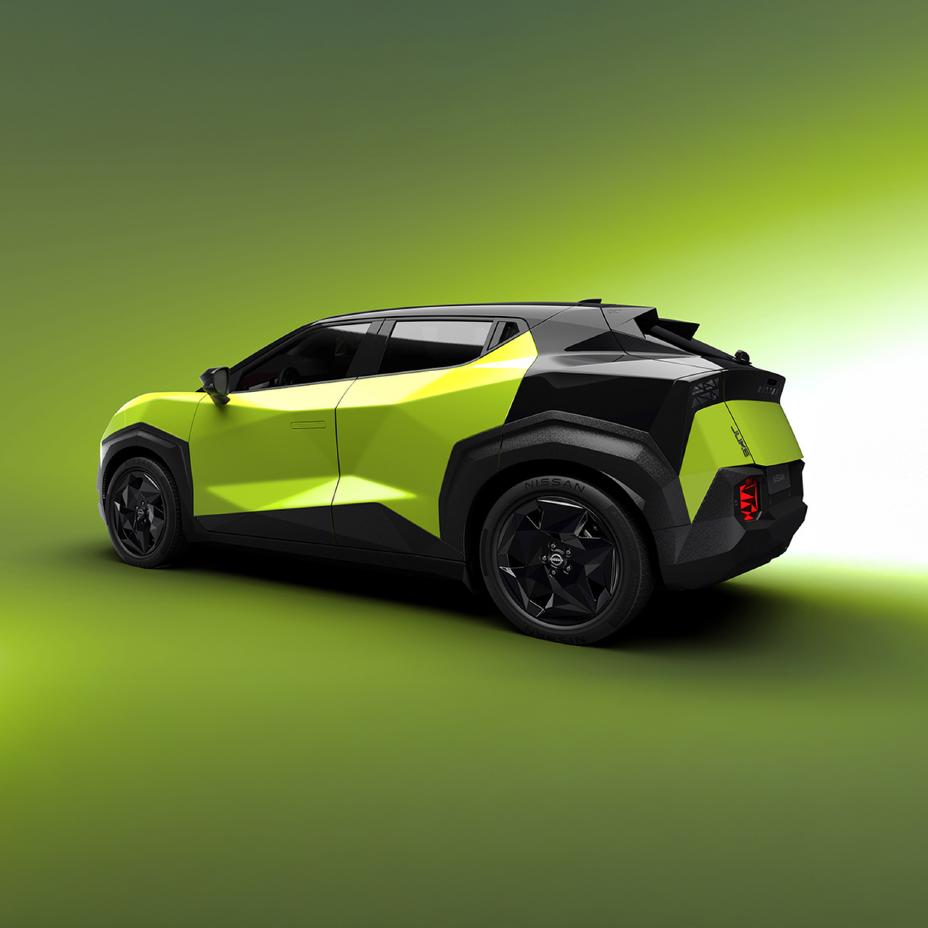
Nissan states that its European operations — spanning the UK, Spain and Germany — will collectively support design, engineering and development, positioning the region as both a production base and innovation centre.
Vehicle-to-grid integration: system architecture and real-world function
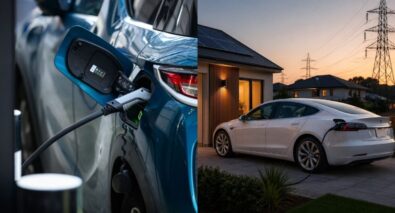
One of the defining technical shifts in the new Juke EV is the integration of Vehicle-to-Grid (V2G) capability — not as an add-on, but as a system-level function embedded within the CMF-EV electrical architecture. Unlike conventional EV charging, which is unidirectional (grid → vehicle), V2G introduces controlled bidirectional energy flow, requiring both onboard hardware and external infrastructure compatibility.
At the vehicle level, this is enabled through:
- A bidirectional onboard charger (OBC) capable of AC/DC conversion in both directions
- Power electronics integrated within the 3-in-1 drive unit (inverter control layer)
- Battery management system (BMS) calibration allowing controlled discharge cycles
- Communication protocols aligned with grid operators (ISO 15118 standard expected)
In practical terms, the vehicle can operate in three distinct energy modes:
- Charging mode: grid supplies energy to battery (standard use)
- Discharge mode (V2G): battery supplies energy back to grid
- Smart buffering: dynamic balancing based on tariff signals and grid demand
This enables participation in demand-response programmes, where the vehicle effectively becomes a distributed energy asset. During peak demand periods, stored energy can be exported back to the grid, while charging is shifted to off-peak windows.
Functional implications
- Load balancing across national grids during demand spikes
- Reduced reliance on fossil-fuel peaker plants
- Monetisation potential via time-of-use tariffs and grid services
- Integration with domestic energy systems (home storage, solar PV)
From an engineering perspective, the limiting factors remain battery degradation management and infrastructure readiness. V2G requires compatible wallboxes and regulatory frameworks, which are currently uneven across European markets.
This places the Juke EV within a broader transition where vehicles are no longer isolated transport units but active nodes within decentralised energy networks — a model increasingly prioritised in UK and EU grid strategies.
Competitive positioning: segment density and differentiation logic
The Juke EV enters the B-segment electric crossover class, one of the fastest-expanding categories in Europe, driven by regulatory pressure, urban electrification and price sensitivity among buyers transitioning from ICE vehicles. The competitive field is defined by compact dimensions, sub-€40,000 pricing targets and platform efficiency rather than outright performance.
Primary competitive set
- Renault 4 electric — retro-positioned, cost-focused
- Kia EV2 — next-gen platform efficiency, aggressive pricing
- Volkswagen ID.2X — volume-driven MEB Entry architecture
- Skoda Epiq — value-led positioning within VW Group
Within this landscape, Nissan’s positioning is structurally different. Rather than competing purely on price-per-kWh or range metrics, the Juke EV is engineered around three axes:
Differentiation strategy:
- Design continuity: preservation of Juke’s non-conformist visual identity (high brand recall)
- Manufacturing localisation: UK-based production reduces logistics complexity and aligns with regional policy frameworks
- Energy integration: V2G capability introduces functionality beyond mobility
- Platform maturity: CMF-EV already validated in higher segments, reducing technical risk
This positions the model between value-driven entrants and more premium compact EVs, targeting buyers prioritising design and ecosystem integration over maximum range or lowest cost.
Technical and pricing outlook: parameters and unknowns
Nissan has not released full homologation data, but available engineering alignment with the Nissan Leaf allows a constrained projection of performance envelopes and cost structure.
Estimated technical envelope:
| Parameter | Standard range | Long range |
|---|---|---|
| Battery capacity | ~52 kWh | ~70–75 kWh |
| WLTP range (est.) | 300–350 km | 400–450 km |
| Drive layout | FWD | FWD |
| Charging (DC) | ~100–130 kW (expected) | ~130–150 kW (expected) |
Pricing logic (market-aligned projection):
- Entry positioning below €30,000 is structurally difficult given battery costs
- Core volume expected in €30,000–€35,000 bracket
- Long-range variants likely approaching €38,000
Critical unknowns affecting final positioning:
- Verified WLTP efficiency figures (aerodynamics + weight)
- Peak DC charging curve stability (not just peak kW)
- Thermal management performance under sustained load
- Software ecosystem maturity (OTA reliability, navigation optimisation)
- Government incentives variability across EU markets
Nissan’s decision to delay full disclosure reflects a broader industry pattern — preserving pricing flexibility until closer to SOP (start of production), particularly in a volatile battery cost environment.
Production timeline and industrial ramp-up: manufacturing logic and execution risks
The industrial ramp-up of the Juke EV follows a tightly sequenced pre-series to volume transition model typical for dedicated EV platforms, but with added complexity due to new body architecture, battery integration and software-defined systems. The programme is structured to de-risk three core domains simultaneously: manufacturing precision, battery systems validation and digital stack stability.
Confirmed industrial sequence
- April 2026 — global reveal: design freeze largely completed; engineering validation ongoing
- Mid-2026 — pilot production: low-volume pre-series builds at Nissan Sunderland Plant
- Late 2026 — validation phase: homologation, durability testing, supplier ramp synchronisation
- Spring 2027 — SOP (start of production): full-scale commercial manufacturing for Europe
This is not a linear scale-up but a gated process where each phase unlocks the next only after technical and operational thresholds are met.
What pilot production actually validates
Pilot (pre-series) production is a critical engineering phase, not a commercial one. Vehicles produced at this stage are used to stress-test manufacturing systems under near-real conditions.
Key validation layers:
- Body and assembly precision
- Tolerance control for complex stamped panels (notably angular, “origami-style” surfaces)
- Robotic welding accuracy and repeatability
- Panel gap and flush consistency at scale
- Battery system integration
- Structural integration of battery pack into CMF-EV chassis
- Thermal management performance under load cycles
- High-voltage safety validation (crash, isolation, fail-safe systems)
- Power electronics and drivetrain
- Calibration of inverter and motor response
- Efficiency mapping across drive cycles
- Regenerative braking consistency
- Software and digital architecture
- OTA update reliability under real-world conditions
- Integration of infotainment, navigation and vehicle control systems
- Fault detection, diagnostics and cybersecurity layers
- Production process stability
- Cycle time optimisation (seconds per unit)
- Defect rate tracking (first-time-through yield)
- Supplier component fit and consistency
Only after these parameters reach defined thresholds does the programme move into homologation and scaling.
Supplier ramp and industrial dependencies
Late-2026 scaling is heavily dependent on Tier 1 and Tier 2 supplier readiness, particularly in high-risk EV components:
- Battery modules and cells (cost and availability volatility)
- Power electronics (inverters, semiconductors)
- Thermal systems (cooling circuits for battery and drivetrain)
- Digital hardware (processors, connectivity modules)
Supplier ramp is synchronised with production volume targets. Any bottleneck — especially in battery supply or semiconductors — directly constrains output.
Sunderland as EV production node: system-level role
The Nissan Sunderland Plant is not operating as a standalone factory but as part of an integrated EV ecosystem under the EV36Zero initiative.
Functional role of the plant:
- High-volume vehicle assembly for European markets
- Integration point for battery systems and drivetrain modules
- Alignment with local supply chains to reduce logistics exposure
- Interface with renewable energy and energy storage infrastructure
This reduces dependency on external imports and shortens supply chains — a key requirement in current European industrial policy.
Execution risks during ramp-up
Despite structured phasing, EV ramp-ups remain exposed to several failure points:
- Battery cost volatility impacting final pricing decisions
- Software instability delaying homologation or customer delivery
- Manufacturing complexity from non-standard body geometries
- Charging and grid compatibility issues (including V2G readiness)
- Supplier disruption in semiconductors or battery materials
These risks are why Nissan is maintaining a delayed full-spec disclosure and flexible launch positioning.
The Juke EV ramp-up is less about increasing unit volume and more about synchronising multiple systems — mechanical, electrical and digital — into a stable production ecosystem. Sunderland’s role is central, but success depends on execution across the full chain: suppliers, software, battery systems and regulatory approval.
Strategic framing: executive signals and market intent
Senior leadership at Nissan is positioning the Juke EV not as a peripheral addition but as a volume-critical asset within its European recovery strategy, where electrification is no longer optional but structurally enforced by regulation and market dynamics. The model sits at the centre of a broader effort to stabilise market share in compact segments while transitioning away from legacy combustion platforms.
“Europe is central to Nissan’s electrification strategy, and we remain firmly committed to a fully electric future,” said Massimiliano Messina (Nissan AMIEO, April 2026), signalling that regional operations are now expected to deliver both compliance and scale. Clíodhna Lyons added at the Nissan Vision Event in Japan that “with this third generation, we are bringing that spirit into the electric age” (April 2026), reinforcing the continuity of brand identity alongside a fundamental architectural shift.
Taken together, these statements point to a dual strategic objective: expanding EV penetration into mainstream price-sensitive segments while preserving product distinctiveness in a market increasingly defined by platform standardisation. The challenge is structural — balancing cost efficiency with brand identity as shared architectures such as CMF-EV reduce differentiation at the hardware level.
What distinguishes the Juke EV is not a single feature set but the integration of multiple system layers into a unified platform strategy:
- Dedicated EV architecture replacing ICE-derived constraints
- Embedded vehicle-to-grid functionality linking transport and energy systems
- Localised European production aligned with regulatory and supply chain priorities
This positions the vehicle less as an isolated product and more as part of a wider ecosystem shift, where value is created through integration rather than standalone specifications.
The Juke EV therefore emerges not as a conventional model replacement but as a structural instrument within Nissan’s attempt to recalibrate its position in Europe’s rapidly evolving EV landscape. Its success will depend less on headline metrics such as range or acceleration, and more on execution across interconnected systems — manufacturing scale, software reliability and supply chain stability.
The core constraint remains unchanged across the industry: battery economics and component availability continue to define pricing power and margin resilience. At the same time, the practical rollout of technologies such as V2G remains contingent on infrastructure readiness and regulatory alignment, both of which vary significantly across European markets.
In that context, the Juke EV reflects a broader shift in automotive logic. Vehicles are no longer engineered solely as transport products but as nodes within a wider technological and energy network. For Nissan, the programme is effectively a test of industrial discipline — the ability to synchronise platform engineering, regional production and ecosystem integration without losing cost competitiveness in one of the most price-sensitive segments of the market. Whether that balance can be sustained will determine not just the trajectory of the Juke EV, but Nissan’s capacity to remain relevant in a European market where electrification is accelerating faster than margins can comfortably follow.
Read about the life of Westminster and Pimlico district, London and the world. 24/7 news with fresh and useful updates on culture, business, technology and city life: Why Is the UK Leading the Way in FinTech, Open Banking, and Digital Payments
Photo: Nissan Motor Co., Ltd. (official release)