Zipcar left the UK after years as one of London’s best-known car-sharing names, and the gap it created is now being felt street by street. In Southwark, the response is becoming visible: the council has agreed new car club partnerships with HiyaCar, Enterprise Car Club and Co-wheels, with an initial 30 vehicles due to operate from bays between London Bridge and Dulwich, The WP Times reports.
The decision matters because car clubs are not just a convenience product in inner London. In boroughs such as Southwark, where many households do not own a car, they act as a backup for hospital trips, family visits, school moves, work errands, bulky shopping and journeys where public transport is difficult. Southwark Council says around 60% of households in the borough do not own a car, making occasional access more important than permanent ownership.
What happened after Zipcar left the UK
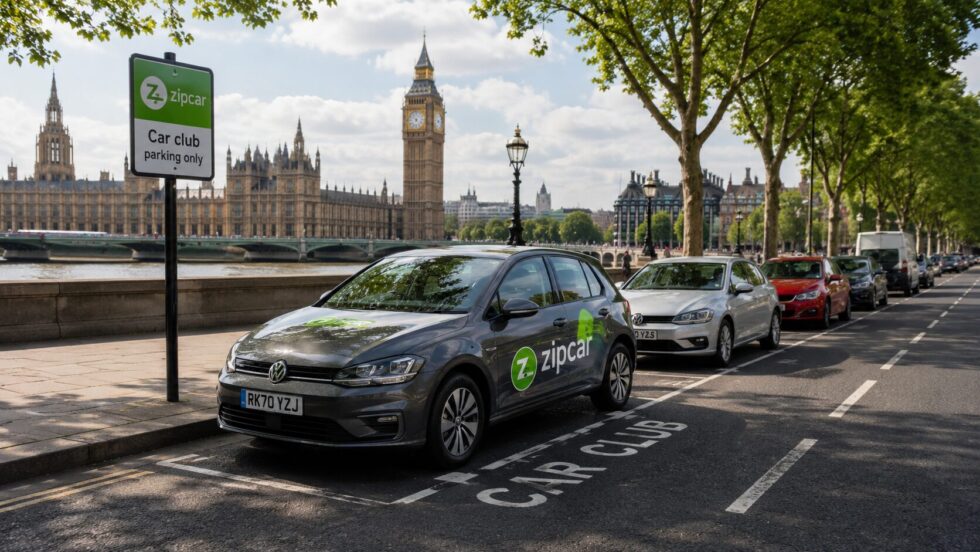
Zipcar’s UK exit left a visible gap in London’s car-sharing network because the company was not a small niche provider, but one of the most recognisable operators in the capital. Its cars were used by residents who did not own a vehicle but still needed one for occasional journeys: moving furniture, visiting family, reaching places poorly served by public transport, or making short work trips. The withdrawal exposed how dependent some boroughs had become on one large operator. Zipcar’s model combined reserved car club bays with app-based booking, giving users access to cars without paying for insurance, maintenance, parking permits or full-time ownership. When that network disappeared, councils could not simply replace it overnight. The decision came against a difficult financial backdrop for the sector. Operators have faced higher insurance costs, vehicle maintenance bills, charging and energy costs, pressure on electric fleets and the challenge of keeping cars available in the right streets at the right time. In London, every vehicle also depends on local parking permissions, kerbside space and borough-level agreements.
For councils, the problem was immediate and practical. Car clubs only work when there are enough vehicles close to where people live, and when operators can afford to run them. After Zipcar’s departure, boroughs such as Southwark had to reopen talks with alternative providers, decide which streets should get bays, and consider whether free parking spaces or other incentives were needed to bring shared cars back.
How is Southwark replacing Zipcar
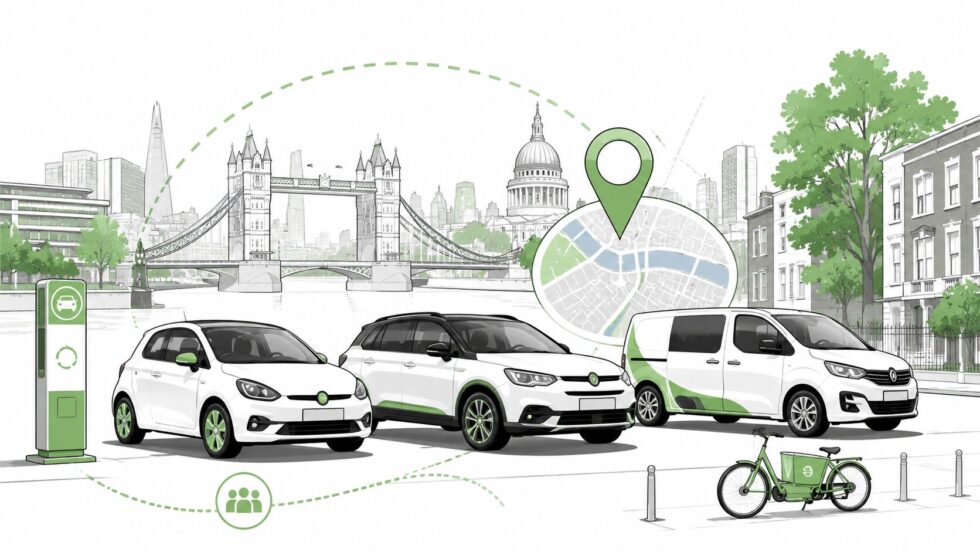
Southwark is rebuilding its car club network through three replacement operators rather than relying on a single provider. Under the first phase, HiyaCar will add 10 vehicles, Enterprise Car Club will add 15, and Co-wheels will add 5. Together, that gives the borough 30 shared cars at launch.
The cars are expected to be placed in dedicated bays across Southwark, from London Bridge in the north to Dulwich in the south. The aim is to restore practical local access for residents who do not own a car but still need one occasionally for shopping, family journeys, work trips or appointments outside easy public transport routes.
The council had previously tried to keep Zipcar in the borough by offering 200 free parking spaces, but the company still left the UK market. Southwark is now using the same basic tool — access to kerbside space — to make the borough attractive to other car club operators. This first phase is deliberately cautious. The council will monitor bookings, locations and demand before deciding whether more vehicles are needed. That is important because car clubs only work when cars are close enough for residents to use, but busy enough for operators to cover insurance, cleaning, maintenance, charging and parking costs.
Why car clubs matter in London
Car clubs matter in London because they solve a very specific transport problem: many residents do not need a car every day, but still need reliable access to one a few times a month. Public transport works well for commuting and central journeys, taxis work for short point-to-point trips, and cycling works for local movement. But none of those options fully replaces a car when someone needs to move furniture, take children and luggage across the city, visit relatives outside London, reach a hospital appointment, or make a work trip with equipment.
That is why car clubs have become part of the capital’s wider transport system. They reduce the pressure to own a private vehicle while still giving households a practical safety net. For renters, students, older residents, young families and people living in flats without driveways, the model can be cheaper and simpler than paying for insurance, servicing, MOT, fuel, parking permits and repairs on a car that sits unused most of the week. The issue became more urgent after Zipcar left the UK. London’s car club network shrank sharply, with reports saying the number of shared vehicles in the capital fell from about 2,800 to around 330 within six months. That collapse showed how dependent parts of the market had become on one major operator, and how quickly access can disappear when a large provider pulls out.
For councils, the risk is not only inconvenience. If residents lose access to shared cars, some may decide to buy private vehicles. That would increase pressure on kerbside parking, add more traffic to already busy local streets and make it harder for boroughs to cut emissions. In dense areas such as Southwark, where many households do not own a car, even a small shift back towards ownership can create a visible problem.
Car clubs are therefore not just a lifestyle service or a cheaper version of car rental. They are a transport policy tool. Used well, they can support low-car living, reduce the need for second cars, help residents who only drive occasionally, and make local streets less dominated by parked vehicles. Their success depends on one practical condition: cars must be close enough to homes for residents to trust the service when they need it.
What Southwark Council says
Southwark Council has framed the return of car clubs as a resident service, not simply as a commercial replacement for Zipcar. Council leader James McAsh welcomed the new partnerships and said car clubs “make a huge difference” for local people. His argument is that shared vehicles can cut demand for private car ownership, reduce pollution and support streets that are easier to walk, wheel and cycle. That wording matters because it places car clubs inside the borough’s wider transport strategy. Southwark is not treating the scheme as a standalone hire-car product. It is linking shared cars to parking policy, cleaner air, active travel and the everyday reality of households that cannot justify owning a vehicle but still need occasional access.
The council’s role is also practical. Car clubs need kerbside space, marked bays and local permission to operate. Without that, providers struggle to place vehicles where residents actually need them. Southwark’s decision to offer parking space to operators is therefore central to the scheme. It lowers the barrier for companies such as HiyaCar, Enterprise Car Club and Co-wheels to rebuild coverage after Zipcar’s exit.
The borough’s own car club information now lists Co-wheels, Enterprise Car Club and HiyaCar as available operators. For residents, the message is clear: the service is returning, but it will be phased. The first 30 cars are a starting point, and future expansion will depend on whether people use them, where demand is strongest and whether operators can keep the vehicles financially viable.
What residents need to know now
The first rollout is small: 30 cars. That means availability may vary by neighbourhood, time of day and weekend demand. Residents near London Bridge, Bermondsey, Peckham, Camberwell, East Dulwich and Dulwich should check each operator’s app or website rather than assuming a car will be nearby immediately. The practical questions are simple:
| Question | What to check |
|---|---|
| Which operators are available? | HiyaCar, Enterprise Car Club and Co-wheels |
| How many cars at launch? | 30 vehicles in the first phase |
| Where will they be? | Bays from London Bridge to Dulwich |
| Why so few at first? | Demand will be monitored before expansion |
| Why did the council help? | Free parking spaces were offered to encourage operators |
| Who benefits most? | Residents who drive occasionally but do not own a car |
What this means for London car sharing
Southwark's agreement is an important step for local residents, but it does not solve London's wider car-sharing challenge. Zipcar's withdrawal exposed a structural weakness in the capital's shared mobility market: unlike buses, the Underground or rail services, car clubs are not managed through a single London-wide system. Instead, they rely on dozens of separate borough agreements covering parking bays, permits, operating conditions and local transport priorities. That fragmented approach means every borough effectively has its own market. Operators must negotiate individually with councils, secure dedicated parking spaces, invest in vehicles, build a local customer base and demonstrate that each location is commercially viable. A successful network in one borough does not automatically extend into the next, leaving residents with very different levels of access depending on where they live.
Transport organisations have warned that Zipcar's departure was more than the loss of one company. CoMoUK described the exit as a significant setback for both London and the wider UK car club sector, arguing that shared vehicles help reduce private car ownership while complementing public transport, walking and cycling. Without a stable network, there is a greater risk that households will return to buying cars, increasing pressure on already limited kerbside space.
Southwark's response demonstrates one possible model for recovery. Rather than searching for another dominant operator, the borough has chosen to spread responsibility across several providers, support them through dedicated parking bays and expand only if demand justifies additional investment. That reduces dependence on a single company while giving residents access to different booking platforms and vehicle fleets. Whether that model succeeds will depend on scale. Thirty vehicles are enough to restore a local service, but they cannot replace the hundreds of cars previously available across London. The longer-term challenge for boroughs will be balancing commercial viability with public access, ensuring that shared cars are available in enough neighbourhoods to become a realistic alternative to ownership rather than an occasional convenience.
Background: why Zipcar mattered
For more than two decades, Zipcar helped define modern car sharing in Britain and became one of the most recognisable mobility brands in London. Its model was simple: members could book a nearby car through an app, unlock it digitally, use it for a short trip or several hours, and return it without taking on the full cost of ownership.
In inner London, that mattered because private cars are expensive to keep and difficult to park. A household that only drives a few times a month still has to pay for insurance, servicing, MOT tests, repairs, fuel, parking permits and depreciation. Zipcar gave many residents a way to stay car-free most of the time while still having access to a vehicle when public transport, cycling or taxis were not enough.
Who used Zipcar in London?
Zipcar was not used only by weekend drivers. Its customer base reflected the practical needs of dense urban areas, where many people do not own cars but still occasionally need one.
Key user groups included:
- families using cars for weekend trips, school moves, bulky shopping or visits outside London;
- freelancers and small businesses needing vans for equipment, deliveries or short work journeys;
- students and renters moving between flats without hiring a traditional removal service;
- carers and relatives travelling to people who were hard to reach by public transport;
- residents without driveways or parking permits who could not justify buying a car;
- households that wanted to avoid owning a second vehicle.
That range explains why Zipcar became part of everyday London life. It was not only a rental product. For many users, it was a practical backup system that made low-car living possible.
What changed after Zipcar left?
Zipcar’s withdrawal affected more than casual leisure users. When the network disappeared, many former members had to look for alternatives quickly. Some switched to traditional daily rental firms, some tried peer-to-peer car-sharing platforms, and some began reconsidering private ownership.
The policy risk is clear:
- fewer shared cars can push some households towards buying a private vehicle;
- more private cars increase pressure on already crowded kerbside parking;
- extra parked vehicles make it harder to redesign streets for walking, cycling and public space;
- weaker car club coverage reduces confidence in living without a car;
- small replacement fleets may not be enough if demand returns quickly.
That is why Southwark is now being watched as a practical test case. The borough is not replacing Zipcar with one dominant operator. Instead, it is bringing in HiyaCar, Enterprise Car Club and Co-wheels, with 30 vehicles in the first phase and council-backed parking bays from London Bridge to Dulwich. For residents, the immediate advice is simple: compare the operators, check which vehicles are closest, read the pricing and booking rules carefully, and reserve early for weekends or peak periods. For London, the bigger question is whether borough-by-borough deals can rebuild a car-sharing network large enough to make private ownership unnecessary for more households.
Read about the life of Westminster and Pimlico district, London and the world. 24/7 news with fresh and useful updates on culture, business, technology and city life: Why Is London Zipcar free parking being offered in 200 bays as Southwark tries to stop Zipcar leaving