London Tube strikes began on Friday 20 November 2026, when TSSA members in Piccadilly line service control walked out from midday until Saturday, and continue with eight 24-hour strikes by RMT train drivers between Thursday 26 November and Thursday 25 February 2027, including two in the week before Christmas and two in the first week of January. Each RMT walkout runs from midday to midday, and Transport for London has warned that the whole Underground network may face delays, cancellations or closures, while the Elizabeth line, London Overground, the DLR, buses and trams are not involved in the disputes, reports The WP Times.
The two disputes are separate. The TSSA strike is over the dismissal of a Piccadilly line service control worker, which TfL says followed a gross misconduct investigation and the union says was unfair; Piccadilly line passengers are told to complete journeys by 10.30am on Friday, with no trains from midday until Saturday evening and parts of the District line also shut. The RMT action concerns London Underground's plan for a voluntary four-day working week for drivers under a new Trains Modernisation Framework, which the union says is not voluntary and could cost hundreds of jobs.
Update, 24 November, evening: talks between the RMT and London Underground at Acas ended without agreement and the RMT says the strike will go ahead. There will be no Piccadilly or Circle line trains all day on Thursday 26 November, no Waterloo and City line from midday and no Tube services after 9pm, with disruption until about 6pm on Friday 27 November. Full details: London Tube strike on 26 November, line by line.
The London Tube strikes fall on some of the busiest travel days of the year, from the Christmas shopping weekends and pre-Christmas flights to the return to work in January and February half-term.
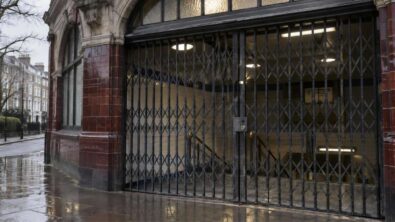
Update, Saturday 21 November: the TSSA strike went ahead after last-minute talks with London Underground on Thursday ended without a settlement. TfL reported the Piccadilly line closed shortly after midday on Friday, and there is no service on the whole line on Saturday until the evening, with replacement buses PL1, PL3, PL4 and PL7 in west London. The District line has no trains between Earl's Court and Richmond or Ealing Broadway until the evening. The next walkout is the first RMT strike, from midday on Thursday 26 November. All weekend closures are listed in our guide to things to do in London this weekend.
When are the London Tube strikes?
The London Tube strikes calendar covers nine separate walkouts over three months. The first, by the TSSA, affects only the Piccadilly line and part of the District line. The eight RMT strikes involve train drivers and could affect any of the 11 Tube lines, although TfL has said not every line will necessarily close on every date. The RMT's current mandate runs until 26 February 2027, and more dates could be added.
| Date | Times | Union | Lines affected |
|---|---|---|---|
| Friday 20 to Saturday 21 November 2026 | 11.59am Friday to 11.59am Saturday, service back Saturday evening | TSSA | Piccadilly; District between Earl's Court and Richmond or Ealing Broadway |
| Thursday 26 to Friday 27 November 2026 | 12pm to 12pm | RMT | Potentially all Tube lines |
| Thursday 17 to Friday 18 December 2026 | 12pm to 12pm | RMT | Potentially all Tube lines |
| Saturday 19 to Sunday 20 December 2026 | 12pm to 12pm | RMT | Potentially all Tube lines |
| Monday 4 to Tuesday 5 January 2027 | 12pm to 12pm | RMT | Potentially all Tube lines |
| Wednesday 6 to Thursday 7 January 2027 | 12pm to 12pm | RMT | Potentially all Tube lines |
| Wednesday 17 to Thursday 18 February 2027 | 12pm to 12pm | RMT | Potentially all Tube lines |
| Tuesday 23 to Wednesday 24 February 2027 | 12pm to 12pm | RMT | Potentially all Tube lines |
| Thursday 25 to Friday 26 February 2027 | 12pm to 12pm | RMT | Potentially all Tube lines |
Piccadilly line strike this weekend: what to expect
The Piccadilly line runs from Cockfosters in north London through the West End to Heathrow and Uxbridge, and serves Knightsbridge, Hyde Park Corner, Green Park, Piccadilly Circus, Leicester Square, Covent Garden and King's Cross. TfL says service will start to reduce after 10.30am on Friday 20 November, with no trains from midday until Saturday evening and no Night Tube on Friday night. Because the Piccadilly and District lines share infrastructure around the Ealing Common depot, there will also be no District line service between Earl's Court and Richmond or Ealing Broadway.
Rail replacement buses will run on Friday night and during the day on Saturday, but not on Saturday night, when the Piccadilly line is expected to be running again. The strike coincides with the opening weekend of Hyde Park Winter Wonderland, whose nearest stations are Hyde Park Corner and Knightsbridge.
"We are extremely disappointed that TSSA is proceeding with unjustified strike action" (Lee Stewart, Head of London Underground Service Control at Transport for London, in a statement on 16 November 2026).
The union's general secretary, Maryam Eslamdoust, said members were acting in support of a colleague who had been unfairly treated, adding that "an injury to one is an injury to all". TfL said the employee was dismissed after an investigation found they had a second job while receiving full company sick pay, and urged the union to withdraw the action.
How to get to Heathrow without the Piccadilly line
- Elizabeth line from Paddington, Bond Street, Tottenham Court Road and Farringdon to Heathrow.
- Heathrow Express from Paddington, non-stop.
- Allow extra time, as both services are expected to be busier.
- National Express and other coach services from Victoria Coach Station.
Alternatives in central London
- Victoria and Jubilee lines to Green Park for Piccadilly and Mayfair.
- Central line to Marble Arch or Lancaster Gate for Hyde Park.
- Northern line and Elizabeth line to Tottenham Court Road for Soho and Covent Garden.
- Buses along Piccadilly, Knightsbridge and the Strand.
Why are RMT Tube drivers striking?
London Underground wants to introduce a four-day working week for drivers, as part of a new Trains Modernisation Framework. Drivers would work the same total hours over four days instead of five. The company presents it as an option for staff, while the RMT says the changes would remove existing protections and could displace drivers from their home depots.
"There is nothing voluntary about a scheme that forces drivers to give up existing protections" (Eddie Dempsey, General Secretary of the RMT, in a union statement announcing the strike dates).
Dempsey said London Underground "must withdraw these damaging proposals and engage seriously with the union". The company's director of customer operations, Nick Dent, defended the plan, saying it "will give our colleagues a real, meaningful choice on their working pattern". The train drivers' union ASLEF, which represents many Tube drivers, has not called any strikes and has criticised the RMT action; its London Underground organiser, Finn Brennan, described it as a strike "designed to stop people having the choice of a shorter working week".
| Party | Position |
|---|---|
| RMT | Opposes the four-day week framework, fears hundreds of job cuts and loss of protections |
| London Underground | Says the scheme is voluntary and gives drivers more choice |
| ASLEF | Has not called strikes, opposes the RMT action |
| TSSA | Striking on Piccadilly line over a dismissal, separate dispute |
Which services will run during the London Tube strikes?
The London Tube strikes involve London Underground staff only. TfL has said the Elizabeth line, London Overground, the DLR, buses and trams will run as normal, although they are likely to be much busier than usual. National Rail services into London terminals are not affected, and Thames Clippers river services operate independently. During RMT strikes, some Tube lines may run a partial service if enough drivers who are not RMT members report for work.
Because each of the London Tube strikes called by the RMT begins at midday, the effects will be felt across two days: services will wind down from late morning on the first day and may take several hours to recover after midday on the second, as trains and staff return to position. Passengers should expect crowding on the Elizabeth line between Paddington and Liverpool Street, and on buses through central London.
- Elizabeth line: running normally.
- London Overground, including the Mildmay, Suffragette, Windrush, Weaver, Lioness and Liberty lines: running normally.
- DLR: running normally.
- Buses and trams: running normally, but busier.
- National Rail: not affected by the Tube disputes.
- Santander Cycles: available, with docking stations across central London.
How the London Tube strikes affect Christmas and New Year travel
The December London Tube strikes fall on the last weekend before Christmas, one of the busiest periods for shops, restaurants and theatres in the West End, and for airports. The strike from midday on Saturday 19 December to midday on Sunday 20 December is likely to hit both shopping and travel to Heathrow. The two January dates follow the return to work after the New Year holiday, and the February dates fall around half-term.
For travellers to and from Heathrow, the Elizabeth line and Heathrow Express are the main alternatives to the Piccadilly line. For Gatwick and Stansted, the main rail links are National Rail services that are not part of the dispute, although passengers who normally reach Victoria or Liverpool Street by Tube will need another route to the terminal.
Planning tips for the London Tube strikes
- Check the TfL status page on the morning of travel and again before setting off home.
- Complete Tube journeys before late morning on the first day of each RMT strike.
- Use the Elizabeth line, Overground and DLR for cross-London journeys where possible.
- Allow at least an extra hour for journeys to airports.
- Consider walking in central London: many West End stations are 10 to 15 minutes apart.
For employers and shift workers
- Strike days start at midday, so evening shifts on day one and morning shifts on day two are most affected.
- Buses are free to use with the same contactless card cap rules as usual.
- Hybrid workers can plan office days around the strike calendar.
Background: London Underground strikes and talks
Disputes on the Underground have recurred over the past decade, over pay, pensions, job cuts and working patterns. The current RMT dispute centres on how drivers' rosters are organised rather than on pay, which makes it unusual. The TSSA action, by contrast, concerns a single dismissal and is limited to one line. Strikes can be called off if agreements are reached through talks, often with little notice, so dates should be checked close to travel.
This week's strike also adds to pressure on a transport network facing other long-term problems, from a £6.5bn renewals backlog to weight limits on Thames bridges. For more on travel in central London, see our reports on Vauxhall Bridge's repair warning, Winter Wonderland travel during the Piccadilly line strike, London's most dangerous junctions for cyclists and the Congestion Charge in 2026.
London Tube strikes: frequently asked questions
Is there a Tube strike this week?
Yes. The Piccadilly line will have no service from midday on Friday 20 November until Saturday evening because of a TSSA strike, with parts of the District line also closed.
When are the RMT Tube strikes?
26 November, 17 December, 19 December, 4 January, 6 January, 17 February, 23 February and 25 February, each for 24 hours from midday.
Which lines will be affected by the RMT strikes?
Potentially all 11 Tube lines, although TfL says not every line will necessarily close on every date.
Will the Elizabeth line run during the Tube strikes?
Yes. The Elizabeth line, Overground, DLR, buses and trams are not part of the disputes and are expected to run normally.
How do I get to Heathrow during the Piccadilly line strike?
Use the Elizabeth line or the Heathrow Express from Paddington, and allow extra time.
Why are Tube drivers striking?
The RMT opposes London Underground's four-day working week framework for drivers, which it says removes protections and could lead to job cuts.
Is ASLEF striking?
No. ASLEF has not announced any London Underground strikes.
Could the strikes be called off?
Yes. Strikes can be suspended if agreements are reached in talks, so passengers should check TfL updates before travelling.
More London news, travel updates and Westminster guides from The WP Times. Read also: Vauxhall Bridge could close to buses, West End Live funding in doubt, Winter Wonderland London 2026 and Greenwich Christmas lights.
Sources used: Transport for London, RMT, TSSA, ASLEF, London Underground, Time Out London, RailAdvent, LBC, Evening Standard.