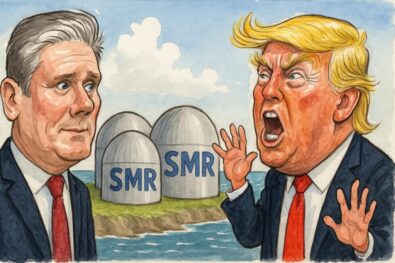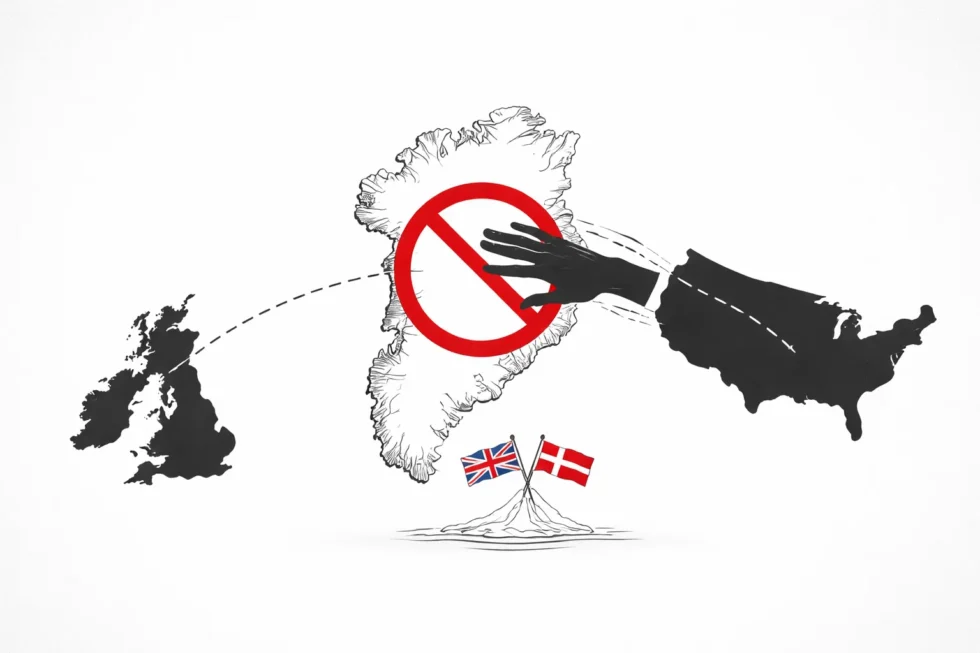
Britain’s prime minister Sir Keir Starmer has said that only Greenland and Denmark have the legal right to decide the future of Greenland, after US president Donald Trump again claimed that the United States “needs Greenland” for national security. The comments were made during a BBC interview following Trump’s remarks aboard Air Force One, where he cited growing Chinese and Russian activity in the Arctic and questioned Denmark’s ability to protect the strategically important territory. The WP Times reports, citing the BBC and The Guardian.
Starmer’s statement places the United Kingdom formally on the side of Denmark and Greenland in a dispute that now involves Nato security, Arctic geopolitics and the principle of territorial sovereignty under international law.
What Trump is arguing
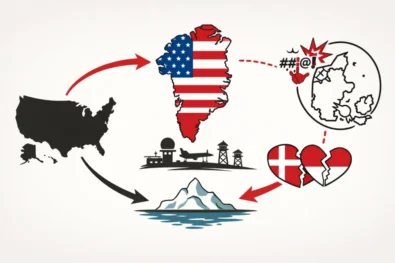
Donald Trump has said that the United States “needs Greenland” for national security. Speaking on Air Force One, he referred to what he described as growing Chinese and Russian activity in Arctic waters around the island and questioned Denmark’s ability to secure the territory.
Greenland hosts US military infrastructure, including the Pituffik Space Base, which is used for missile warning and space surveillance. These facilities operate under defence agreements between the United States and Denmark.
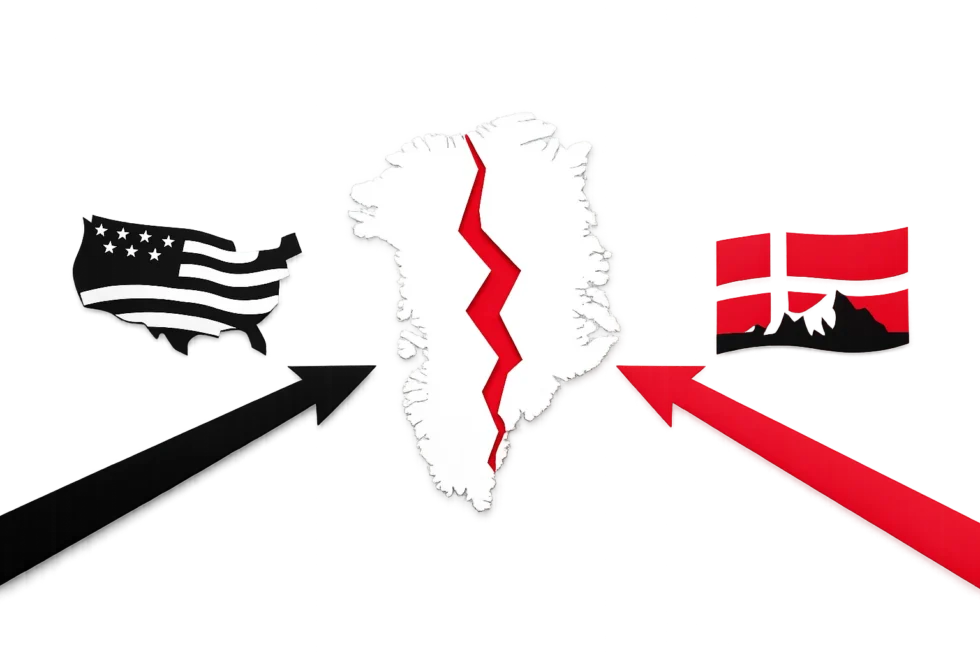
Trump has not outlined any legal process by which the United States could acquire Greenland. Under international law, Greenland is part of the Kingdom of Denmark, with Denmark responsible for foreign and defence policy, while Greenland has its own self-governing government.
Why Denmark and Greenland rejected the claim
Greenland is a self-governing territory within the Kingdom of Denmark. While it controls most internal affairs, responsibility for foreign policy and defence rests with Denmark, which is a member of both Nato and the European Union.
Under international law, Greenland is neither disputed nor unclaimed. Its status is defined by the Danish constitution and by international treaties, meaning that any change would require the formal consent of both the Greenlandic government and the Danish state.
Greenland’s prime minister, Jens-Frederik Nielsen, rejected suggestions of US control, describing the idea as a “fantasy” and saying that “threats, pressure and talk of annexation have no place between friends”. He added that Greenland was open to dialogue only “in line with international law”.
Denmark’s prime minister, Mette Frederiksen, said that “the United States has no right to annex any of the three countries in the Danish kingdom”, referring to Denmark, Greenland and the Faroe Islands.
Both governments have therefore dismissed the US position on the basis of sovereignty, constitutional law and the existing international legal framework governing Greenland’s status.
Why Britain spoke up
Sir Keir Starmer’s statement was made in an interview with the BBC on 5 January 2026, after Donald Trump repeated that the United States “needs Greenland” for national security. The United Kingdom is a founding member of Nato, which currently includes 32 member states, among them both the United States and Denmark. Greenland is part of the Kingdom of Denmark, which means it falls under the territorial scope of a Nato member state.
Under the North Atlantic Treaty of 1949, Nato’s collective defence mechanism (Article 5) applies only to external attacks on a member state. The treaty does not contain any mechanism governing disputes over territory between two Nato members. For this reason, any attempt by one Nato country to change the territory of another would fall outside the alliance’s existing legal and operational framework.
Starmer’s statement that only Denmark and Greenland can decide Greenland’s future reflects the position that Greenland is legally part of the Danish state and therefore covered by Nato’s territorial order.
Why Europe closed ranks
Following Trump’s remarks, the European Union and several Nordic governments issued public statements supporting Denmark. On 5 January 2026, EU foreign policy spokesperson Anitta Hipper said the EU would continue to uphold “national sovereignty, territorial integrity and the inviolability of borders”, particularly when the territory of an EU member state is questioned.
Denmark is a member of the EU, while Greenland left the EU in 1985 but remains part of the Danish kingdom. Sweden’s prime minister Ulf Kristersson said that only Denmark and Greenland have the right to decide the island’s future and that Sweden supports Denmark. Norway and Finland also expressed support for Copenhagen.
Donald Trump said on Air Force One that he would return to the Greenland issue “in 20 days”, indicating that the matter remains active in US policy discussions. Denmark and Greenland have not announced any change to Greenland’s legal or constitutional status. Denmark continues to be responsible for defence and foreign policy, while Greenland maintains internal self-government. The issue is now being addressed through diplomatic channels between the United States, Denmark, Greenland and Nato partners. No legal process has been initiated that would allow any transfer of sovereignty over Greenland under Danish or international law.
Read about the life of Westminster and Pimlico district, London and the world. 24/7 news with fresh and useful updates on culture, business, technology and city life: Why Katie Miller, wife of Trump adviser Stephen Miller, posted Greenland in US colours — and why Denmark is furious