The Olympics Games Milano Cortina 2026 have moved from ceremonial spectacle into their competitive core, as Italy hosts one of the most geographically dispersed Winter Olympics in modern history. Spread across northern Italy, the Games combine metropolitan arenas, Alpine resorts and historic mountain valleys in an experiment that organisers describe as sustainable and future-proof — and critics warn could stretch the Olympic model to its limits. This is reported by The WP Times, citing European broadcasters and Olympic officials.
Around 2,900 athletes from more than 90 countries are competing across 16 days of events, with medals contested from ice rinks in Milan to high-altitude snow courses in the Dolomites. The scale, symbolism and political undertones of these Games make Milano Cortina 2026 more than a sporting event — they are a test of how the Olympics adapt to climate pressure, cost scrutiny and geopolitical tension.
A Winter Olympics unlike any before
Milano Cortina 2026 marks a deliberate shift away from the single-city Olympic model. Instead of concentrating venues in one compact zone, Italy has opted for a multi-cluster structure, linking existing facilities across several regions. Organisers argue this reduces environmental damage and avoids the “white elephant” stadiums that have plagued previous hosts.
The trade-off is complexity. Athletes, media and officials operate across hundreds of kilometres, with different climates, altitudes and logistical demands. The result is an Olympics that feels more like a connected network of championships than a single unified festival — a structural experiment that may shape future bids.
Dates, venues and regional clusters
The Games run from 6 to 22 February 2026, with early qualification rounds already under way ahead of the official opening.
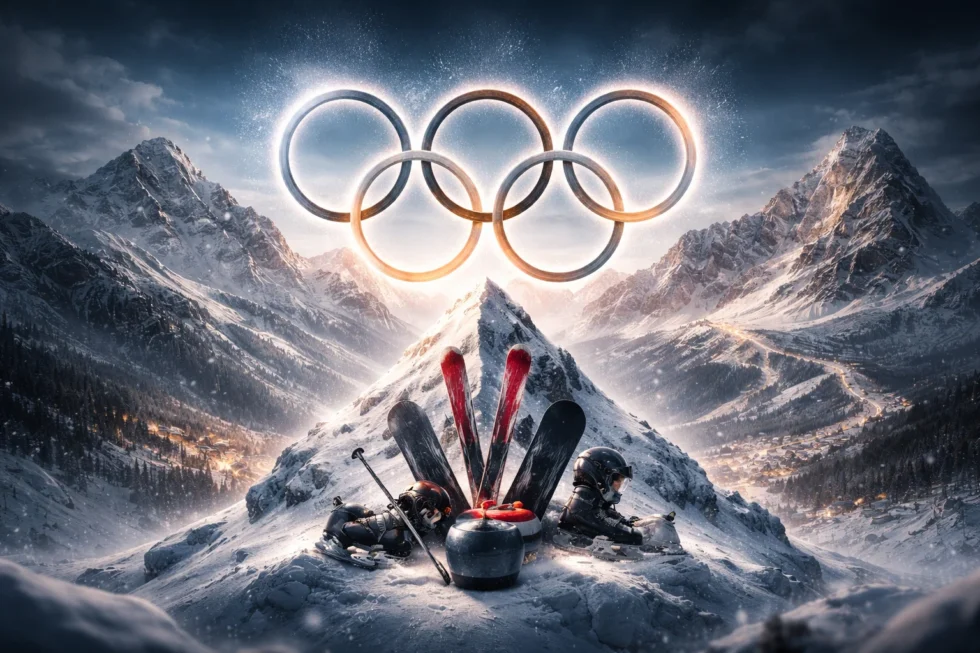
Five core clusters anchor the competition:
- Milan – ceremonial centre, ice hockey, figure skating
- Cortina d’Ampezzo – alpine skiing, curling, sliding sports ceremonies
- Livigno – freestyle skiing and snowboarding
- Bormio – alpine skiing and ski mountaineering
- Predazzo & Tesero (Val di Fiemme) – Nordic combined, ski jumping, cross-country
This layout reflects Italy’s Alpine geography but also exposes athletes to varying snow conditions and travel demands — an issue teams have raised quietly in briefings.
Opening ceremony: spectacle with symbolism
The opening ceremony takes place at San Siro Stadium in Milan, transforming one of Europe’s most famous football grounds into an Olympic stage. Organisers have framed the ceremony as a cultural bridge between Italy’s classical heritage and its modern creative industries.
Given the distances involved, a parallel ceremony is held in Cortina d’Ampezzo, complete with its own Olympic cauldron. Satellite celebrations in Predazzo and Livigno reinforce the decentralised identity of the Games, ensuring athletes based outside Milan are symbolically included. For Great Britain, the flag-bearing duties are split: figure skater Lilah Fear leads in Milan, while bobsleigh pilot Brad Hall represents Team GB in Cortina — a rare dual-ceremony moment in Olympic history.
Why Milano Cortina 2026 matters for Team GB
Britain’s relationship with winter sport has long been shaped by modest expectations. Yet Milano Cortina 2026 could represent a watershed moment.
UK Sport estimates that up to eight medals are achievable — a figure that would eclipse Britain’s best Winter Olympics performances to date. The projection reflects sustained investment since Sochi 2014 and growing depth across multiple disciplines.
British medal contenders to watch
- Skeleton: Matt Weston and Marcus Wyatt, dominant throughout the World Cup season
- Snowboarding: Mia Brookes and Charlotte Bankes, both consistent podium threats
- Freestyle skiing: Kirsty Muir and Zoe Atkin, pushing Britain into snow-based medal contention
- Figure skating: Lewis Gibson and Lilah Fear, seeking the UK’s first Olympic skating medal since 1994
- Curling: aiming to build on the medals secured at Beijing 2022
A gold medal on snow would mark a historic breakthrough for Team GB.
New sports and expanded events
Milano Cortina 2026 introduces the first new Winter Olympic sport since 2002.
Ski mountaineering (skimo)
Held in Bormio, ski mountaineering blends endurance racing with technical transitions. Athletes climb steep slopes using adhesive skins, shoulder their skis during foot ascents, and then race downhill to the finish.
Three medal events are contested:
- Men’s sprint
- Women’s sprint
- Mixed relay
Despite its growing popularity in Alpine nations, no British athletes are entered in skimo this year.
Additional programme changes
The IOC has also expanded several disciplines, adding:
- Dual moguls (men and women)
- Luge doubles (men and women)
- Team alpine combined events
- Women’s large hill ski jumping
- Mixed team skeleton relay
These changes reflect the Olympic push towards gender parity and mixed-gender formats.
Infrastructure: success stories and flashpoints
Cortina Sliding Centre
The rebuilt Cortina Sliding Centre, constructed at a cost exceeding £72 million, was among the most scrutinised projects in the Olympic build-up. Completion delays raised fears of embarrassment for organisers, but test events in late 2025 confirmed the venue is competition-ready.
Milan ice hockey controversy
The Milano Santagiulia ice hockey arena remains a source of tension. As of this week:
- The venue is not fully completed
- Organisers insist all fixtures will proceed
- The NHL has expressed safety concerns over rink dimensions
- Ice quality and collision risk have been questioned
While the International Ice Hockey Federation approved the rink, players and teams continue to monitor conditions closely.
Doping and discipline: Italy under scrutiny
The host nation’s preparations were dented by the removal of biathlete Rebecca Passler following a failed doping test earlier this week. The case marks Italy’s first major scandal of the Games and has intensified scrutiny of anti-doping controls. Officials stress that testing regimes remain robust, but the incident has inevitably shifted headlines away from sporting achievement.
Russian and Belarusian athletes: a neutral presence
Athletes from Russia and Belarus remain largely excluded following Russia’s invasion of Ukraine in 2022. However, the International Olympic Committee has approved a limited number to compete as Individual Neutral Athletes (AINs).
Conditions include:
- No national flags or anthems
- No military contracts
- No public support for the war
A total of 20 athletes from the two countries are competing across eight sports. Media investigations have questioned the eligibility of several competitors, but the IOC maintains all approvals followed established neutrality criteria.
Key facts and figures
| Category | Details |
|---|---|
| Dates | 6–22 February 2026 |
| Athletes | ~2,900 |
| Participating nations | 90+ |
| Host regions | Lombardy, Veneto, Trentino |
| New sport | Ski mountaineering |
| Opening ceremony | San Siro, Milan |
| Team GB medal target | Up to 8 |
| Neutral athletes | 20 (Russia & Belarus) |
Why Milano Cortina 2026 could shape future Olympics
Beyond medals, these Games serve as a stress test for the Olympic movement. Climate uncertainty, rising costs and political legitimacy have all shaped public debate in recent years. Italy’s decentralised approach — relying on existing resorts and shared hosting — may offer a blueprint for future Winter Games. Yet the logistical strain and uneven spectator experience highlight the risks of fragmentation. Whether Milano Cortina 2026 is remembered as a bold evolution or a cautionary tale will depend on what unfolds over the next two weeks.
Olympics Games Milano Cortina 2026
The Olympics Games Milano Cortina 2026 have entered their first full weekend of competition, with Team GB beginning a tightly packed sequence of medal-defining events across snow and ice. From skeleton and snowboard cross to figure skating and freestyle skiing, British athletes are scheduled to compete across multiple venues and disciplines during the opening phase of the Winter Games. What follows is a day-by-day competition guide for Team GB, setting out when British athletes are due to compete, in which events, and at what stage of each discipline. The schedule highlights Britain’s strongest medal opportunities, particularly between 9 and 12 February, when several finals are expected to take place.
All times are listed in local Italian time (CET). Event timings and heats remain subject to weather conditions and operational adjustments, in line with standard Olympic practice.Saturday,
7 February 2026
| Sport | Athlete(s) | Event | Stage |
|---|---|---|---|
| Figure skating | Lilah Fear / Lewis Gibson | Ice dance – rhythm dance | Opening segment |
| Curling | Team GB | Mixed doubles | Round-robin |
| Skeleton | Matt Weston | Men’s skeleton | Official training runs |
| Snowboard | Charlotte Bankes | Snowboard cross | Seeding / qualification |
Editorial note: First competitive day for several British medal contenders. Ice dance rhythm sets the base score for Fear/Gibson.
Sunday, 8 February 2026
| Sport | Athlete(s) | Event | Stage |
|---|---|---|---|
| Skeleton | Matt Weston, Marcus Wyatt | Men’s skeleton | Heats 1–2 |
| Snowboard | Mia Brookes | Slopestyle | Qualification |
| Curling | Team GB women | Team curling | Group match |
| Freestyle skiing | Zoe Atkin | Halfpipe | Training |
Editorial note: Skeleton begins in earnest. Weston and Wyatt are expected to be in podium contention after early runs.
Monday, 9 February 2026
| Sport | Athlete(s) | Event | Stage |
|---|---|---|---|
| Skeleton | Matt Weston, Marcus Wyatt | Men’s skeleton | Heats 3–4 / medals |
| Snowboard | Charlotte Bankes | Snowboard cross | Finals / medals |
| Freestyle skiing | Zoe Atkin | Halfpipe | Qualification |
| Curling | Team GB men | Team curling | Group match |
Editorial note: One of the most important medal days for Britain, particularly in skeleton and snowboard cross.
Tuesday, 10 February 2026
| Sport | Athlete(s) | Event | Stage |
|---|---|---|---|
| Freestyle skiing | Zoe Atkin | Halfpipe | Final / medals |
| Figure skating | Lilah Fear / Lewis Gibson | Ice dance – free dance | Medal-deciding segment |
| Curling | Team GB women | Team curling | Round-robin |
Editorial note: Potentially historic day for British figure skating, with medal contention realistic.
Wednesday, 11 February 2026
| Sport | Athlete(s) | Event | Stage |
|---|---|---|---|
| Snowboard | Mia Brookes | Slopestyle | Final / medals |
| Freestyle skiing | Kirsty Muir | Slopestyle | Qualification |
| Curling | Team GB men | Team curling | Group match |
Editorial note: Brookes targets Britain’s first Olympic snowboarding gold or silver on snow.
Thursday, 12 February 2026
| Sport | Athlete(s) | Event | Stage |
|---|---|---|---|
| Freestyle skiing | Kirsty Muir | Slopestyle | Final / medals |
| Curling | Team GB women | Team curling | Quarter-finals (if qualified) |
Editorial note: Slopestyle finals could add another medal to Britain’s tally.
Friday, 13 February 2026
| Sport | Athlete(s) | Event | Stage |
|---|---|---|---|
| Curling | Team GB men | Team curling | Quarter-finals |
| Figure skating | Fear / Gibson | Ice dance | Final standings confirmed |
Saturday, 14 February 2026
| Sport | Athlete(s) | Event | Stage |
|---|---|---|---|
| Curling | Team GB | Men / Women | Semi-finals |
| Freestyle skiing | Zoe Atkin | Big air | Qualification |
Sunday, 15 February 2026
| Sport | Athlete(s) | Event | Stage |
|---|---|---|---|
| Freestyle skiing | Zoe Atkin | Big air | Final / medals |
| Curling | Team GB | Men / Women | Bronze & gold medal matches |
Monday–Friday, 16–20 February 2026
| Sport | Athlete(s) | Event | Stage |
|---|---|---|---|
| Alpine skiing | Team GB | Team alpine combined | Qualification / finals |
| Snowboard | Bankes / Brookes | Team & mixed events | Possible finals |
| Curling | Team GB | — | Medal confirmations |
Sunday, 22 February 2026
| Event | Details |
|---|---|
| Closing ceremony | Milan |
| Final medal table | Official confirmation |
As competition intensifies, focus will shift decisively from venues and controversy to athletic performance. Medal races, breakthrough athletes and defining moments now stand to shape the narrative. For Britain, the coming days may confirm a long-anticipated arrival as a genuine winter sports nation. For Italy, they represent a test of organisational credibility on the world stage.The Olympics Games Milano Cortina 2026 are no longer a promise — they are happening, in real time, across mountains, cities and ice.
Where and how to watch the Olympics Games Milano Cortina 2026 live
The Olympics Games Milano Cortina 2026 are broadcast in the UK primarily by the BBC, offering free-to-air coverage across BBC One, BBC Two and extensive live streaming on BBC iPlayer, with additional live text, clips and schedules available via the BBC Sport website and app. Events take place in Italy on Central European Time (CET), meaning UK viewers should expect most competitions to air one hour earlier in GMT, with morning sessions from around 07:00 UK time, daytime events from 11:00, and headline finals and medal ceremonies typically scheduled between 18:00 and 21:30.
Team GB’s key medal events — including skeleton, snowboard cross, freestyle skiing, figure skating and curling — are prioritised in BBC prime-time coverage, while iPlayer allows viewers to follow individual sports live without interruption. Coverage runs daily from 6 to 22 February 2026, with replays and highlights available on demand. This is reported by Renewz, citing official broadcast schedules and Olympic organisers.
Read about the life of Westminster and Pimlico district, London and the world. 24/7 news with fresh and useful updates on culture, business, technology and city life: Winter Olympics 2026: Why doctors say Lindsey Vonn still has a strong chance despite ACL tear