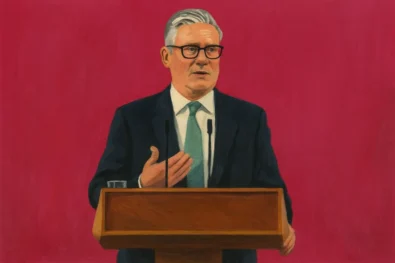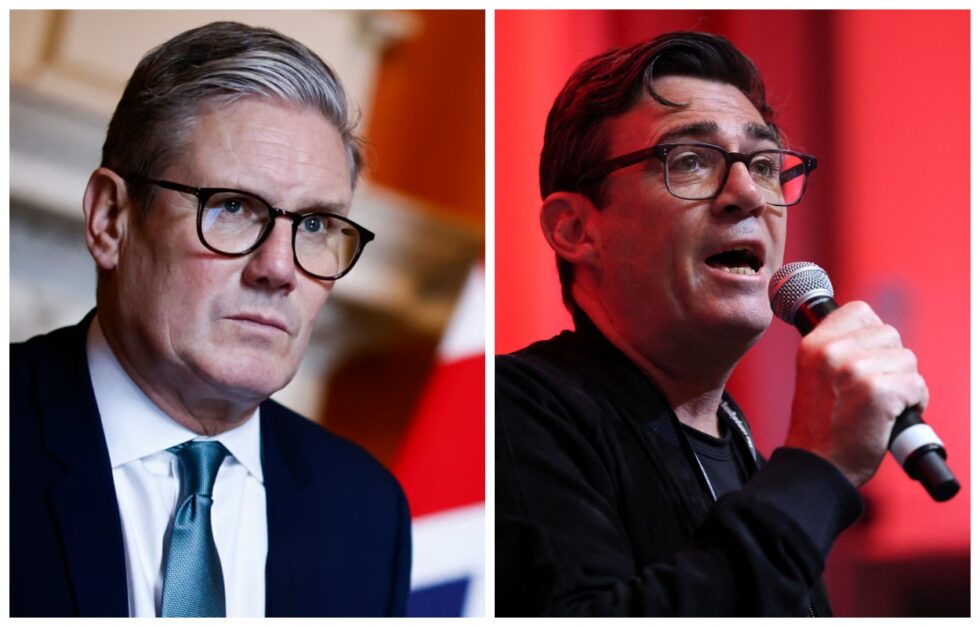
Andy Burnham, Mayor of Greater Manchester, faces a procedurally complex and politically uncertain route if he decides to challenge UK Prime Minister and Labour Party leader Keir Starmer. The situation gained renewed attention on January 22, 2026, after Labour MP Andrew Gwynne confirmed he would step down from Parliament, creating a vacancy in the Gorton and Denton constituency. Any leadership bid by Burnham would require approval from Labour’s National Executive Committee, resignation from his mayoral post, selection as a parliamentary candidate, victory in a by-election, and support from at least 20% of Labour MPs, The WP Times reports, citing theguardian.
Vacancy That Reopens a Westminster Route
The immediate trigger for renewed discussion around Burnham’s future was Andrew Gwynne’s announcement on January 22, 2026, that he would resign as MP for Gorton and Denton. The constituency sits within the Greater Manchester area governed by Burnham as mayor.
Under Labour Party rules, only sitting Members of Parliament are eligible to stand in a leadership contest. Gwynne’s departure therefore creates a necessary, though not sufficient, condition for any future challenge.
Burnham has so far declined to confirm whether he intends to seek the seat. Speaking to local media on the day of the announcement, he said:
“People shouldn’t rush to conclusions. I have been very focused on my role as Mayor of Greater Manchester.”
Burnham previously contested the Labour leadership twice, in 2015 and 2016, losing on both occasions. Since then, his political profile has shifted from Westminster to regional government, where he has built a reputation as one of Labour’s most recognisable local leaders.

NEC Permission as a Formal Barrier
Any attempt by Burnham to enter Parliament would begin with a decision by Labour’s National Executive Committee.
Changes introduced to the party’s rulebook in 2026 require directly elected mayors to obtain “express permission” from the NEC before seeking selection for a parliamentary seat. Without that approval, Burnham would be barred from even entering the candidate selection process.
The NEC is a 41-member body responsible for overseeing Labour’s internal governance. Its membership includes representatives from:
- Affiliated trade unions
- Constituency Labour Parties
- The Parliamentary Labour Party
- Appointed party officials
Control of the NEC became a strategic focus for Keir Starmer’s leadership team ahead of Labour’s return to power in the 2024 general election. As a result, many members are considered broadly aligned with the current leadership.
One senior party figure familiar with the process said Burnham’s approval could not be taken for granted, given the implications for party unity and leadership stability.
Resignation From the Mayoralty
If granted NEC permission, Burnham would be required to resign as Mayor of Greater Manchester before standing for Parliament.
UK electoral rules do not allow an individual to hold the mayoralty and serve as an MP simultaneously. Burnham has held the mayoral office since 2017 and was re-elected in May 2024 to a third term, securing 63% of the vote.
He has previously described the role in positive terms, calling it “the best job politics can offer” due to its executive authority and direct electoral mandate.
Resignation would trigger a fresh mayoral election across Greater Manchester’s ten local authorities. According to one NEC official, speaking on condition of anonymity, the cost and administrative burden of such an election would be significant, particularly with other local elections scheduled for May 2026.
“There is effectively no chance of him appearing on the ballot without stepping down,” the official said.
Selection Process in Gorton and Denton
Even with NEC approval and resignation from office, Burnham would still need to secure Labour’s nomination in Gorton and Denton.
The selection process unfolds in several stages:
- The NEC draws up a longlist of eligible candidates.
- A five-member panel interviews candidates to produce a shortlist.
- Local Labour members vote to select the final candidate.
The shortlisting panel consists of:
- Three representatives of the local constituency party
- One member of Labour’s regional executive
- One NEC representative
At this stage, the panel may decide to impose an all-women shortlist. While no longer mandatory, Labour has continued to use such shortlists in some by-elections. If adopted, Burnham would be excluded from the contest regardless of NEC approval.
If shortlisted, Burnham would likely enter the members’ ballot as one of the most recognisable figures in the field.
Electoral Risks of a By-Election
Winning the Labour nomination would lead to a by-election that carries political risk.
In the 2024 general election, Labour won Gorton and Denton with a margin of approximately 36 percentage points. However, since entering government, Labour’s national polling has weakened.
Recent multilevel regression and post-stratification models, which estimate constituency-level outcomes based on national trends, have suggested that Reform UK could be competitive in the seat under current conditions.
Those projections do not account for Burnham’s personal vote. In the 2024 mayoral election, he secured 61% of the vote in the district corresponding to Gorton and Denton.
A Labour adviser, speaking on condition of anonymity, said concerns about defeat were overstated.
“His team are certain he would win in Gorton,” the adviser said.
Threshold for Challenging the Leadership
Election to Parliament would not automatically entitle Burnham to stand against Starmer.
Under Labour rules, a leadership challenger must secure nominations from at least 20% of Labour MPs. With Labour holding 405 seats, that threshold stands at 81 MPs.
This requirement is designed to ensure that leadership contests reflect substantial parliamentary backing. Many of Labour’s MPs were elected in 2024 under Starmer’s leadership, potentially limiting appetite for an internal challenge.
Other figures frequently mentioned by party members as potential leadership contenders include:
- Health Secretary Wes Streeting
- Home Secretary Shabana Mahmood
- Former Deputy Prime Minister Angela Rayner
Any contest would therefore likely involve multiple candidates.
Key Steps Burnham Would Need to Complete
Below is a simplified overview of the procedural path Burnham would face:
- Secure NEC permission to seek parliamentary candidacy
- Resign as Mayor of Greater Manchester
- Win Labour’s candidate selection in Gorton and Denton
- Win the parliamentary by-election
- Obtain nominations from at least 81 Labour MPs
Failure at any stage would end the process.
At present, no formal action has been taken by Burnham. The Gorton and Denton seat remains vacant pending the scheduling of a by-election, and Labour’s leadership remains unchanged.
For voters and party members, the situation underscores how leadership challenges in UK politics are shaped as much by internal rules and timing as by public popularity. Any move by Burnham would unfold over months and carry direct consequences for local governance in Greater Manchester as well as Labour’s national direction.
Read about the life of Westminster and Pimlico district, London and the world. 24/7 news with fresh and useful updates on culture, business, technology and city life: What do the Oscar nominations 2026 reveal about the films and stars leading this year’s race