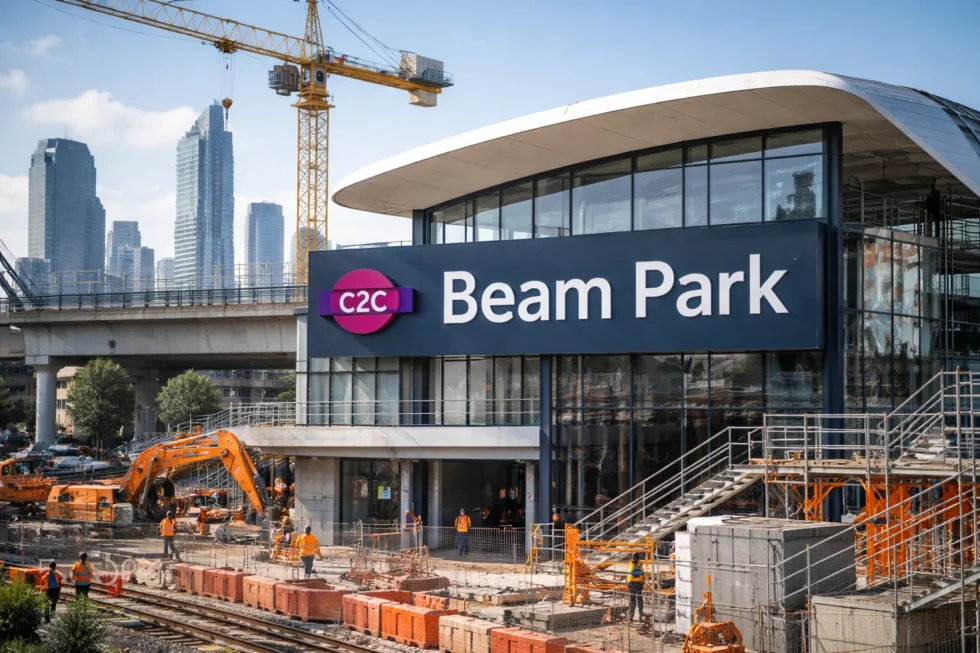
The development of the East London transport corridor reached a definitive milestone on Monday, April 6, 2026, as the Department for Levelling Up, Housing and Communities formally granted final approval for the construction of the Beam Park railway station. Situated on the strategic c2c line between Dagenham Dock and Rainham, this infrastructure project is designed to reduce travel times to London Fenchurch Street to just 20 minutes, serving a burgeoning community where 1,100 homes are already occupied and another 1,200 remain under active construction.
The central government's intervention, backed by the Housing Accelerator program, aims to unlock a massive residential capacity of 20,000 new homes across the wider redevelopment zone, addressing a critical housing deficit in the capital. For local residents and investors, this approval signifies the end of a "transport vacuum" that has persisted since the first occupants moved into the area in 2020, promising a projected 15-22% increase in local property valuations following the station's operational debut, reports The WP Times, via GOV.UK.
Strategic Significance of the Beam Park Infrastructure Development
The formal authorization of Beam Park station represents the culmination of a planning cycle that originated in 2002, reflecting a 24-year journey through shifting bureaucratic and economic landscapes. By integrating the station into the existing c2c network, Transport for London (TfL) and the Greater London Authority (GLA) are executing a high-density transit-oriented development (TOD) model. According to the Havering Council, the station is not merely a transport hub but the "key element of infrastructure" required to sustain the existing community in the south of the borough and prevent long-term economic stagnation.
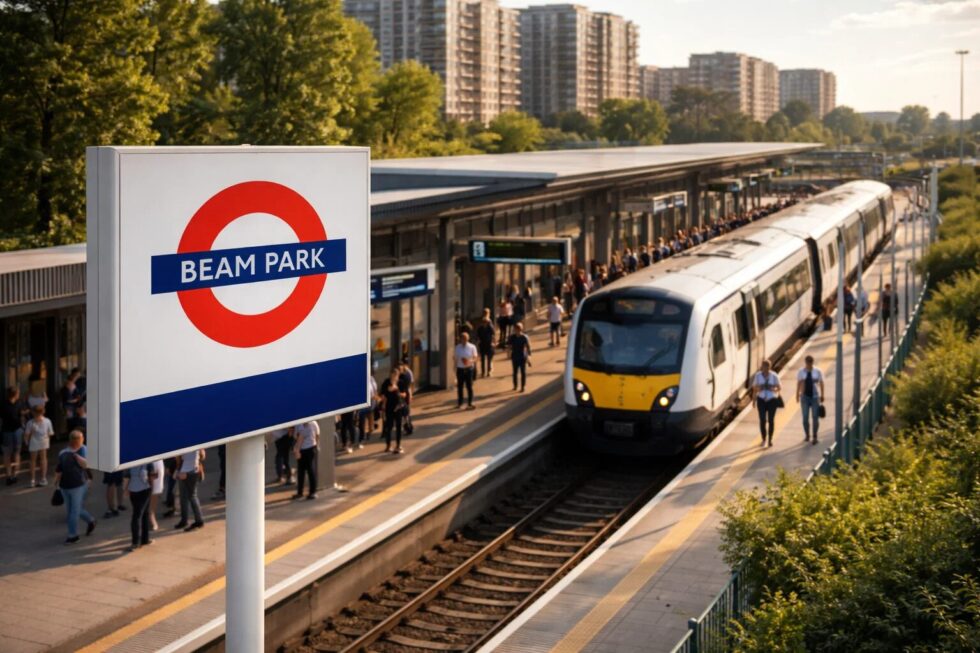
Current projections suggest that the operational station will facilitate over 2.5 million passenger journeys annually by 2030, significantly relieving pressure on local bus networks that have served as the sole transit link for six years.
Comparison of Connectivity: Beam Park vs. Adjacent Transit Hubs (2026 Data)
| Station | Line / Operator | Time to Central London | Daily Frequency (Peak) | Local Housing Growth (Est. 2026-30) |
| Beam Park | c2c (Fenchurch St) | 20 Minutes | 4-6 Trains/Hour | +20,000 Units |
| Dagenham Dock | c2c | 23 Minutes | 2-4 Trains/Hour | +2,500 Units |
| Rainham | c2c | 25 Minutes | 2-4 Trains/Hour | +1,800 Units |
| Barking Riverside | Overground | 22 Minutes | 4 Trains/Hour | +10,800 Units |
Financial Framework and Economic Challenges in the Post-Inflation Era
While the political green light has been secured, the project faces a revised financial landscape characterized by the cumulative impact of 2024-2025 construction inflation and rising labor costs. Ray Morgon, Leader of Havering Council, noted that "the costs have risen due to inflation, labor costs, and materials," requiring a coordinated funding effort between the GLA, Havering, and the Department for Levelling Up, Housing and Communities (DLUHC).
Current estimates place the funding gap at approximately £15-£20 million above the original 2019 budget, a deficit that partners are now seeking to close through section 106 contributions and central government grants. Practical implications for the project timeline suggest that while site preparation can begin immediately, the final procurement of heavy rail signaling systems remains subject to this capital injection.
"We have always said that we would do everything we can to ensure the construction of Beam Park station," said Councillor Ray Morgon. "Without the station, the area will remain in a transport vacuum."
Practical Steps for Local Residents and Property Owners
- Monitor Section 106 Updates: Residents should track the Havering Planning Portal for updates on community infrastructure levies that will fund station amenities.
- Property Value Assessment: Owners should consider the "Station Effect" in valuations; historically, East London properties within 500m of new rail links outperform the wider market by 4.5% annually.
- Commuting Transition: Prepare for the shift from bus-dependency to rail; TfL intends to reroute local bus lines to feed directly into the Beam Park hub upon completion.
- Environmental Impact: The station design incorporates sustainable urban drainage systems (SuDS) and low-carbon materials, aligning with London’s 2030 Net Zero targets.
Overcoming the "Transport Vacuum": Integration with the c2c Network
The technical integration of a new station into one of the UK’s busiest commuter lines requires surgical precision to avoid disrupting existing service levels between Essex and London. Network Rail and c2c have initiated the "Operational Viability Study 2026" to ensure that the additional stop does not adversely affect the performance metrics of the Fenchurch Street line, which currently boasts a Public Performance Measure (PPM) of over 90%. The station will feature step-free access, high-capacity ticket gates, and integrated cycle storage for over 200 bicycles, encouraging "active travel" as a first-mile solution.
This infrastructure is essential for the Beam Park railway station to serve as a viable alternative to private vehicle ownership in a region increasingly affected by the Ultra Low Emission Zone (ULEZ) expansion.
Technical Specifications and Site Requirements
The station footprint is designed to accommodate 8-car and 12-car train sets, ensuring future-proofing for increased demand as the 20,000-home masterplan progresses. Engineers are focusing on the "existing rail envelope" to minimize land acquisition costs and environmental disruption.
The construction phase is expected to utilize modular platform components to accelerate the build-out, a technique successfully employed at other recent London station projects.
For the Beam Park railway station to succeed, it must maintain a seamless interface with the surrounding pedestrianized public realm, currently under development by Countryside Partnerships and L&Q.
Housing and Regeneration: Unlocking the 20,000-Home Potential
The approval of the Beam Park railway station is the linchpin for one of the most significant housing surges in East London since the 2012 Olympics. The Greater London Authority has designated the area as a "Housing Zone," providing streamlined planning permissions for developers who commit to the infrastructure-first model. With 1,100 homes already housing residents, the psychological impact of the station’s approval is expected to trigger an immediate uptick in sales velocity for the 1,200 units currently under construction. Long-term, the station enables the conversion of former industrial brownfield sites into a thriving residential district, supported by new schools, medical facilities, and retail hubs.
Risk Assessment for Future Phases
- Funding Shortfalls: Increased material costs could delay the final fit-out of the station interiors.
- Network Congestion: Managing the additional dwell time at Beam Park without slowing down the Essex-London express services.
- Inflationary Pressure: Ongoing volatility in the construction market may necessitate further budget revisions in 2027.
- Community Cohesion: Ensuring that the new rail hub benefits existing Dagenham and Rainham residents, not just new arrivals.
Frequently Asked Questions
When will the Beam Park railway station be operational?
Following the 2026 approval, construction is estimated to take 18-24 months, with an anticipated opening window in late 2027 or early 2028, pending final funding gaps.
Which train line will serve the new station?
The station will be served by the c2c line, providing direct links between London Fenchurch Street and Grays/Southend.
How will the station affect local property prices?
Historically, new rail links in London lead to a 10-20% premium compared to non-connected areas; the 20-minute link to the City is a major driver.
Is there parking available at the new station?
The design focuses on sustainable transport, offering extensive cycle storage and bus links rather than large-scale private car parking.
What happened to the 2021 refusal?
The government initially feared the station would slow down the line and lacked a business case, but the 2026 housing demand and the Housing Accelerator program have overridden those concerns.
Read about the life of Westminster and Pimlico district, London and the world. 24/7 news with fresh and useful updates on culture, business, technology and city life: Free London Bus Routes and DLR Lines 2026: How to Ride Across the Thames at Zero Cost Until May 26