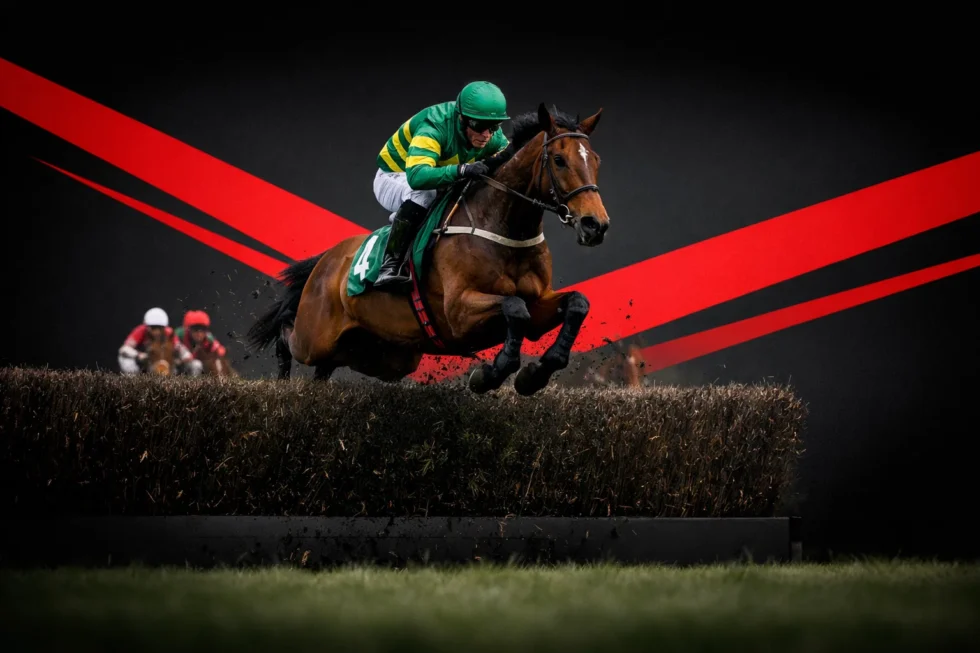
The grand national runners 2026 line-up for the Grand National 2026 at Aintree is set for Saturday 11 April at 16:00 BST, bringing together 34 contenders in what remains the most unpredictable race in British sport, with punters again asking when is the Grand National 2026, what are the grand national odds, and whether historical data can actually point to the winner. The race, run over 4 miles 2½ furlongs with 30 fences, continues to defy logic despite decades of trends, with recent analysis showing that favourites, outsiders and mid-priced runners have all won in equal measure across modern renewals, leaving the horse racing grand national runners field wide open once again. The WP Times reports this, citing British media coverage and race data analysis.
Unlike more form-driven meetings such as Cheltenham, the grand national horses 2026 field reflects a unique test where stamina, jumping accuracy and race conditions outweigh pure class, and where even experienced bettors rely on probability rather than certainty. Since 2000, results show a spread of outcomes that underline the race’s volatility: from short-priced favourites like Tiger Roll (2019) at 4-1 to extreme outsiders such as Mon Mome (2009) at 100-1, while last year’s winner Nick Rockett (2025) returned at 33-1, reinforcing the idea that the grand national 2026 odds cannot be read in a traditional way.
| Factor | Data Insight | Impact on 2026 |
|---|---|---|
| Average winning odds | ~24-1 since 2000 | Value often outside favourites |
| Recent trend | 5 winners at 11-1 or shorter in last 10 | Favourites more competitive |
| Biggest outsider | 100-1 (Mon Mome, 2009) | Longshots still viable |
| Last winner | 33-1 (Nick Rockett, 2025) | Mid-range odds strong |
Age has become one of the clearest filters when narrowing down grand national horses, particularly in the modern era where race conditions and safety adjustments have shifted the competitive profile. No horse aged 10 or older has won since 2014, while eight- and nine-year-olds dominate the winners’ list over the past decade. The anomaly remains Noble Yeats (2022), who won as a seven-year-old, breaking a trend that had stood since 1940, but data still strongly favours horses in their prime racing years for the grand national runners 2026 shortlist. Weight, by contrast, offers less certainty but still provides a narrowing tool. Winners over the past 25 renewals have carried between 10st 3lb and 11st 9lb, with an average clustering around 10st 12lb to 10st 13lb. This range effectively reduces the field, particularly when considering that top-weight runners rarely succeed — a trend unchanged since Red Rum’s historic 1974 win carrying 12 stone, meaning current top-weight contenders face a statistical disadvantage heading into Aintree.
Trainer influence remains significant but not decisive. Irish dominance has defined recent editions, with trainers such as Willie Mullins, Gordon Elliott and Henry de Bromhead responsible for a large share of winners and top-five finishes. Mullins, in particular, has trained the last two winners, marking a shift after a long gap since his previous success in 2005. Collectively, Irish-trained horses have won seven of the last nine renewals, highlighting a structural advantage in preparation and race targeting for the Grand National 2026. Jockey performance also contributes to trend analysis, though without guaranteeing results. Riders such as Paul Townend, who won in 2024 and has multiple top finishes, and Jack Kennedy, with four top-five results, provide consistency, but the chaotic nature of the race often neutralises individual advantage. The sheer number of runners, combined with the intensity of the course, means positioning and race incidents frequently override form and experience.
Further statistical filters help refine the grand national runners 2026 shortlist. Horses rated below 146 by official handicappers have rarely won, with 14 of the last 16 winners rated above that threshold. Similarly, race fitness plays a role: no winner in the past 25 years has had fewer than three runs in the season leading up to Aintree, with an average of four runs among recent winners. These indicators suggest that both class and recent activity are essential components in identifying viable contenders.
Another critical factor is distance performance. The Grand National’s extreme length demands proven stamina, and data shows that 21 of the last 24 winners had previously won over distances of three miles or more. Horses lacking this experience, regardless of overall talent, face a significant disadvantage when tackling the unique demands of the grand national horses 2026 field.
Breeding trends also reveal a strong Irish influence, with 18 of the 24 winners this century being Irish-bred. French-bred and British-bred horses account for a minority, reinforcing the dominance of Irish bloodlines in producing endurance-focused runners suited to Aintree’s conditions. Recent form provides another indicator, though not a definitive one. Eleven of the past 25 winners finished in the top two in their previous race, and six of the last eight winners had won their most recent outing. However, exceptions remain, including winners that finished well outside the top positions, demonstrating that momentum helps but does not guarantee success.
| Key Trend | Historical Pattern | Relevance |
|---|---|---|
| Ideal age | 8–9 years | Strong filter |
| Rating | 146–160 | High importance |
| Distance wins | 3+ miles | Essential |
| Runs this season | 3–6 | Fitness indicator |
| Irish-trained | Majority winners | Strategic edge |
Applying these filters to the current grand national runners 2026 field reduces the contenders significantly. Based on available data, horses such as Monty’s Star, Lecky Watson, Three Card Brag, Oscars Brother, Stellar Story and Captain Cody emerge as statistically aligned with winning profiles. However, even this narrowed selection reflects probability rather than prediction, as the race’s history consistently defies purely analytical approaches. The presence of previous winners and high-profile contenders further complicates the picture. I Am Maximus, winner in 2024 and among the leading names in the grand national 2026 odds, returns with strong credentials but faces the traditional challenge of carrying top weight, a factor that has historically limited repeat success at Aintree. Ultimately, the grand national 2026 time, conditions and race dynamics will shape the outcome as much as any data model. With fences such as Becher’s Brook, The Chair and Canal Turn continuing to define the race’s unpredictability, the Grand National remains less about certainty and more about calculated risk. The enduring appeal of the Grand National 2026 lies precisely in that uncertainty. While statistical models can reduce the field and highlight likely profiles, they cannot account for the unpredictable variables that define the race — from falls and interference to ground conditions and race pace. For bettors and analysts alike, the conclusion remains unchanged: data can guide, but it cannot guarantee the winner at Aintree.
Read about the life of Westminster and Pimlico district, London and the world. 24/7 news with fresh and useful updates on culture, business, technology and city life: Grand National 2026 horses at Aintree: time, tickets, race programme, prize money, runners and what to know