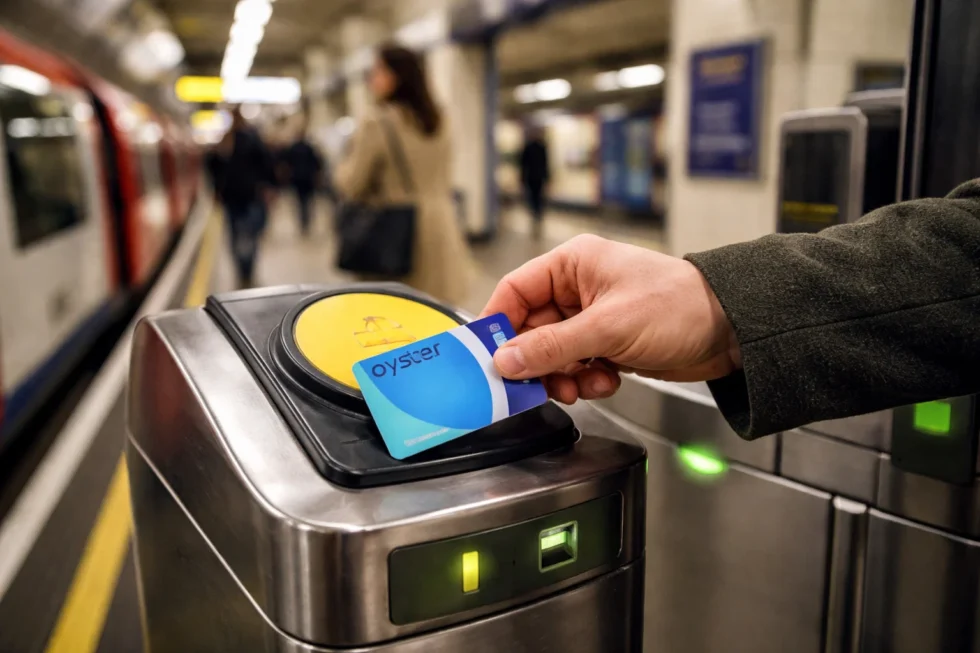
Behind London’s familiar yellow Oyster card, a quiet but far-reaching shift is underway. Transport for London has confirmed a seven-year contract to replace the operator running its TfL Oyster and contactless ticketing systems — the digital backbone that calculates fares, applies daily caps and processes millions of passenger journeys every day. While nothing changes at ticket barriers for now, the move reshapes how London’s fares, payments and Oyster infrastructure will evolve in the coming years.
The contract has been awarded to Indra Group, ending more than 20 years of operations by Cubic Transportation Systems, which has managed the Oyster system since its launch in 2003. For passengers, fares and travel rules remain unchanged in the short term — but the switch represents the largest structural reset of London’s ticketing system in a generation, laying the groundwork for digital Oyster cards, faster fare updates and new payment options. Reports The WP Times, citing a TfL contract announcement.
Who was running Oyster — and who runs it now
| Area | Before | Now |
|---|---|---|
| Ticketing system operator | Cubic Transportation Systems | Indra Group |
| Period | 2003–2025 | 2026–2033 |
| Core role | Oyster & contactless processing | Full fare, payment & revenue engine |
| Visible impact today | Stable, mature system | No immediate passenger changes |
| Strategic focus | Physical Oyster & contactless | Digital Oyster & future upgrades |
What this means in practice: TfL is not changing the card — it is replacing the engine behind it.
What does the operator change actually mean for passengers
For customers, this change is about how the system will evolve, not what happens at the ticket barrier tomorrow. There are no new cards, no new rules and no new fares being introduced immediately. Instead, the shift affects the back-end engine that powers how London’s ticketing system works. The new operator controls:
- how fares are calculated
- how Oyster and contactless payments are processed
- how balances, daily and weekly caps, and travelcards are applied
- how new ticketing features are designed, tested and introduced
In practical terms, this means TfL is rebuilding the core infrastructure behind Oyster and contactless payments. While passengers may not notice changes straight away, the operator swap determines how quickly fares can be updated, how reliably caps are applied, and how easily new digital options — such as virtual Oyster cards — can be rolled out in the future.
The impact is therefore structural rather than immediate: less about visible changes today, and more about how London’s ticketing system adapts to new travel habits, technologies and payment expectations over the next decade.simple terms, TfL is rebuilding the core infrastructure that decides what you are charged and why.
What stays exactly the same right now
Transport for London has stressed that day-to-day travel is unaffected and that passengers do not need to change how they travel.
| Area | What passengers need to know |
|---|---|
| Oyster cards | Physical cards continue to work as normal |
| Contactless bank cards | No change to use or fare rules |
| Fares & caps | No fare increases linked to the contract |
| Ticket barriers | No new equipment or validation required |
| Refunds & concessions | Existing rules and eligibility remain |
TfL has confirmed that physical Oyster cards will continue to be supported, particularly for visitors, children, older passengers and concessionary users, ensuring that those who rely on traditional cards are not forced into digital-only options.
What could change in the coming years
The new system gives Transport for London technical flexibility that was difficult or costly under the previous setup. While no launch dates have been confirmed, the contract enables TfL to introduce features that were previously limited by legacy infrastructure. Expected long-term options include:
- Digital Oyster cards stored securely in smartphone wallets
- Faster top-ups with near real-time balance updates
- Clearer journey and spending history in a single account view
- Easier fare structure changes without widespread disruption
- Improved recovery tools if a physical card or mobile device is lost
For many passengers, these changes could gradually close the gap between Oyster and modern mobile payment systems, while retaining Oyster-specific benefits such as travel cards, concessions and discounted fares that are not always available through standard bank cards.
WWhy TfL says this matters to customers
For Transport for London, the issue is not new technology for its own sake, but trust. With millions of journeys recorded across the network every day, even small inaccuracies in fare calculation can affect large numbers of passengers — financially and operationally. TfL says the rebuilt system is designed to:
- reduce the risk of fare calculation errors
- strengthen resilience during outages, upgrades or system maintenance
- support long-term growth without disrupting daily travel
Shashi Verma, TfL’s director of technology strategy and revenue, said the authority’s aim is to ensure passengers are consistently charged the correct fare, while allowing Oyster and contactless ticketing to evolve in line with how Londoners now travel and pay.
Practical advice for London travellers
For now, TfL’s message to passengers is simple:
- No action required — Oyster and contactless cards work exactly as before
- Keep journey history and receipts if you regularly claim refunds or expenses
- Visitors should continue using physical Oyster cards for simplicity
- Regular commuters should expect incremental improvements, not a single launch event
- Monitor TfL announcements before opting into any digital-only ticketing options
TfL has not confirmed timelines for digital Oyster cards or other visible upgrades. Industry analysts expect a phased rollout, with extended testing periods before any public launch.
The takeaway:
Oyster continues to function exactly as it does today — but the infrastructure behind it is being rebuilt for the next decade of London travel. TfL says that approach is intended to modernise the system without disrupting the millions of passengers who rely on it every day.
Read about the life of Westminster and Pimlico district, London and the world. 24/7 news with fresh and useful updates on culture, business, technology and city life: Oyster Card Secrets: How to Master London Transport and Save Money