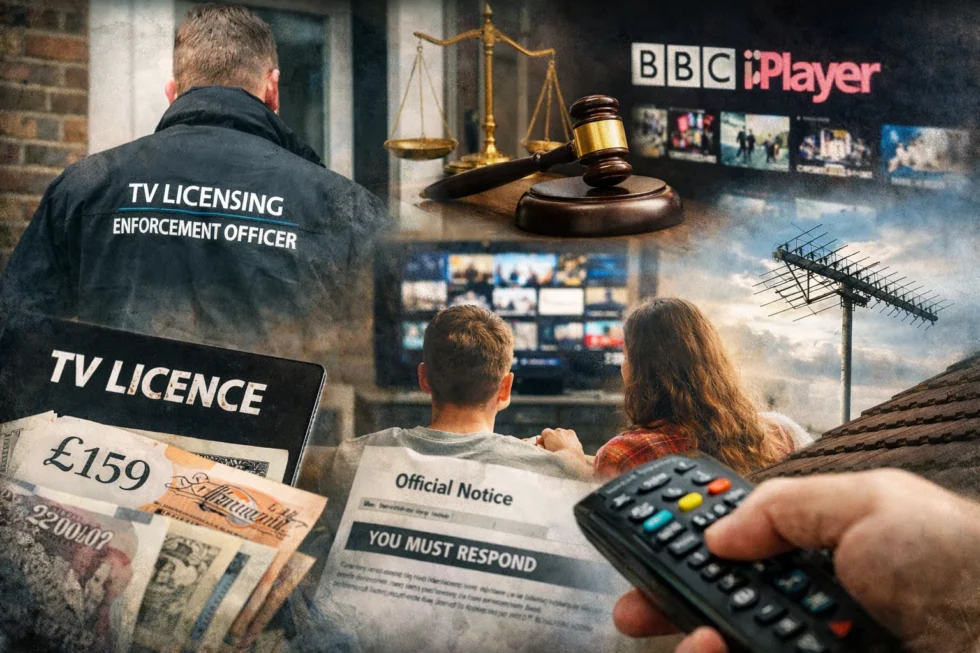
January 2026 — Millions of people across the UK remain unsure whether they need a TV licence, as confusion persists over streaming services, live TV rules and BBC iPlayer in an increasingly on-demand media landscape.Despite the shift towards streaming, a TV licence is still a legal requirement in the UK for anyone who watches or streams live television on any channel or uses BBC iPlayer, regardless of device. Official estimates show that more than 2.5 million UK addresses are currently unlicensed, even though enforcement data indicates that many continue to access licensed content.
The annual licence fee stands at £159, frozen until 2028, while non-payment can result in criminal prosecution and fines of up to £1,000, excluding court costs. The WP Times reports, citing official guidance and enforcement data from TV Licensing.
What is a TV licence and why does it still exist in the UK
A TV licence is a statutory charge required under UK law for anyone who watches or streams live television or uses BBC iPlayer, regardless of the device used. The requirement remains in force in January 2026, despite the widespread shift towards streaming and on-demand viewing. Confusion around streaming platforms, smart TVs and catch-up services has led to persistent non-compliance. Official estimates show that more than 2.5 million UK addresses are currently unlicensed, even though enforcement data indicates that many continue to watch licensed content. Non-payment remains a criminal offence in England and Wales and can result in prosecution and fines.
What does the TV licence fund
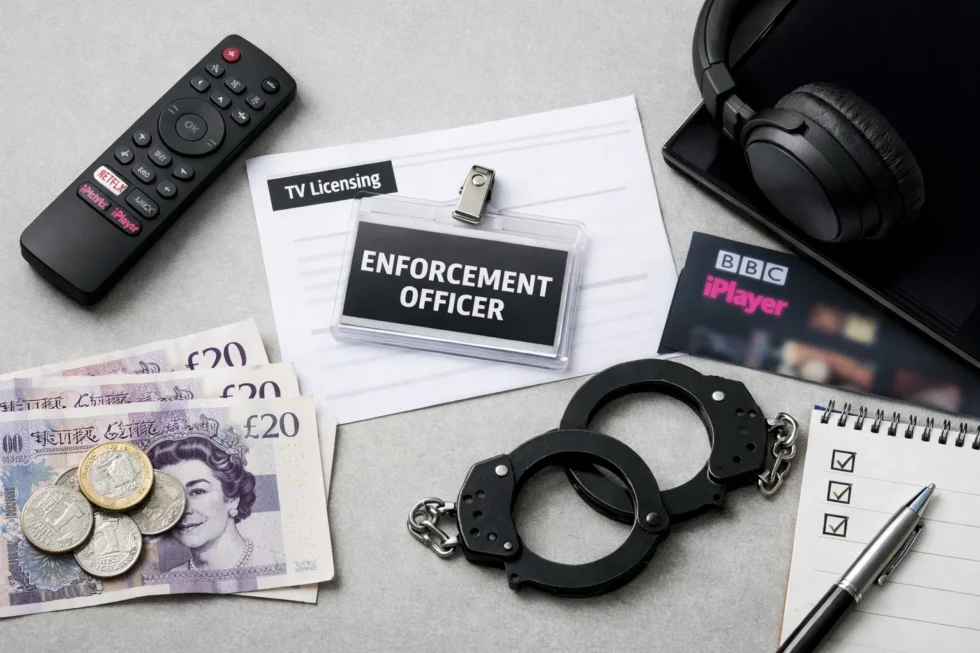
The licence fee is the primary source of funding for the BBC, accounting for the majority of its operating income. Licence revenue funds:
- national and regional television channels
- BBC radio networks across the UK
- online news, educational and cultural content
- emergency broadcasting and public service output
From a policy perspective, the licence exists to provide stable, advertising-free funding for public broadcasting. Successive governments have argued that this model protects editorial independence and ensures nationwide access to public service media (Department for Culture, Media and Sport statements, funding settlement 2022–2028).
Who is legally required to pay for a TV licence in the UK
Under UK law, the obligation to hold a TV licence is determined by how television content is consumed, not by ownership of a device. The rules apply regardless of whether programmes are watched on a traditional television set, a laptop, a tablet or a smartphone.
You need a TV licence if you:
- watch or record live TV on any channel, including non-BBC channels
- stream live programmes online, including live news or sport
- use BBC iPlayer, whether watching live or on demand
You do not need a TV licence if you:
- only watch on-demand services such as Netflix, Prime Video or Disney+
- watch non-live videos on YouTube
- use catch-up services other than BBC iPlayer
Key legal clarification: owning a television set does not in itself create a legal obligation. Liability arises solely from usage (TV Licensing guidance).
How much does a TV licence cost in 2026
The standard TV licence fee remains £159 per year in 2026, after the UK government confirmed a freeze on the charge that will stay in place until 2028.
Payment options
| Payment method | Cost |
|---|---|
| Annual payment | £159 |
| Monthly Direct Debit | ~£13.25 |
| Quarterly instalments | Available |
| Weekly payment card | Available |
From an affordability standpoint, policymakers frequently note that the licence equates to just over £3 per week, a figure cited in parliamentary debates on the future of public broadcasting.
What happens if you do not pay a TV licence
In England and Wales, failure to pay for a TV licence remains a criminal offence under UK law.
Possible consequences include:
- a fine of up to £1,000
- additional court costs and compensation
- a criminal conviction if the case is prosecuted
In Scotland and Northern Ireland, enforcement follows different legal procedures, but licence evasion continues to be actively pursued.
Enforcement data and court impact
According to justice system statistics, TV licence cases account for a significant share of magistrates’ court workload seach year, making licence evasion one of the most frequently prosecuted offences in England and Wales. Enforcement is carried out by TV Licensing on behalf of the BBC. Authorities consistently state that misunderstanding streaming rules does not exempt households from enforcement action (official TV Licensing guidance).
TV Licensing visits: what officers can and cannot do
Fear of enforcement visits by TV Licensing officers remains widespread across the UK, driven largely by misunderstandings about what inspectors are legally allowed to do. While enforcement powers do exist, they are significantly more limited than many households assume. TV Licensing officers are permitted to visit a residential address and make enquiries about television use. They may ask occupants questions and can request permission to enter a property. However, they do not have automatic rights of entry.
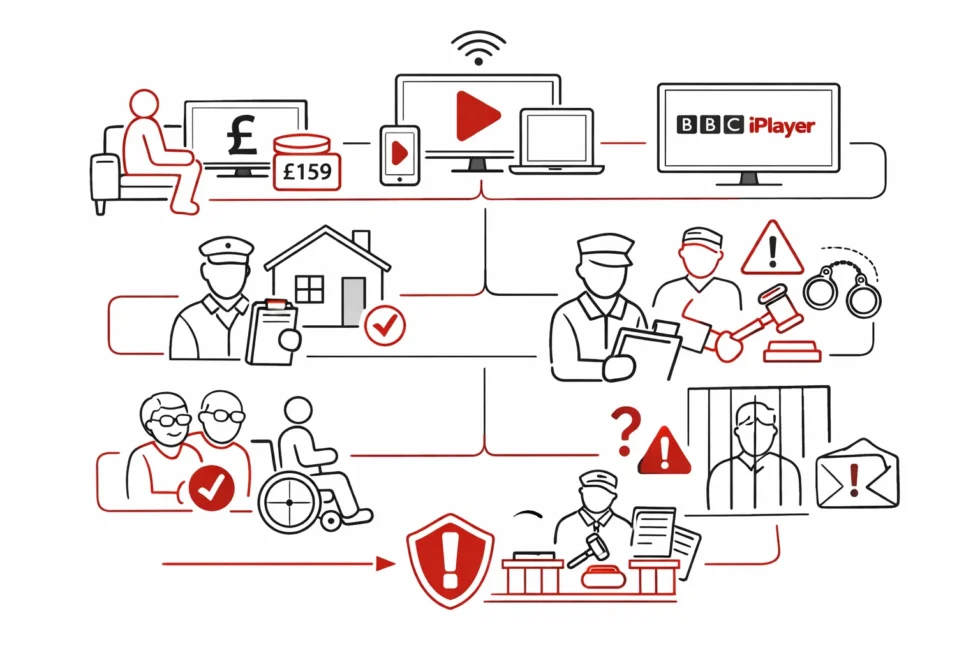
Without a court-issued warrant, officers cannot force entry, cannot search a home, and cannot demand immediate payment. Residents are under no legal obligation to allow entry or to answer questions. Entry can only be compelled if a magistrates’ court has issued a warrant, a step authorities describe as relatively rare. Official guidance confirms that householders are legally entitled to refuse entry unless such a warrant is presented, a point frequently misunderstood in public discourse.
Streaming services and live TV: where confusion arises
The rapid growth of streaming platforms has widened the gap between public behaviour and legal understanding of TV licence rules. Many households incorrectly assume that traditional television rules no longer apply in an on-demand media environment.
Common misconceptions include the belief that a licence is unnecessary if BBC channels are not watched, that streaming automatically removes the requirement to pay, or that viewing content on phones or laptops is treated differently under the law.
In legal terms, these assumptions are incorrect. Live television streamed on any platform still counts as live TV, regardless of broadcaster. BBC iPlayer always requires a licence, whether content is watched live or on demand. Crucially, the type of device used is irrelevant. This persistent misunderstanding helps explain why licence evasion continues despite years of public guidance and enforcement activity.
Who qualifies for exemptions or discounts
Exemptions and discounts do exist, but they are narrower than many households expect. Eligibility is tightly defined and often misunderstood. Full exemptions apply to people aged 75 or over only if they receive Pension Credit. A 50 per cent discount is available for individuals who are registered blind or severely sight-impaired. Certain residents in care homes may also qualify under specific conditions. Age alone does not guarantee exemption, a policy position that has generated ongoing political and public controversy.
How widespread is TV licence non-payment
Policy estimates suggest that between 2.5 and 3 million UK addresses are currently unlicensed. Each year, tens of thousands of licence-related cases pass through the magistrates’ courts, making non-payment one of the most commonly prosecuted offences in England and Wales.
Research and court data indicate that women and low-income households are disproportionately affected, a pattern that has fuelled criticism from legal reform groups and social policy analysts. From an analytical perspective, critics argue that the scale of enforcement raises questions about fairness and proportionality, particularly in the context of broader cost-of-living pressures.
Why the TV licence is under political pressure
The current funding model faces sustained criticism on several fronts. Opponents argue that it is outdated in a streaming-led media market, socially regressive due to criminal penalties, and expensive to administer relative to the revenue collected.Publicly discussed alternatives include the decriminalisation of non-payment, the introduction of a universal household media levy, or a shift towards subscription-based funding for the BBC. Despite these debates, no confirmed replacement model is planned before the current funding settlement expires in 2028.
What UK households should check now
To reduce legal risk, households are advised to review whether any live television is watched or streamed on any device, whether BBC iPlayer is used across the household, and whether they may qualify for an exemption or discount.
Official rules, costs and eligibility criteria are published by TV Licensing and remain the primary reference point for households navigating the system. The TV licence framework remains legally clear but socially contested. While viewing habits have changed dramatically over the past decade, enforcement rules have largely remained intact. Until reform is introduced, responsibility for compliance continues to rest with individual households.
Materials used: TV Licensing official guidance and rules; BBC public funding information; Department for Culture, Media and Sport licence fee settlement documents; Ministry of Justice court and enforcement data.
Read about the life of Westminster and Pimlico district, London and the world. 24/7 news with fresh and useful updates on culture, business, technology and city life: What do the Oscar nominations 2026 reveal about the films and stars leading this year’s race