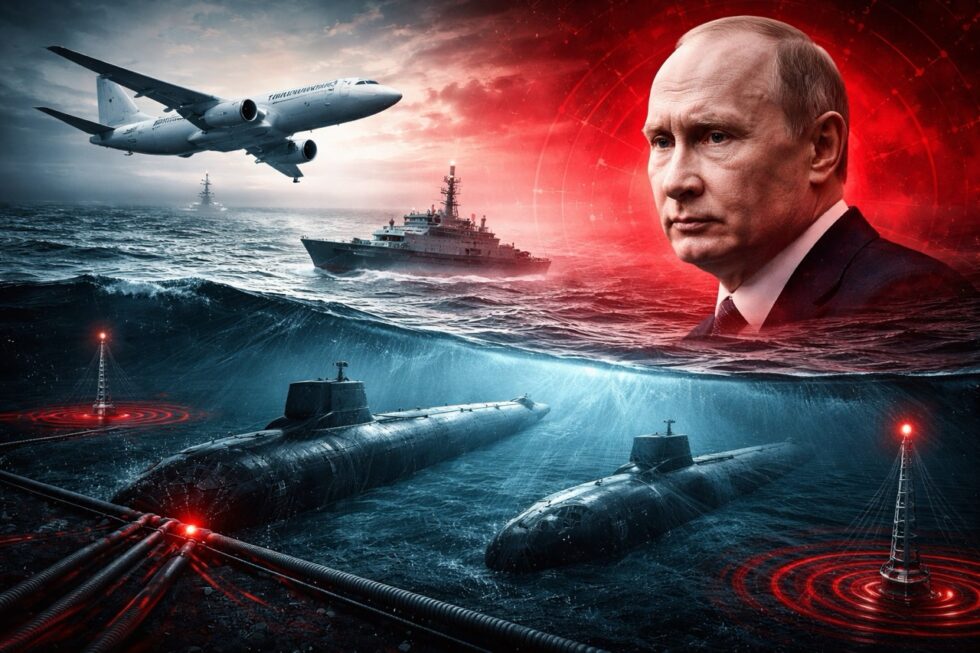
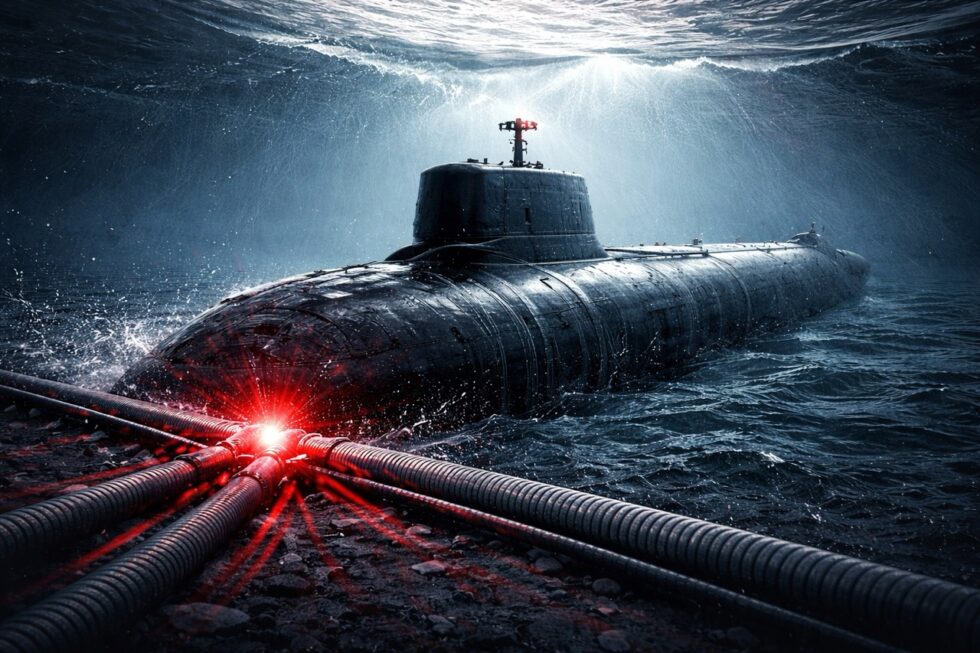
The United Kingdom has disclosed a covert Russian naval operation near critical undersea infrastructure in the Atlantic, with Defence Secretary John Healey issuing a direct warning to Vladimir Putin that any interference with cables or pipelines would trigger “serious consequences”, in what officials describe as a deliberate and calibrated public signal following weeks of classified monitoring — reported by The WP Times citing Sky News and UK defence sources. According to the British government, three Russian vessels were detected operating for more than a month within the UK’s exclusive economic zone in the North Atlantic. These included an attack submarine assessed to be from the Akula class, alongside two specialised deep-sea submarines linked to Russia’s Main Directorate of Deep-Sea Research (GUGI), a unit widely associated by Western intelligence with sensitive seabed operations involving cables and pipelines. The activity follows earlier tracking of the Russian surveillance vessel Yantar in the same region in late 2025, reinforcing concerns over sustained monitoring of Western infrastructure.
Officials state that the deployment formed part of what Healey described as “hybrid warfare activity” directed at critical national infrastructure, particularly undersea communication cables and energy pipelines that underpin both the UK economy and wider NATO systems. While no physical damage has been confirmed, the presence and duration of the operation have raised the level of concern within defence and intelligence circles.
The UK response involved a coordinated, multi-layered surveillance effort combining naval and aerial assets. Royal Navy vessels operated alongside RAF Boeing P-8 Poseidon aircraft, supported by allied capabilities, in a continuous monitoring mission lasting over a month. More than 500 British personnel were involved. Sonar buoys were deployed to track underwater movement and, critically, to signal to the Russian submarines that they were being actively observed in real time.
“We tracked every move,” Healey said during a Downing Street briefing, adding that the operation demonstrated both capability and intent. The Akula-class submarine has since returned to base, while monitoring of the remaining vessels linked to GUGI continues. British officials emphasised that the submarines operated outside territorial waters but within the exclusive economic zone, an area where such activity is legally permissible yet strategically sensitive.
In an unusually direct public statement, Healey framed the disclosure as a message to Moscow rather than purely a domestic briefing. “President Putin — we see you, we see what you are doing with our cables and pipelines, and you must understand that any attempt to interfere will be unacceptable and will have serious consequences,” he said. He further characterised the operation as unsuccessful, arguing that persistent surveillance prevented any covert action from being carried out undetected.
The disclosure comes amid a broader pattern of intensified Russian maritime activity near the UK. On 9 April, the Russian frigate Admiral Grigorovich reportedly escorted sanctioned tankers linked to the so-called shadow fleet through the English Channel, according to The Telegraph. Analysts estimate that more than 300 such vessels have transited waters near the UK since the beginning of 2026, highlighting the scale of maritime pressure linked to sanctions evasion and strategic signalling.
Ukraine has also reacted to the development. Foreign Minister Andrii Sybiha stated that the exposure of the operation underscores “acute regional and global threats” posed by Russia, calling for intensified international pressure and sanctions. The strategic importance of the incident lies in the vulnerability of undersea infrastructure. Submarine cables carry the vast majority of global data traffic, while offshore pipelines remain essential to European energy security. Western security assessments have repeatedly warned that Russia possesses specialised deep-sea capabilities capable of mapping and potentially disrupting such systems, particularly in periods of heightened geopolitical tension. Incidents in both the Baltic Sea and North Atlantic in recent years have reinforced the perception that seabed infrastructure is emerging as a critical domain in modern conflict, where visibility is limited but consequences can be immediate and far-reaching.
Read about the life of Westminster and Pimlico district, London and the world. 24/7 news with fresh and useful updates on culture, business, technology and city life: Shadow Fleet And Warship In Channel: What Changed After UK Authorised Ship Seizures
Prepared using materials from Sky News, The Telegraph, and official UK defence briefings.