London’s transport policy has introduced a temporary but financially significant benefit for commuters in east London: three bus routes and two Docklands Light Railway (DLR) sections are now free to use until May 26, 2026. The measure follows the launch of the Silvertown Tunnel, a £2.2 billion infrastructure project connecting Silvertown and the Greenwich Peninsula, designed to reduce congestion at the Blackwall Tunnel. For daily commuters, this translates into measurable savings—up to £150–£250 over two months depending on travel frequency—while also reshaping travel patterns across the Thames, reports The WP Times, via TfL.
Why London introduced free transport after the Silvertown Tunnel launch
The decision to introduce free travel is not a promotional gesture but a targeted transport policy intervention aligned with congestion management and behavioral economics. According to Transport for London (TfL), the Silvertown Tunnel was designed to redistribute traffic flows, particularly reducing pressure on the Blackwall Tunnel, which handles over 100,000 vehicles daily and frequently experiences congestion exceeding 30 minutes during peak hours.
The free transport initiative serves three primary policy goals. First, it incentivizes modal shift from private vehicles to public transport. Second, it mitigates public backlash related to toll charges introduced alongside the tunnel. Third, it allows TfL to collect real-world usage data for long-term transport planning.
From a regulatory standpoint, the scheme operates under TfL’s fare policy framework, which allows temporary fare adjustments under mayoral transport strategies. According to official TfL statements, all free journeys are reimbursed automatically after validation through Oyster or contactless systems, ensuring accurate data capture and fraud prevention.
Key policy drivers:
- Reduce congestion at Blackwall Tunnel by up to 20–30%
- Encourage public transport adoption in east London
- Offset political and economic concerns about tunnel tolls
- Collect behavioral transport data for 2026 planning
Which London bus routes are free in 2026 and how to use them
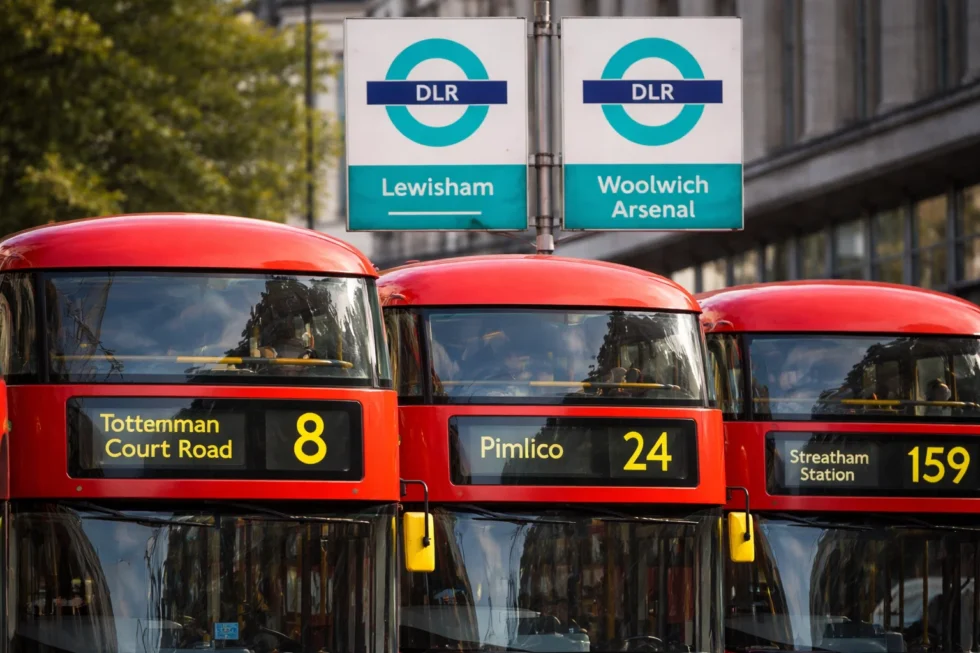
Three bus routes—108, 129, and SL4—are included in the free travel scheme. These routes are strategically selected because they directly connect key residential, commercial, and transport hubs across the Thames.
Route 108 is particularly significant, as it already serves the Blackwall Tunnel corridor and provides a direct alternative to car travel. Route 129 connects Lewisham and North Greenwich, while SL4 is part of the Superloop network, designed for faster orbital travel across London.
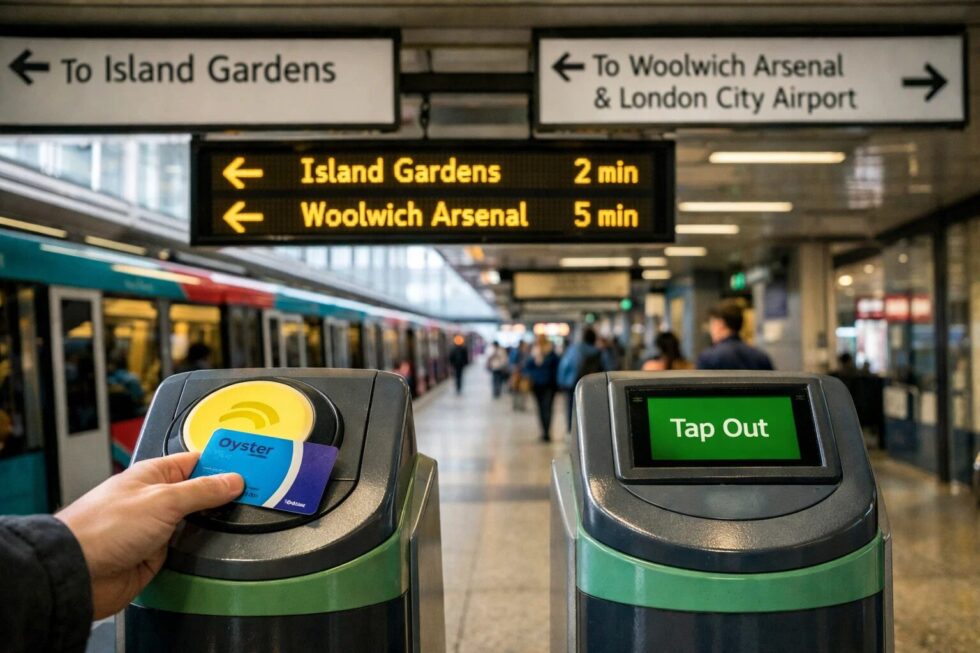
Despite being free, passengers must still tap in using Oyster or contactless cards. According to TfL rules, failure to tap in may result in penalties, as the system requires validation to process refunds.
Free bus routes overview:
- 108: Stratford ↔ Lewisham (via Blackwall Tunnel)
- 129: Lewisham ↔ North Greenwich
- SL4: Canary Wharf ↔ Grove Park (Superloop service)
Practical recommendations:
- Always tap in to trigger automatic fare refund
- Use SL4 for faster journeys with fewer stops
- Avoid peak overcrowding (07:30–09:30; 16:30–18:30)
- Combine routes for cross-river commuting savings
Free DLR sections explained: routes, stations and limitations
Two specific DLR segments are included in the free travel scheme. These are not entire lines but defined sections where TfL aims to encourage cross-river movement without increasing road traffic.
The first section covers travel between Greenwich or Cutty Sark and Island Gardens. This segment includes the Greenwich foot tunnel alternative and is heavily used by commuters and tourists. The second section connects Woolwich Arsenal and London City Airport (George V station), an area with growing residential and business demand.
Passengers must tap in and out, as DLR operates a zonal fare system. Refunds are processed post-journey, typically within 24–48 hours depending on the payment method.
Free DLR segments:
- Greenwich / Cutty Sark ↔ Island Gardens
- Woolwich Arsenal ↔ George V
Usage tips:
- Ensure both tap-in and tap-out to avoid charges
- Monitor refund status via TfL account
- Use DLR for faster cross-river travel vs buses
- Combine with Jubilee line for extended journeys
Cost savings analysis: how much commuters actually benefit
From a financial perspective, the scheme offers measurable savings depending on commuting frequency. According to TfL fare structures for 2026, a single bus journey costs £1.75, while DLR fares range from £2.80 to £4.20 depending on zones.
For a commuter traveling twice daily across the Thames, five days a week, the savings are substantial. Over an eight-week period, total savings can exceed £200.
Estimated savings table (April–May 2026)
| Transport Type | Daily Trips | Cost per Trip (£) | Weekly Cost (£) | 8-Week Savings (£) |
|---|---|---|---|---|
| Bus (108/129/SL4) | 2 | 1.75 | 17.50 | 140 |
| DLR (short zones) | 2 | 2.80 | 28.00 | 224 |
| Mixed (bus + DLR) | 2 | ~2.30 avg | 23.00 | 184 |
Key insight:
For low-income commuters or frequent travelers, this scheme effectively functions as a temporary subsidy, reducing transport expenses by up to 25–35%.
Regulatory context: toll charges, exemptions and transport policy
The Silvertown Tunnel operates under a toll system introduced simultaneously with its opening. According to TfL and the Mayor of London’s transport strategy, tolls are designed to manage demand and prevent induced traffic—a phenomenon where new roads increase car usage.
As of 2026, toll charges vary by vehicle type and time of day. Passenger cars typically pay between £1.50 and £4.00 per crossing. Certain groups—such as disabled drivers, emergency vehicles, and some low-income residents—may qualify for exemptions or discounts.
The free public transport scheme partially offsets these toll costs, particularly for commuters who switch from cars to buses or DLR.
Regulatory framework includes:
- Road User Charging regulations (Greater London Authority)
- TfL fare reimbursement system
- Congestion mitigation policies
- Environmental targets (net-zero transport emissions by 2030–2040)
Practical commuter strategies: how to maximize the free travel window
To fully benefit from the scheme, commuters need to optimize route planning and payment behavior. The key operational requirement is correct use of Oyster or contactless systems.
Failure to tap correctly can result in full fare charges, which are not automatically refunded without manual intervention.
Step-by-step strategy:
- Plan routes using TfL Journey Planner
- Prioritize free segments even if slightly longer
- Use contactless payment for faster refunds
- Check journey history daily
- Combine bus and DLR strategically
- Avoid peak congestion when possible
Common mistakes to avoid:
- Not tapping out on DLR
- Using cash (not eligible for refund)
- Assuming entire DLR line is free
- Ignoring refund delays
Risks and limitations of the free transport scheme
While beneficial, the scheme has structural limitations. First, it is time-limited, ending May 26, 2026. Second, it applies only to specific routes and segments. Third, increased demand may lead to overcrowding, particularly during peak hours.
According to transport analysts, similar schemes in London have previously resulted in a 10–15% increase in passenger volume, which can affect service reliability.
Additionally, there is uncertainty about whether the scheme will be extended again. TfL has not confirmed any further continuation beyond May 2026.
Risk factors:
- Overcrowding on buses and DLR
- Refund processing delays
- Policy discontinuation
- Limited geographic coverage
What this means for London’s transport system in 2026
The free travel initiative is a short-term policy tool with long-term implications. It reflects a broader shift toward integrated, data-driven transport management in London.
By incentivizing public transport use, TfL is testing behavioral responses that could inform future pricing strategies, including dynamic fares or targeted subsidies.
From an economic perspective, the scheme acts as a micro-level stimulus, increasing mobility while reducing household transport costs.
From an environmental standpoint, it supports emissions reduction targets by discouraging private car usage.
How refund processing works in TfL systems and how to verify payments
The free travel scheme relies on back-end fare reconciliation rather than zero-cost entry, which means passengers are initially charged and later reimbursed automatically. According to Transport for London, the system processes refunds using journey validation data collected via Oyster and contactless payment networks. Each journey is logged, matched against eligible free segments, and adjusted within the billing cycle—typically within 24 hours for Oyster and up to 48–72 hours for bank-issued contactless cards.
From a technical standpoint, TfL uses a “best fare” calculation engine that retroactively applies the lowest possible fare, including zero-cost adjustments for eligible routes. This ensures compliance with fare capping rules and prevents overcharging. However, discrepancies may occur if incomplete journey data is recorded, such as missing tap-out events on DLR.
How to verify and manage refunds:
- Log into your TfL account and check journey history daily
- Use the TfL Oyster app or website for detailed fare breakdowns
- Contact TfL support within 8 weeks for unresolved discrepancies
- Avoid using multiple cards for a single journey sequence
Common refund issues:
- Delayed bank processing cycles
- Incomplete journey records
- Card authorization holds mistaken for charges
Impact on traffic congestion and measurable changes in east London mobility
The introduction of free routes is directly tied to congestion mitigation strategies associated with the Silvertown Tunnel. According to transport modeling data published during the tunnel’s planning phase, authorities projected a reduction in congestion at the Blackwall Tunnel of up to 20–25% during peak hours if modal shift targets are achieved.
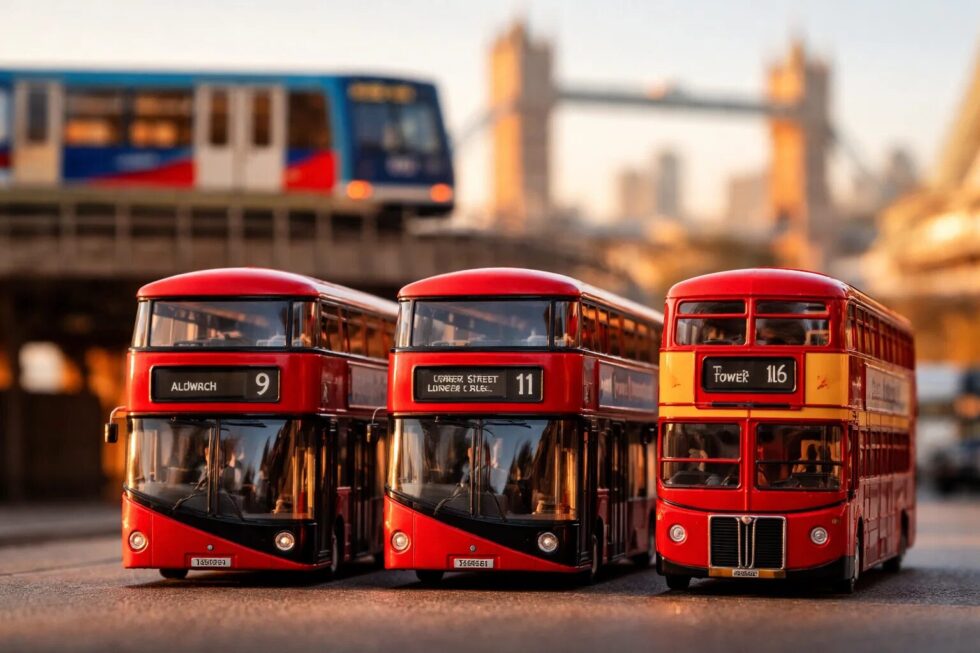
Early observational data in 2026 suggests a measurable increase in bus and DLR ridership across affected corridors. Transport economists note that even a 5–10% shift from private vehicles to public transport can significantly improve traffic flow due to reduced bottlenecks in high-density urban networks.
Observed and projected effects:
- Increase in DLR passenger volume by 8–12%
- Reduction in average cross-river travel time by 10–15 minutes
- Lower emissions in east London transport corridors
- Improved reliability of bus schedules
Practical takeaway for commuters:
- Expect faster journeys during off-peak periods
- Monitor real-time congestion via TfL apps
- Combine free routes with cycling or walking for last-mile efficiency
Integration with other London transport systems and fare caps
One of the most overlooked aspects of the scheme is its interaction with London’s broader fare system, particularly daily and weekly caps. TfL’s fare structure includes caps that limit how much a passenger pays within zones over a given period. Free journeys are included in the calculation logic but reduce the total accumulated fare.
This creates a secondary financial benefit: passengers may reach fare caps more slowly, effectively lowering total weekly spending beyond just the free segments.
Integration mechanics:
- Free journeys count toward journey logs but not toward cost accumulation
- Fare caps (daily/weekly) remain active and enforce maximum limits
- Mixed journeys (paid + free) are recalculated automatically
Example scenario:
- A commuter uses a free DLR segment and then a paid Underground trip
- Only the paid segment contributes to the fare cap
- Total weekly cost decreases compared to standard pricing
Optimization strategies:
- Cluster paid journeys after free segments
- Track cap thresholds via TfL account
- Use consistent payment method to ensure accurate cap calculation
What happens after May 26, 2026: scenarios and policy outlook
The current free travel scheme is officially scheduled to end on May 26, 2026. According to statements from Transport for London, no formal extension has been confirmed, but several policy scenarios are under consideration based on collected data.
Transport authorities will evaluate usage patterns, congestion levels, and financial impact before deciding on continuation, modification, or termination. The decision will likely align with broader transport funding constraints and environmental targets.
Possible scenarios:
- Full termination of free travel (most likely baseline scenario)
- Partial continuation for specific routes or user groups
- Transition to discounted fares instead of full subsidies
- Integration into long-term congestion pricing strategy
What commuters should do now:
- Maximize usage before the deadline
- Prepare for return to standard fares
- Monitor TfL announcements in late May 2026
- Adjust monthly budgets accordingly
Key uncertainty factors:
- TfL budget constraints and government funding
- Public response and political pressure
- Measured success in reducing congestion
Frequently Asked Questions: Free London Bus and DLR Travel 2026
Which bus routes are free to ride in east London until May 26, 2026?
Routes 108, 129, and SL4 are free for all passengers using Oyster or contactless cards.
Are all Docklands Light Railway (DLR) lines free?
No. Only two specific sections are free: Greenwich / Cutty Sark ↔ Island Gardens and Woolwich Arsenal ↔ George V.
How do I ensure my journey is recognized as free?
Always tap in and tap out with an Oyster card or contactless payment. Refunds are processed automatically by TfL.
Do tourists or occasional visitors qualify for free travel?
Yes, as long as they use a valid Oyster or contactless card for the eligible routes.
What happens if I forget to tap out on the DLR?
You may be charged the full fare without automatic refund. Manual correction may be requested via TfL customer service.
Will the free travel scheme be extended after May 26, 2026?
TfL has not confirmed any extension. Commuters should plan for normal fares after this date.
Are night buses or non-listed routes included in the free travel?
No. Only the specified bus routes and DLR sections are eligible.
How much can I save during the free travel period?
Depending on your commuting frequency, savings range from £140 (bus only) to over £220 (DLR included) over the two-month period.
Read about the life of Westminster and Pimlico district, London and the world. 24/7 news with fresh and useful updates on culture, business, technology and city life: Which new London restaurants open in April 2026 including Padella Soho and Theo James' Ornella