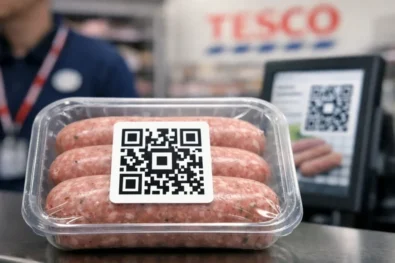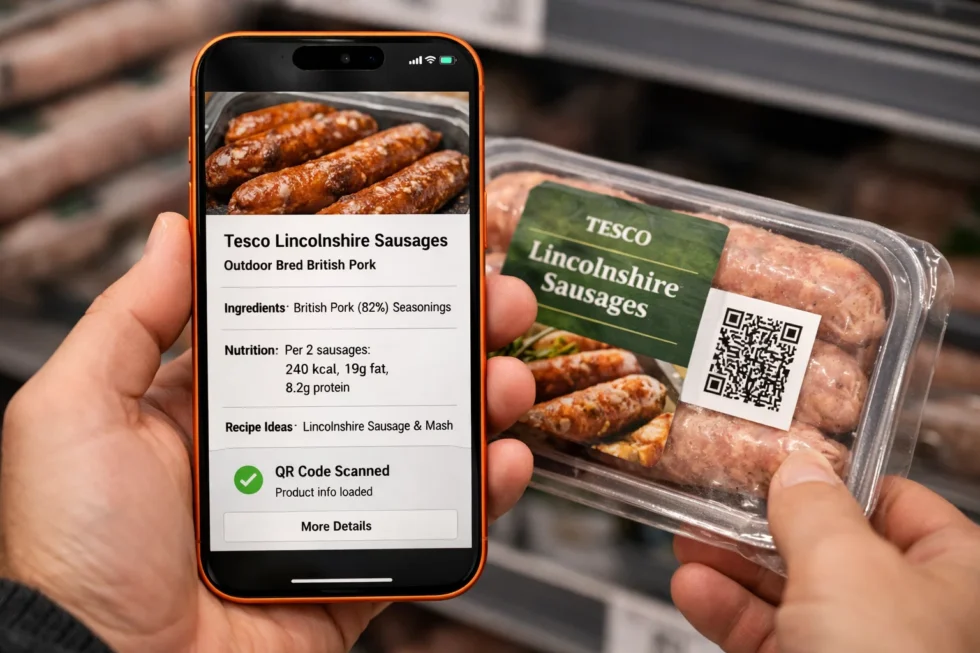
Tesco QR codes are being deployed in a landmark shift that replaces traditional linear barcodes across an entire own-label sausage range, marking the first full-category transition of its kind in a British supermarket environment. The rollout, beginning with 13 sausage lines including pork, chipolatas, Cumberland and Lincolnshire varieties, is designed to embed richer digital product data directly into packaging while maintaining standard checkout functionality.
Reporting from The WP Times confirms that this move positions Tesco as the first UK retailer to operationalise QR-based identification at scale, signalling a structural change in how food products are tracked, scanned and analysed across supply chains.
The transition from barcodes to Tesco QR codes is not visible in everyday shopping flow but represents a significant backend transformation in retail data architecture, logistics and consumer engagement systems. Shoppers will continue scanning items at tills in the same way, but smartphones will now unlock extended datasets including nutritional breakdowns, provenance, traceability records and product-level information previously unavailable through standard barcodes.
SYSTEM SHIFT — From linear barcodes to QR-driven retail data ecosystems
Tesco QR codes replace the traditional one-dimensional barcode format with a two-dimensional data matrix capable of storing significantly larger volumes of information. The initial rollout applies to Tesco’s own-label sausage lines in partnership with supplier Cranswick, forming a controlled test environment for full-scale adoption across wider product categories.
Unlike conventional barcodes, which only link to a product identifier in a database, QR codes embed direct access points to digital product profiles.
From an operational perspective, Tesco QR codes enable real-time linkage between physical stock and dynamic digital records, allowing updates to be reflected without altering packaging design. This shift reduces dependency on static labelling systems and increases flexibility in how supermarkets manage product metadata. Industry observers note that this approach aligns with broader global retail digitisation trends, particularly in food transparency and supply chain traceability systems.
The implementation also reflects growing pressure on retailers to modernise packaging infrastructure while maintaining compatibility with existing point-of-sale systems. Despite the shift in data architecture, checkout processes remain unchanged, ensuring continuity for both staff and customers while backend systems evolve significantly.
CONSUMER EXPERIENCE — What shoppers gain from Tesco QR codes
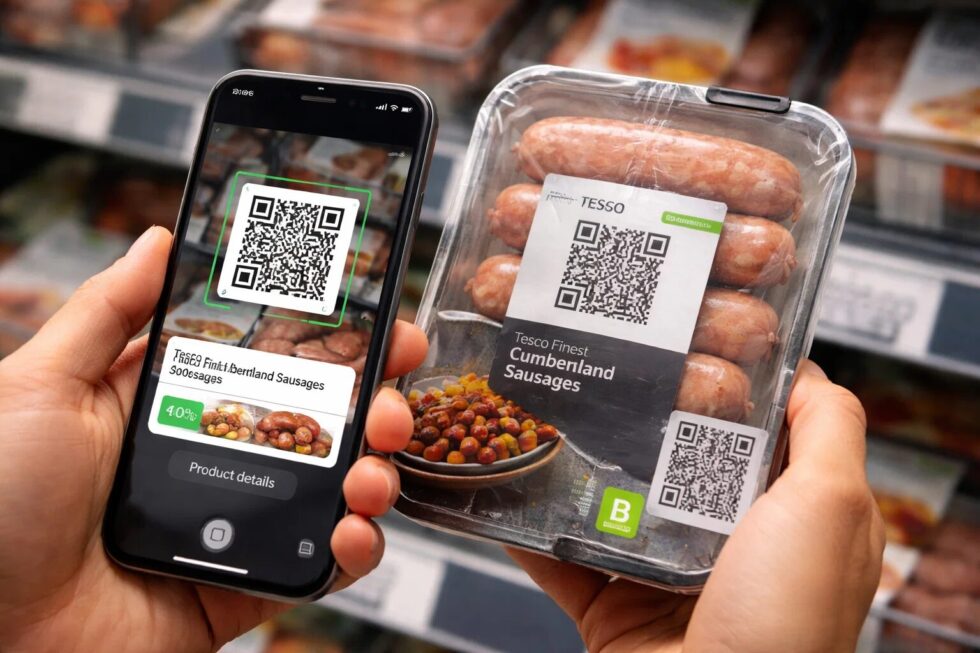
Tesco QR codes are designed to be scanned using standard smartphone cameras, enabling customers to access expanded product information beyond what is visible on packaging. This includes nutritional content, ingredient sourcing, production origin, and detailed traceability pathways showing how sausages and other products move through supply chains before reaching shelves.
The system also introduces interactive layers such as recipe suggestions, promotional competitions and digital engagement features linked directly to individual products. This transforms packaging from a static information carrier into an interactive data gateway.
While traditional barcode scanning remains unchanged at checkout, QR scanning creates an optional second layer of consumer interaction.
In addition, Tesco QR codes are expected to evolve into personalised digital tools over time, allowing customers to track purchasing habits, reduce food waste at home and receive tailored recommendations.
As Tesco development and change director Peter Draper stated, the aim is to “help reduce food waste, improve stock control and unlock new digital benefits for customers while maintaining the same shopping experience.”
SUPPLY CHAIN AND WASTE REDUCTION — Operational impact of QR integration
The introduction of Tesco QR codes extends beyond consumer engagement into supply chain optimisation and waste reduction systems. By embedding product-specific data into scannable codes, retailers gain enhanced visibility into shelf life, stock rotation and expiry timelines. This allows for more precise inventory management and reduces over-ordering, which is a key driver of food waste in large-scale supermarket operations.
Tesco QR codes also improve product recall systems by enabling batch-level identification rather than full product line withdrawals. Instead of removing all stock from shelves in the event of an issue, supermarkets can isolate specific production batches linked to QR identifiers.
This targeted approach reduces unnecessary disposal of safe products while maintaining consumer safety standards.
Retail systems can also integrate automated alerts that block affected products at checkout tills and notify customers who have previously purchased impacted batches. This creates a more responsive recall infrastructure that operates at near real-time speed compared to traditional barcode-dependent systems.
INDUSTRY RESPONSE — GS1 UK and retail technology transition
Industry organisations have described Tesco QR codes as a foundational step toward next-generation retail labelling systems. GS1 UK CEO Anne Godfrey said:
“Tesco moving to QR codes powered by GS1 across an entire range marks a significant step forward for UK retail. It shows how the next generation of barcodes can support a more connected, transparent future.”
Godfrey further noted that broader adoption across the sector could enhance consumer access to trusted product data while improving interoperability between retailers, suppliers and logistics networks. The introduction of Tesco QR codes is therefore positioned not only as a retailer-led innovation but as part of a wider structural shift in retail data standards.
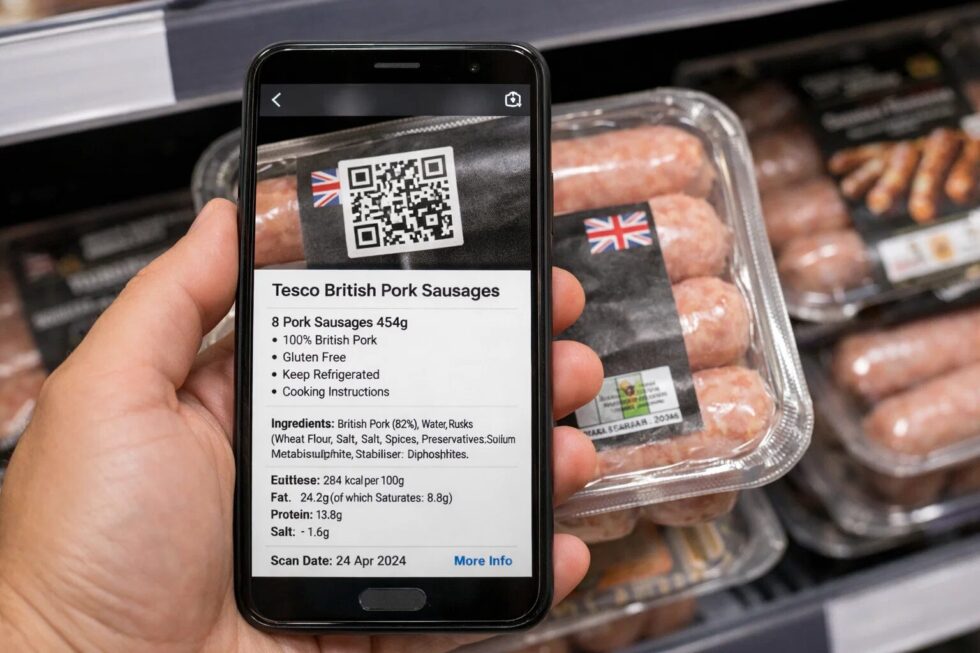
The collaboration with suppliers such as Cranswick demonstrates how upstream food producers must also adapt packaging and traceability systems to accommodate QR-based identification frameworks.
This alignment between retailer and supplier infrastructure is essential for scaling the technology beyond pilot product ranges.
PRODUCT SCOPE — Initial rollout across Tesco sausage range
The first implementation phase of Tesco QR codes covers 13 sausage lines under Tesco’s own-label range. These include core British varieties such as pork sausages, Cumberland, Lincolnshire and chipolatas. Each product has been updated with QR labels that replace traditional linear barcodes while maintaining identical shelf placement and packaging structure.
The controlled rollout allows Tesco to test scanning reliability, data accuracy and customer interaction patterns before expanding the system to broader categories. Future expansion is expected to include additional fresh food lines, packaged goods and potentially non-food categories once infrastructure stabilises.
Supplier integration is central to this phase, ensuring that production data, ingredient sourcing and logistics tracking are fully synchronised with QR-enabled systems from factory to retail shelf.
FUTURE OUTLOOK — Digital packaging as retail infrastructure
Tesco QR codes represent a shift toward packaging functioning as a digital interface rather than a purely informational label. As retail systems evolve, QR-based identification is expected to become a standard mechanism for connecting physical goods to dynamic data environments.
Long-term implications include personalised nutrition tracking, automated inventory management and enhanced sustainability reporting. The system also lays groundwork for integrating consumer-level digital tools that extend beyond purchase points into home consumption management.
While the immediate impact remains largely invisible to shoppers at checkout, the underlying transformation suggests a gradual replacement of traditional barcode infrastructure across UK retail environments, with Tesco positioned at the forefront of this transition.
Read about the life of Westminster and Pimlico district, London and the world. 24/7 news with fresh and useful updates on culture, business, technology and city life: B&M home bargains chocolate recall issued after urgent allergen safety risk in UK stores