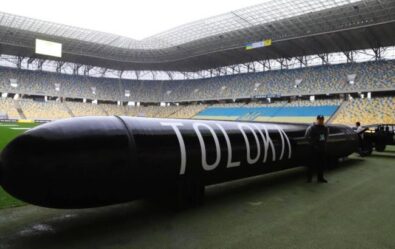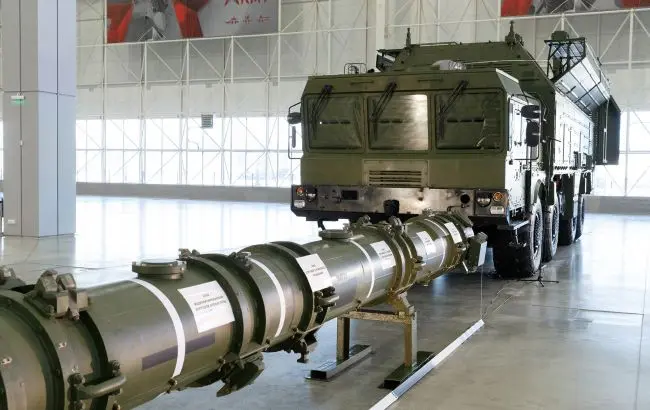
Russia has begun using the prohibited 9M729 “Novator” cruise missile against Ukraine — a weapon that once triggered the collapse of one of the most important arms control treaties in modern history. According to Reuters and RBC-Ukraine, Russian forces have launched more than 20 of these missiles since August 2025. The report was published by The WP Times, citing Reuters and Wikipedia.
The 9M729 was developed by the Russian defense company NPO Novator and is a ground-launched variant of the well-known Kalibr cruise missile. It gained global attention in 2019, when the U.S. formally withdrew from the INF Treaty (Intermediate-Range Nuclear Forces Treaty), citing the deployment of this system. Then–U.S. Secretary of State Mike Pompeo explicitly named the 9M729 as the key reason for Washington’s exit from the agreement.
Officially, Moscow maintains that the 9M729’s range is under 500 kilometers, keeping it within treaty limits. However, Western intelligence agencies estimate its range at up to 2,350 kilometers, allowing Russia to strike nearly any target in Europe from within its own borders. According to Russian sources, the missile can carry both conventional and nuclear warheads.
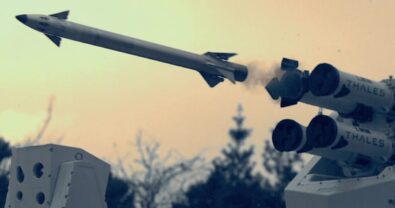
The weapon is launched from Iskander-M mobile systems (9K720) and, in some cases, from MAZ-543 trucks, which can transport up to six missiles. Between August and October 2025, Reuters documented at least 23 launches, with two earlier tests recorded in 2022. One missile reportedly flew 1,200 kilometers on October 5 before hitting its target.
Military analysts describe the 9M729 as a strategic threat because it enables Moscow to conduct long-range precision strikes while staying deep within Russian territory, effectively bypassing Ukraine’s air defenses. According to FAZ(Frankfurter Allgemeine Zeitung), several likely deployment sites have been known since 2019 — including Kapustin Yar near Volgograd, Yekaterinburg, Mozdok in North Ossetia, and Shuya near Moscow — all considered potential bases for nuclear-capable weapons.
The U.S. had already accused Russia of violating the INF Treaty as early as 2017, specifically through the deployment of the 9M728 and 9M729 systems. The INF Treaty, signed in 1987, banned all land-based missiles with ranges between 500 and 5,500 kilometers, aiming to reduce the nuclear threat in Europe. Its collapse marked the end of a decades-long period of strategic restraint and a return to great-power arms competition.
“The 9M729 blurs the line between conventional and nuclear warfare,” a European defense analyst told Reuters. “It’s mobile, accurate, and politically explosive.”
The renewed use of the missile comes as Moscow simultaneously promotes tests of its nuclear-powered Burevestnik cruise missile and the Poseidon underwater drone, both of which Western observers see as signs of a renewed nuclear arms race.
Today, the 9M729 has become a symbol of failed disarmament diplomacy. Its use against Ukraine underlines how the war has transformed into a broader geopolitical contest, extending far beyond the battlefield and challenging the global security architecture established after the Cold War.
Read about the life of Westminster and Pimlico district, London and the world. 24/7 news with fresh and useful updates on culture, business, technology and city life: Trump says Ukraine war could be the “ninth” conflict he will resolve