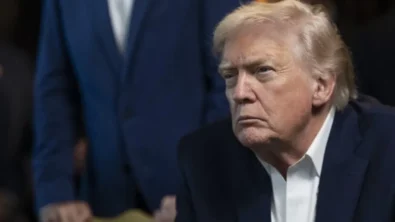
The administration of US President Donald Trump is proposing that countries seeking a permanent seat in the newly created Peace Council make a financial contribution of at least $1 billion. This was reported by The WP Times, citing Bloomberg.
According to the document, Trump is expected to become the first chairman of the Peace Council and will personally determine which states are invited to join. Decisions within the organisation will be made by a majority vote, with each member state holding one vote. However, all decisions will require final approval from the chairman. The draft charter also states that member states will hold their seats for terms of up to three years, with the possibility of renewal at the chairman’s discretion. This limitation will not apply to countries that contribute more than $1 billion in cash to the Peace Council within the first year after the charter enters into force.
The document describes the Peace Council as an international organisation aimed at promoting stability, restoring legitimate governance and ensuring lasting peace in regions affected by conflict or at risk of it. The organisation will officially begin its work after at least three states agree to join the charter.
The proposal also grants the US president authority to approve the official symbols of the organisation, including its seal. The White House has so far declined to comment on the initiative. The idea of creating the Peace Council has raised concern among critics, who believe Trump may be attempting to establish an alternative to, or competitor of, the United Nations – an organisation he has repeatedly criticised in the past.
According to Bloomberg, the US president has already invited several world leaders, including Argentine President Javier Milei and Canadian Prime Minister Mark Carney, to join the Peace Council to address post-war settlement issues in Gaza. This structure is intended to operate within the broader framework of the new Peace Council. At the same time, the initiative has faced criticism from Israeli Prime Minister Benjamin Netanyahu, who stated that the parameters of such a plan had not been coordinated in advance with the Israeli side.
Sources say that several European countries have also received invitations to join the Peace Council. However, the draft charter may stipulate that control over the organisation’s financial resources will remain with the chairman, a provision that is causing serious objections among potential participants. Some states are already opposing the proposed document and are working on joint steps to block the initiative. Under the draft, the Peace Council is to hold voting sessions at least once a year, as well as at additional times and locations determined by the chairman. The agenda will also be set with his approval. Separate regular consultative meetings of the executive council without voting rights are planned to take place at least once a quarter.
In addition, Trump would be granted the authority to remove states from membership in the Peace Council, although such a decision could be blocked by a two-thirds vote of participating countries. The charter also states that the chairman has the right to appoint his successor at any time.
It should be noted that on 16 January the White House announced the US representatives who would join the Peace Council. A day earlier, on 15 January, Donald Trump formally announced the creation of the body to oversee post-war governance in Gaza. It has also emerged that Trump’s team plans to establish a separate Peace Council for Ukraine, modelled on the Gaza framework, to address issues related to the war.
What is Trump’s Peace Council – background and context
The Peace Council is a new international body proposed by Donald Trump as an alternative mechanism for managing post-conflict regions and enforcing future peace agreements. Initially designed for post-war governance in Gaza, the concept is now being expanded to other global conflicts, including Ukraine. The aim is to create a permanent supervisory structure that would monitor ceasefires, coordinate reconstruction and ensure compliance with political settlements. Unlike traditional multilateral institutions, the Peace Council would operate under strong presidential control, with Trump serving as its first chairman and holding final authority over membership and key decisions.
Key facts about the Peace Council plan:
- Announced on 15 January 2026 as a new international organisation
- Initially created to oversee post-war administration in Gaza
- Plans are being developed for a separate Peace Council for Ukraine
- Trump would act as the first chairman with extensive powers
- Countries seeking permanent membership must contribute at least $1 billion
- Membership terms would normally last up to three years
- All decisions would require approval by the chairman
- The council could include representatives from Ukraine, Europe, NATO and Russia
- Similar councils are being considered for Venezuela and other regions
- The initiative has raised concerns about becoming a competitor to the United Nations
Supporters argue that the Peace Council could provide a faster and more pragmatic way to enforce peace agreements than existing international organisations. Critics warn that the structure grants excessive power to a single individual and risks turning global conflict management into a pay-to-play system. As negotiations over Ukraine and Gaza continue, the Peace Council remains one of the most controversial elements of Trump’s emerging foreign policy strategy.
Read about the life of Westminster and Pimlico district, London and the world. 24/7 news with fresh and useful updates on culture, business, technology and city life: Trump introduces 10% tariffs on Denmark and seven European nations amid Greenland purchase plan crisis