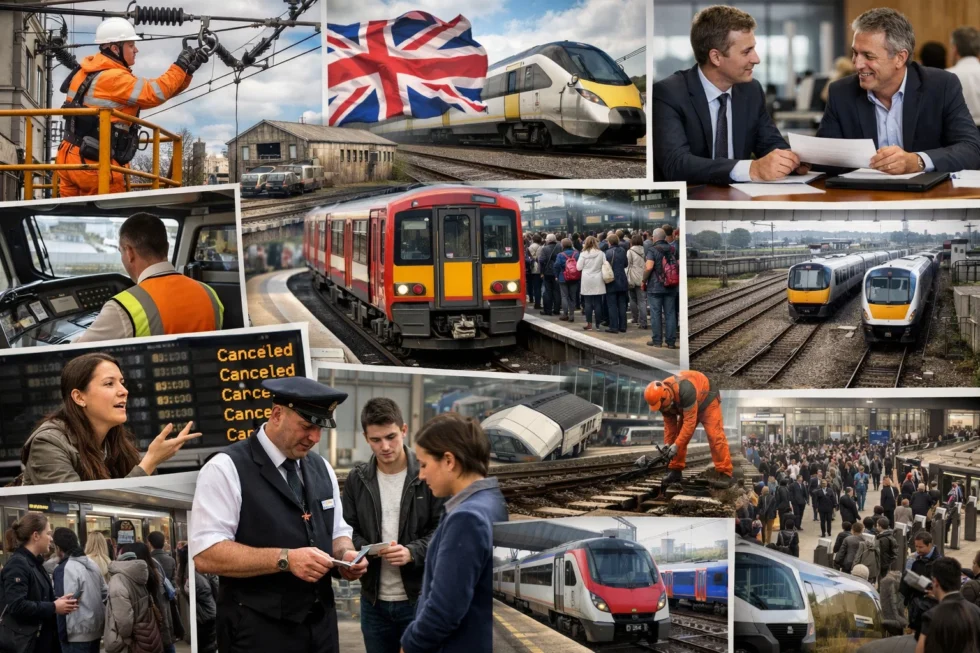
Most of Great Britain’s major rail operators are now under public ownership as the UK government advances a phased rail nationalisation programme, with 10 of 16 passenger operators already under state control and the remaining six due to transfer by autumn 2027. The policy is intended to improve coordination, reliability and accountability across the rail network. This explainer sets out which rail services are now publicly owned, how nationalisation is being implemented, what comes next, and what official performance data shows about delays, cancellations and costs, reports The WP Times, citing The Guardian.
How Britain’s rail nationalisation is being implemented
The Labour government, elected in 2024, pledged to bring Britain’s railways into public ownership. Rather than purchasing private companies outright, the strategy is to wait for existing core contracts to expire, allowing the Department for Transport (DfT) to take control without paying compensation to shareholders. This approach results in roughly one operator moving to public ownership every three months. It builds on earlier nationalisations carried out before 2024 by Conservative ministers or by devolved administrations in Wales and Scotland. Transport secretary Heidi Alexander has overseen the latest phase, which has seen four operators nationalised since May 2025.
Which rail operators are now public-owned
As of February 2026, the following major passenger rail operators have been brought into public ownership:
- London North Eastern Railway
- Northern
- Southeastern
- TransPennine Express
- South Western Railway
- C2C
- Greater Anglia
- West Midlands Trains
- Transport for Wales
- ScotRail
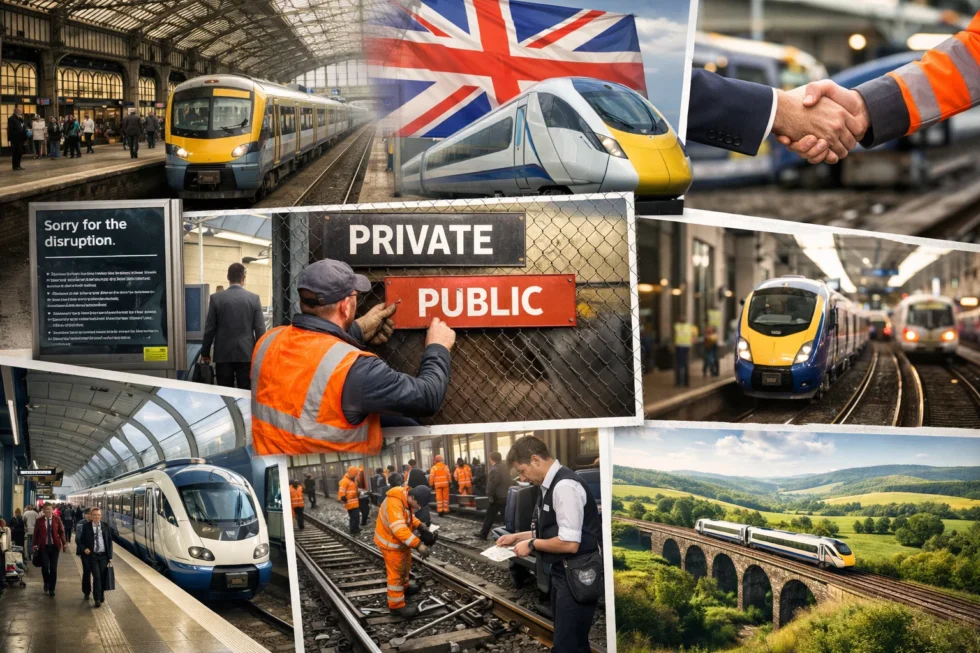
Several of these entered public control after financial difficulties or poor performance under private management. Transport for Wales and ScotRail were nationalised separately by the Welsh and Scottish governments in 2021 and 2022; their operations are not expected to be merged into the new central body.
Which operators are due next
The government has announced that the following six operators will transfer to public ownership as their contracts expire:
| Operator | Expected timing |
|---|---|
| Govia Thameslink Railway | May 2026 |
| Chiltern Railways | Summer 2026 |
| Great Western Railway | Autumn 2026 |
| East Midlands Railway | Winter 2026 |
| Avanti West Coast | Spring 2027 |
| CrossCountry | Autumn 2027 |
CrossCountry is scheduled to be the final operator taken into public control under the current timetable.
A new state-controlled entity called Great British Railways is expected to become operational in 2026. Its purpose is to unify the management of rail services and infrastructure, combining publicly owned operating companies with Network Rail, which owns tracks, signals and major stations. Great British Railways is intended to act as a single directing body to co-ordinate timetables, investment and performance across the network. Train fleets, however, will remain privately owned.
Performance changes since nationalisation
Data from the Office of Rail and Road shows a mixed picture of performance among nationalised operators:
- London North Eastern Railway has recorded fewer delays and cancellations, and is cited by ministers as an example of improved performance.
- Northern Trains has reduced cancellations but seen little change in delays.
- Transport for Wales has fewer delays but an increase in cancellations.
- Southeastern has registered increases in both delays and cancellations.
- ScotRail shows similar levels of delays and cancellations year on year.
- TransPennine Express has seen mixed results, with more delays but fewer cancellations.
Overall, the most recent nationalised operators have shown variation in punctuality and service reliability, indicating no uniform improvement across all franchises.
Costs, subsidies and fare trends
Public subsidy for Britain’s railways remains substantial. Operational support from government is reported to be around £12bn annually, excluding separate funding for projects such as HS2. Fares have also continued to rise in real terms. Based on industry data, a typical 50km rail journey now costs around £8.90, compared with an inflation-adjusted cost of £7.54 in 1994. Annual cancellations across the network reached their highest level since 2015 in the last reporting year, reflecting ongoing operational challenges despite some local improvements.
Government position on nationalisation
The DfT has said that nationalisation and the creation of Great British Railways are designed to improve accountability, efficiency and reliability. In an official statement the department said that public ownership should lead to better outcomes for passengers, with clearer responsibility for performance and service delivery. The department also acknowledged that inherited issues from decades of fragmented private contracts will take time to address.
Industry response
Rail industry figures have offered a range of assessments. Some see potential benefits in improved co-ordination of track and train operations, while others highlight that systemic issues such as funding pressures and infrastructure constraints will not be resolved solely through changes in ownership. A spokesperson for ScotRail highlighted ongoing efforts to improve punctuality, noting that around nine out of ten services meet punctuality targets and emphasising commitment to customer service.
The next scheduled nationalisation is Govia Thameslink Railway in May 2026, followed by Chiltern Railways later that year. Over the next 18 months, the rail sector will continue to transition toward full public ownership, and performance data will be key to assessing whether this shift delivers the reliability and affordability outcomes outlined by ministers.
Read about the life of Westminster and Pimlico district, London and the world. 24/7 news with fresh and useful updates on culture, business, technology and city life: Will HMRC’s 2026 penalty points system make UK taxpayers pay £200 for late returns